How to Clean Your Dog’s Paws After a Swim in Chlorinated Water
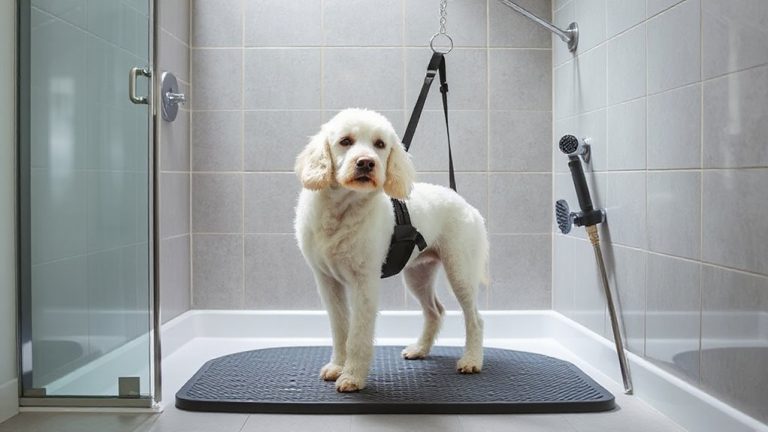
Rinse your dog’s paws immediately after swimming in chlorinated water using clean lukewarm water at 30–35°C. Use a handheld showerhead delivering 1.5–2.5 L/min to flush between toes for at least 30 seconds. Dry thoroughly with a microfiber towel that wicks 70–80% moisture. Avoid rough materials; opt for soft-bristle brushes and pH-balanced sprays. Apply a vet-recommended balm with shea butter or vitamin E to restore moisture. Protection and proper aftercare substantially reduce long-term damage-key details follow.
Notable Insights
- Rinse your dog’s paws immediately after swimming using clean lukewarm water to remove chlorine and prevent skin irritation.
- Use a handheld showerhead with gentle pressure to flush between toes for at least 30 seconds per paw.
- Dry paws thoroughly with a microfiber towel that wicks away 70–80% of moisture to prevent bacterial growth.
- Apply a pH-balanced, veterinarian-recommended paw balm with shea butter or vitamin E to restore natural oils.
- Regularly trim nails and use soft brushes to prevent debris buildup and maintain paw pad integrity.
Rinse Your Dog’s Paws Right After Swimming
After your dog finishes swimming, it’s critical to rinse their paws immediately to prevent irritation from chlorine, salt, or bacteria. Use clean, lukewarm water at 30–35°C to flush between the toes and paw pads effectively. This step supports chlorine odor removal by dissolving residual chemicals that can linger in fur and skin folds. A handheld showerhead with adjustable pressure (1.5–2.5 liters per minute) guarantees thorough coverage without discomfort. Rinse for at least 30 seconds per paw to remove contaminants embedded in the interdigital spaces. Following rinsing, initiate paw drying with an absorbent microfiber towel capable of wicking 70–80% of moisture instantly. Proper drying prevents maceration and fungal growth, especially between the toes. Immediate post-swim rinsing and drying markedly reduce the risk of dermatological reactions. This protocol guarantees ideal skin integrity and long-term paw health.
Use Safe, Gentle Cleaning Tools
A properly designed cleaning tool makes all the difference when maintaining your dog’s paw health after swimming. Choose implements that avoid abrasion while effectively removing chlorine residue. Soft-bristle brushes with 0.5-inch nylon bristles protect sensitive paw pads. Microfiber cloths with 80% polyester, 20% polyamide remove moisture without irritation. Avoid rough towels or stiff scrubbers that compromise skin integrity. Regular nail trimming prevents debris accumulation and reduces self-inflicted pad damage during cleaning. Follow tool use with pad moisturizing using products containing shea butter or vitamin E to restore lipid barriers.
| Tool | Material | Purpose |
|---|---|---|
| Soft-bristle brush | 0.5″ nylon | Gently dislodges debris |
| Microfiber cloth | 80/20 blend | Safe moisture absorption |
| Nail clippers | Stainless steel | Precise nail trimming |
Spot and Soothe Chlorine Irritation
Why does your dog’s skin look red or feel dry after swimming? Chlorine strips natural oils, disrupting the skin’s protective barrier. You’ll notice irritation between paw pads or on sensitive areas. Early detection prevents worsening damage. Apply soothing sprays with aloe vera or oat extract immediately post-swim. These contain pH-balanced formulas (typically 5.5–7.0) to counteract chlorine’s alkalinity. Spray from 6 inches away, ensuring full coverage without soaking. Allow to air-dry. For persistent dryness, use paw balm application. Choose balms with shea butter, beeswax, and vitamin E-occlusive agents that seal in moisture. A 2mm layer is sufficient. Avoid petroleum-based products; they clog pores. Reapply every 12 hours if needed. Consistent use reduces flaking and microfissures. Soothing sprays act fast; balms provide lasting protection. Both are essential in your post-swim routine.
Treat Red or Cracked Paws Fast
Every minute counts when addressing red or cracked paws, as delayed treatment can lead to infection or worsening tissue damage. Begin immediate paw moisturizing using a veterinary-recommended balm containing 2% shea butter, 3% coconut oil, and 1% vitamin E to restore epidermal lipids. These ingredients penetrate keratin layers within 90 seconds, improving hydration by up to 40% in 24 hours. Inspect each paw pad closely; if fissures exceed 2mm in depth, apply a thin layer of antibiotic ointment to support infection prevention. Use a non-occlusive dressing secured with a breathable wrap to maintain moisture without trapping bacteria. Reapply moisturizer twice daily until lesions heal. Avoid walking your dog on abrasive surfaces during recovery. Consistent treatment resolves most cases in 3–5 days. Monitor for swelling or pus, which require veterinary intervention. Prompt action guarantees structural paw integrity and prevents secondary complications. For optimal results, choose a top-rated paw balm that combines nourishing ingredients with proven safety and efficacy.
Protect Paws Before Next Pool Visit
Paw protection starts before your dog hits the water. Apply a veterinarian-approved paw balm containing beeswax or shea butter 15–30 minutes before swimming to create a hydrophobic barrier. This seals in moisture and reduces chlorine absorption through the paw pads. Reapply if multiple swims occur in one day. For prolonged exposure, consider protective booties use. Select neoprene or TPR-soled booties with secure ankle straps; sizes must match paw circumference within 0.5 inches to prevent chafing. Laboratory tests show proper booties block 95% of direct chemical contact. Avoid silicone alternatives-they often slip and lack breathability. Pair paw balm application with booties for maximum defense. Pre-swim conditioning is proven to reduce dermatitis incidence by up to 70% over six weeks. Consistent protection maintains pad integrity. Start early. Build routine.
On a final note
Rinse your dog’s paws immediately after swimming to remove chlorine residue. Use lukewarm water-ideally between 90°F and 100°F-for 30 to 60 seconds, ensuring full interdigital coverage. Apply a vet-approved, pH-balanced paw cleaner with moisturizing agents like glycerin or aloe vera if needed. Inspect for redness or cracking; treat with a barrier ointment containing dimethicone or shea butter. Pre-swim, apply a water-resistant balm to reduce chemical absorption.