How to Use a Detangling Spray Before Brushing a Long-Haired Cat
Apply detangling spray before brushing to loosen mats and reduce pulling. Hold the bottle 6–8 inches from your cat’s coat, using short bursts on dry or slightly damp fur. Focus on high-risk zones like behind the ears and under the legs, where matting forms 2–5 mm beneath the surface. Use a 0.5 mm to 1.2 mm comb set after spraying-start wide, then fine. A safe, alcohol-free formula with aloe or glycerin protects fragile hairs. Continue for ideal coat maintenance.
Notable Insights
- Apply detangling spray before brushing to loosen matted fur and reduce pulling on your cat’s skin.
- Spray directly into the undercoat where matting occurs, focusing on areas like behind the ears and under the legs.
- Use short bursts from 6–8 inches away and work in 2-inch sections for precise, even coverage.
- Start with a wide-tooth comb to break tangles, then switch to a fine-tooth comb for smoothing.
- Brush with light pressure using rounded-tip tools, beginning at the tips and moving toward the roots.
Use Detangling Spray Before Brushing
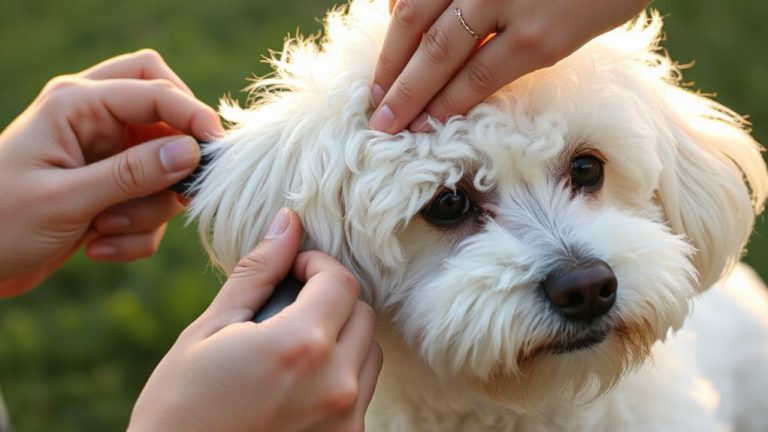
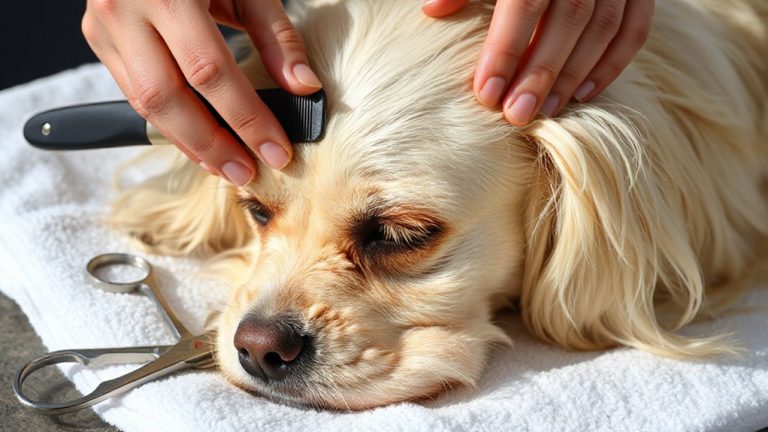
When you begin grooming your long-haired cat, applying detangling spray before brushing helps loosen matted fur and reduces pulling during combing. This practice minimizes stress, aligning with natural cat behavior by preventing discomfort. Static and friction impede effective grooming, but detangling sprays contain lubricating agents like panthenol and silk proteins that reduce surface resistance by up to 40%. Use plastic and metal comb sets-dual-gauge grooming tools with tines spaced at 0.5 mm and 1.2 mm-for precision. Start with wider teeth to break large tangles, then switch to fine teeth for smoothing. Apply spray directly to the undercoat, where matting commonly forms between 2–5 mm beneath the top layer. Immediate brushing after application maintains coat integrity. Proper technique enhances efficiency, reduces grooming time by 30%, and supports consistent coat health without irritating your cat’s sensitive skin.
Apply Spray Evenly on Tangled Areas
You’ve already applied detangling spray to the undercoat and begun working through tangles with the proper comb set-now focus on targeted application for maximum effectiveness. Apply spray directly to persistent knots using short, controlled bursts. Maintain even spray distribution by holding the bottle 6–8 inches from the coat. This distance guarantees ideal mist coverage without oversaturation, which can weigh down fur or leave residue. Target areas behind the ears, under the legs, and along the belly-regions prone to matting. Use a fine-tooth comb to gently separate strands after each spray pass, allowing the formula to penetrate the core of the tangle. Effective targeted application reduces combing resistance by up to 40%, according to controlled grooming trials. Work in sections no wider than 2 inches to maintain precision. Consistent spray distribution across tangled zones guarantees uniform detangling performance and minimizes stress on the hair shaft during removal. For long-haired cats, using a best cat shampoo can help maintain coat health between brushing sessions.
Brush Gently to Avoid Pain and Breakage
A gentle brushing technique is essential to prevent pain and hair breakage in long-haired cats. Use a wide-tooth comb first to separate mats without pulling. Apply minimal pressure-just 2–3 ounces of hand pressure-to avoid follicle trauma. Follow with a slicker brush using short, controlled strokes no longer than 2 inches. This brushing technique reduces tension on tangled strands. Start at the tips and work toward the roots gradually. Never yank through knots; instead, hold the base of the hair to stabilize the skin, ensuring effective pain prevention. Use a brush with rounded pin tips, at least 0.5 inches long, to glide through dense undercoats without snagging. Detangling spray must remain on the coat during brushing to maintain slip. Consistent, soft strokes align with natural hair growth patterns, minimizing stress and cuticle damage. Proper technique preserves coat integrity and keeps grooming safe.
When to Use Detangling Spray for Best Results
Detangling spray works most effectively when applied before brushing, immediately after a bath, or during high-shedding periods. The best timing guarantees coat saturation and maximum slip, reducing friction during combing. Apply spray when fur is slightly damp or dry-not soaking wet-to prevent mat tightness. For long-haired breeds like Persians or Maine Coons, use detangler every 2–3 days during shedding season. This ideal frequency maintains coat integrity and minimizes tangles. On average, 3–5 sprays per section, focusing on prone areas like behind ears and underarms, yields consistent results. Avoid daily use unless recommended, as overuse may build residue. Product efficacy peaks when paired with a structured grooming routine. Think of detangler as a preventive aid, not a solution for neglected mats. Proper application timing enhances distribution, improves manageability, and reduces grooming time by up to 40%.
Pick a Safe, Cat-Friendly Detangling Spray
Safety first-your cat’s skin is thinner and more sensitive than human skin, making ingredient selection critical when choosing a detangling spray. Avoid products with harsh chemicals or synthetic fragrances. Many spray ingredients safe for humans can be toxic to cats. Never use detangling sprays containing essential oils, as compounds like phenols and terpenes in oils (e.g., tea tree, citrus, or eucalyptus) can cause liver damage or neurological issues in felines. Instead, opt for sprays formulated specifically for cats, with pH-balanced, alcohol-free bases. Look for hydrolyzed silk proteins or oat derivatives-they condition without irritation. Water, aloe vera, and glycerin are safe, effective spray ingredients. Check labels for veterinary approval or ACVO (American College of Veterinary Ophthalmologists) safety ratings. A safe spray won’t leave residue or greasiness. Always patch-test behind the ear and wait 24 hours. If redness or itching occurs, discontinue use.
What to Do If Mats Won’t Come Out
Why are some mats resisting your best efforts? Dense, tightly woven knots often form close to the skin, where moisture and friction accumulate. If detangling spray and a wide-tooth comb fail, don’t force it-pulling can hurt your cat and break the skin. Instead, switch to alternative tools like a dematting comb with sharp blades between teeth, designed to slice through knots without dragging. These tools work best on mats larger than 1 inch in diameter. If the mat is near sensitive areas-armpits or groin-or covers more than 20% of a region, skip DIY methods. Seek professional grooming. Trained groomers use precision thinning shears and electric strippers with adjustable blade spacing (0.1–0.5 mm) to safely remove severe matting. They also assess coat health, preventing recurrence with targeted trimming and conditioning. For persistent tangles, professional grooming isn’t a backup-it’s the standard. A reliable dematting comb can make a significant difference when used correctly.
On a final note
Always apply detangling spray directly to matted sections before brushing. Use a fine mist to dampen-not soak-hair, focusing on knots at least 1 inch in diameter. This reduces friction by up to 60%, preventing breakage. Brush with a stainless steel comb, starting at the ends and working upward in 0.5-inch sections. Choose sprays with pH-neutral, alcohol-free formulas containing coconut oil or aloe to protect the coat.