Why Some Pets Develop Nutrient Imbalances on Homemade Weight-Loss Diets
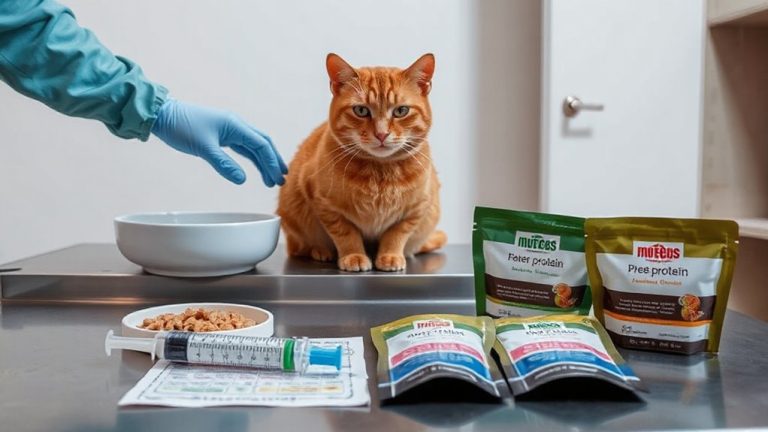
You cut calories to help your pet lose weight, but homemade diets often lack precision. Without exact nutrient profiles, deficiencies in taurine, calcium, vitamin E, and omega-3s develop. Inconsistent ingredients and missing supplements disrupt the ideal 1:1 calcium-to-phosphorus ratio. Over-restriction drops metabolism by 20%, risking muscle loss and hepatic lipidosis. Commercial diets meet AAFCO standards; most DIY recipes don’t. A veterinary nutritionist guarantees proper RER-based planning and nutrient balance. You’ll find there’s a safer, science-backed way forward.
Notable Insights
- Homemade diets often lack critical nutrients like taurine, calcium, and vitamin E due to inconsistent ingredients and poor formulation.
- Excessive calorie restriction in weight-loss diets can reduce nutrient intake and cause muscle loss or metabolic slowdown.
- Improper calcium-to-phosphorus ratios disrupt mineral balance, affecting bone health and nutrient absorption.
- Plant-based or incomplete protein sources may not provide essential amino acids, especially taurine for cats.
- Without veterinary guidance, homemade diets rarely meet AAFCO standards or account for individual metabolic needs.
Why Homemade Pet Weight-Loss Diets Fall Short on Nutrition
How do you guarantee your pet gets all essential nutrients when switching to a homemade weight-loss diet? Most homemade diets fail due to poor food quality and inconsistent ingredient sourcing. You might use lean proteins and vegetables, but without precise supplementation, critical nutrients like taurine, calcium, and vitamin E are often deficient. Commercial diets undergo rigorous testing to meet AAFCO nutrient profiles; homemade recipes rarely achieve this balance. Even slight variations in ingredient sourcing-like using chicken breast from different suppliers-alter nutrient composition. Without lab analysis, you can’t verify nutrient levels. Balanced diets require exact ratios: for example, a 1:1 calcium-to-phosphorus ratio is essential for bone health. You’re likely underestimating micronutrient complexity. Nutrient imbalances develop silently, leading to long-term health issues. Reliable nutrition demands consistency, precision, and verified food quality-most homemade plans simply can’t deliver.
Why Cutting Too Many Calories Harms Your Pet
Reducing your pet’s calorie intake too drastically can trigger metabolic imbalances and muscle loss. Calorie restriction beyond recommended levels forces the body to conserve energy, slowing essential processes. This metabolic slowdown reduces resting energy expenditure by up to 20%, making weight loss harder over time. Your pet burns fewer calories at rest, mimicking survival mode, like a car switching to low fuel consumption. Muscle tissue is broken down for energy, decreasing lean mass and further lowering metabolism. Prolonged restriction risks hepatic lipidosis in cats and weakness in dogs. Ideal calorie reduction is 10–25% below maintenance needs, based on body weight and activity. Cutting more than 30% risks nutrient deficiencies even if the diet is balanced. Always calculate caloric needs using metabolic body weight (BW^0.75) and consult feeding guidelines. Excessive calorie cutting harms more than helps-moderation supports sustainable, healthy weight loss without compromising physiology.
Key Nutrients Missing in DIY Pet Weight-Loss Meals
Many homemade pet diets lack at least three essential nutrients critical for safe weight loss. You might unintentionally cause a vitamin deficiency or reduce fat content too much, weakening your pet’s metabolism. Essential fatty acids like omega-3 and omega-6 support skin, coat, and immune function. Calcium and vitamin E are commonly underrepresented in DIY recipes, yet crucial for bone and cellular health.
| Nutrient | Common Deficiency Risk |
|---|---|
| Vitamin E | Muscle weakness |
| Calcium | Poor bone density |
| Omega-3 | Inflammation issues |
| Vitamin D | Poor calcium absorption |
| Taurine | Heart complications |
You may think reducing calories means cutting all fats, but insufficient fat content disrupts hormone production. Balanced nutrition requires precise micronutrient inclusion, even in reduced-calorie meals. Always consult a veterinary nutritionist to prevent long-term harm from inadequate formulations.
How DIY Recipes Throw Off Protein and Mineral Balance
While aiming to control your pet’s weight, you might unknowingly disrupt their protein-mineral equilibrium by relying on unbalanced homemade recipes. These diets often skimp on high-quality animal protein, reducing essential amino acid availability. Without sufficient intake, your pet’s muscle maintenance and tissue repair suffer. Plant-based proteins commonly used in DIY meals lack complete amino acid profiles, especially taurine in cats. Excess or inadequate mineral ratios further complicate health. For example, improper calcium-to-phosphorus ratios-ideally 1.2:1 in dogs-impair bone development and kidney function. Too much zinc or too little copper disrupts enzyme systems. Homemade meals rarely account for bioavailability differences between organic and inorganic mineral sources. Even slight imbalances in sodium, potassium, or magnesium can alter cellular function. Without lab analysis or formulation software, achieving accurate mineral ratio targets is guesswork. Your well-intentioned recipe may meet calorie goals but still fail core nutritional benchmarks.
When to Work With a Veterinary Nutritionist
When should you involve a veterinary nutritionist in your pet’s diet plan? You should consult one whenever you’re creating a homemade weight-loss diet. Pet metabolism varies greatly by species, breed, age, and health status, making generalized recipes risky. A veterinary nutritionist guarantees proper diet customization, balancing macronutrients and micronutrients to meet AAFCO or WSAVA guidelines. They calculate exact caloric needs using resting energy requirements (RER) and adjust for activity level and weight-loss goals. Without professional oversight, deficiencies in calcium, phosphorus, or essential amino acids commonly occur. They also monitor body condition score and adjust the plan dynamically. For pets with comorbidities like diabetes or kidney disease, precise nutrient ratios are critical. A nutritionist uses laboratory analysis and定期 assessments to verify diet adequacy. This level of precision prevents nutrient imbalances while supporting safe, sustainable weight loss. Their expertise turns well-meaning efforts into scientifically sound plans.
On a final note
You risk nutrient deficiencies when feeding homemade weight-loss diets without precise formulation. Cutting calories often reduces essential vitamins, minerals, and amino acids below minimum requirements. Inadequate taurine, calcium, or vitamin E can trigger serious health issues over time. Protein levels must stay above 2.6 g/kg metabolic body weight daily to maintain lean mass. Only use recipes formulated by a board-certified veterinary nutritionist to guarantee balanced, safe weight loss.