Winter Coat Maintenance for Siberian Huskies
Your Husky’s double coat thrives in winter with proper care. A dense 1–2 inch undercoat and 2–4 inch guard hairs reduce heat loss by up to 40%. Brush weekly using a dual-edge rake with 1.5–2 mm spacing and a slicker brush with 3 mm bent wires. Bathe every 6–8 weeks with oatmeal-based shampoo to preserve sebum. Keep humidity at 40–50% and use a high-velocity dryer during sheds. More key practices follow.
Notable Insights
- A Siberian Husky’s double coat provides natural insulation in winter and should be kept intact to retain heat.
- Brush weekly with an undercoat rake and slicker brush to remove loose fur and prevent matting.
- Avoid frequent bathing; limit to every 6–8 weeks to preserve essential oils that protect skin and coat.
- Use oatmeal-based, pH-balanced shampoo only when necessary and dry thoroughly to maintain coat integrity.
- Check for mats behind ears, under legs, and around the collar, and remove them safely with proper dematting tools.
Why Huskies Need Winter Coat Care
While your Siberian Husky’s double coat is naturally built for cold climates, proper winter coat care remains essential to maintain its insulating properties and overall health. Cold protection depends on an intact undercoat that traps body heat. This dense, 1–2 inch underlayer works with the 2–4 inch guard hairs to create a thermal barrier, reducing heat loss by up to 40% in subzero conditions. Damaged or matted fur compromises this system. Shed management prevents excessive undercoat buildup, which can trap moisture and encourage skin infections. Seasonal shedding, especially during winter-to-spring shift, requires weekly brushing to remove dead hairs. Leaving them in disrupts airflow and insulation efficiency. Improper care leads to clumping, reducing the coat’s ability to repel snow and ice. Effective maintenance preserves coat structure, guarantees mobility in deep cold, and supports long-term dermatological health. Regular checks are non-negotiable for performance in extreme weather.
Best Tools for Grooming a Husky’s Coat
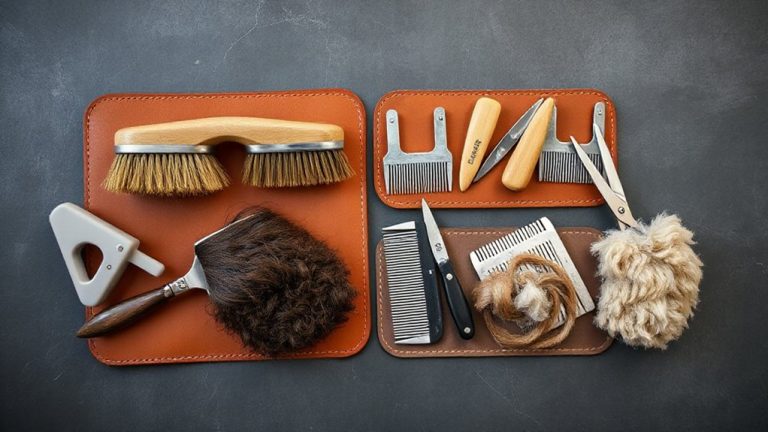
A quality undercoat rake isn’t just a grooming tool-it’s a necessity for maintaining your Siberian Husky’s thermal protection. You need a rake with dual-edge blades spaced 1.5 to 2 mm apart to efficiently remove loose undercoat without damaging guard hairs. Pair it with a slicker brush featuring fine, bent wires set in a rotating head for surface tangles. For claw trimming, use stainless steel guillotine clippers with a safety stop to avoid cutting quicks-trim every three weeks. Include ear cleaning in your routine: use a veterinarian-approved solution and soft gauze wipes to prevent moisture buildup. A high-velocity dryer helps loosen dead undercoat during seasonal sheds, increasing rake effectiveness. These tools, used consistently, preserve coat integrity and skin health. Invest in durable, ergonomic designs-your Husky’s coat depends on precision, not frequency. Grooming isn’t about aesthetics; it’s thermal regulation and disease prevention. For the most effective results, consider one of the best deshedding tools recommended for double-coated breeds.
How to Brush a Husky’s Double Coat
You’ve got the right tools-now it’s time to use them properly. Brushing your Husky’s double coat prevents matting and controls coat shedding. Start with an undercoat rake set to 1.5-inch tines to reach the dense underlayer without damaging the topcoat. Follow with a slicker brush using fine, bent wires spaced 3mm apart to lift loose fur. Never cut the coat or perform fur trimming-Husky’s double coat insulates against cold and removing it compromises thermal regulation.
| Technique | Tool Used | Purpose |
|---|---|---|
| Deep raking | Undercoat rake | Removes loose undercoat |
| Surface brushing | Slicker brush | Eliminates topcoat debris |
| Directional pass | Bristle brush | Smooths guard hairs |
Brush at a 45-degree angle in sections, working against the grain. Spend 10–15 minutes per session for effective shedding control.
How Often to Bathe a Husky in Winter?
Typically, bathing your Husky once every 6 to 8 weeks during winter is sufficient to maintain coat health without disrupting natural insulation. This bathing frequency preserves the skin’s natural oils, which are critical for thermal regulation and dry skin prevention. Over-bathing strips essential sebum, increasing susceptibility to flaking and irritation. Huskies have a double coat with dense underfur that traps body heat; excessive washing compromises this barrier. Use a pH-balanced, oatmeal-based shampoo only when necessary-visible dirt or odor warrants cleaning. Water temperature should be lukewarm (100–105°F) to avoid shocking the skin. Rinse thoroughly to prevent residue, which can exacerbate dryness. Towel-dry immediately, then use a low-heat dryer on a no-contact setting. Limiting baths maintains lipid integrity in the epidermis, supporting long-term coat resilience and minimizing dermatological stress during cold exposure.
How to Prevent Mats and Skin Irritation
While a Husky’s double coat is designed to regulate temperature and repel debris, it’s prone to matting when dead undercoat isn’t regularly managed. You should perform coat detangling at least twice weekly using a metal rake with 1.5-inch teeth to reach the dense undercoat. Mats form most frequently behind ears, under legs, and around the collar-inspect these zones closely. A slicker brush with fine, bent wires removes surface tangles without damaging guard hairs. For effective skin moisturizing, use a leave-in conditioner with oat proteins and ceramides, applying it directly to the skin in a fine mist. Avoid heavy oils-they clog follicles and disrupt natural insulation. Proper humidity (40–50%) in your home prevents static buildup, reducing tangle formation. Use a hygrometer to monitor levels. Consistent grooming prevents discomfort and maintains coat integrity. Never cut matted fur with scissors-use dematting tools designed for double coats. A high-quality dematting tool for dogs can safely cut through tough mats without harming the skin or coat.
Winter Grooming Tips for Huskies
A well-maintained coat guarantees your Siberian Husky stays insulated and comfortable during winter months. During cold weather, your Husky’s double coat provides essential thermal regulation. The dense undercoat traps body heat, while the longer guard hairs repel snow and moisture. Brush your dog at least three times weekly to support shedding control and prevent matting. Use a slicker brush or undercoat rake with tines 1–1.5 inches deep to reach the undercoat effectively. Avoid shaving-this disrupts natural insulation and UV protection. Bathe only when necessary, using a moisturizing, pH-balanced dog shampoo to preserve skin oils. Dry thoroughly to prevent chills. Trim ice balls from paw fur regularly. Maintain coat health with omega-3 supplements at 300–500 mg daily. Consistent grooming guarantees peak coat performance, keeping your Husky safe and efficient in extreme temperatures, much like a properly insulated building retains heat.
On a final note
You must maintain your husky’s double coat to preserve its insulating properties. A dense undercoat traps body heat, while the outer guard hairs repel snow and moisture. Use a slicker brush and undercoat rake weekly to remove dead hair and prevent matting. Avoid frequent bathing-it strips natural oils. Instead, spot-clean when needed. Never shave the coat; it disrupts thermoregulation. Proper grooming guarantees peak performance in subzero temperatures.