Why You Should Check Your Pet’s Eyes Every Time You Clean Their Face
You should check your pet’s eyes every time you clean their face because early signs of conditions like corneal ulcers or dry eye can appear within hours. Look for cloudiness, redness, or excessive tearing-symptoms that may signal a corneal ulcer, which can lead to perforation in 24–72 hours. Healthy eyes are bright, clear, and have equal, light-responsive pupils. Check for symmetry, corneal clarity, and pink, moist conjunctiva. A Schirmer tear test below 10 mm/min indicates keratoconjunctivitis sicca. Persistent discharge, squinting, or dullness demand immediate veterinary evaluation. Ongoing assessment supports timely diagnosis and preserves ocular function.
Notable Insights
- Checking your pet’s eyes during face cleaning helps catch early signs of problems like redness or cloudiness.
- Regular observation can reveal symptoms of serious conditions such as corneal ulcers before they worsen.
- Detecting discharge, swelling, or dullness early supports prompt treatment and better outcomes.
- Eye exams during routine care allow you to notice changes in tear production or conjunctiva color.
- Immediate veterinary care can be sought if signs like squinting, pain, or vision changes are observed.
How to Spot Eye Problems During Face Cleaning
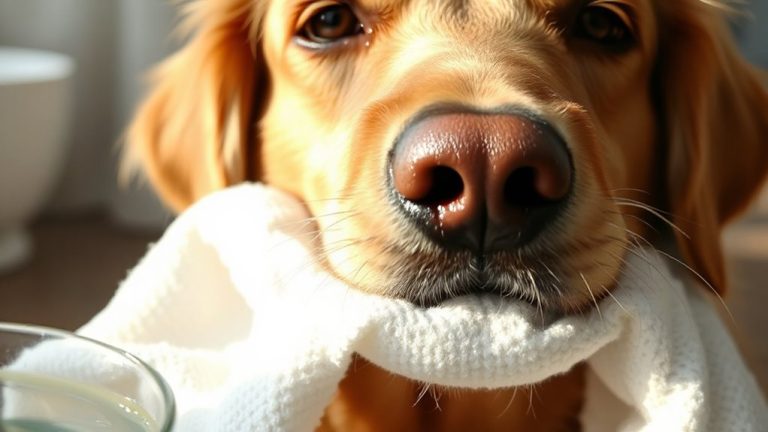
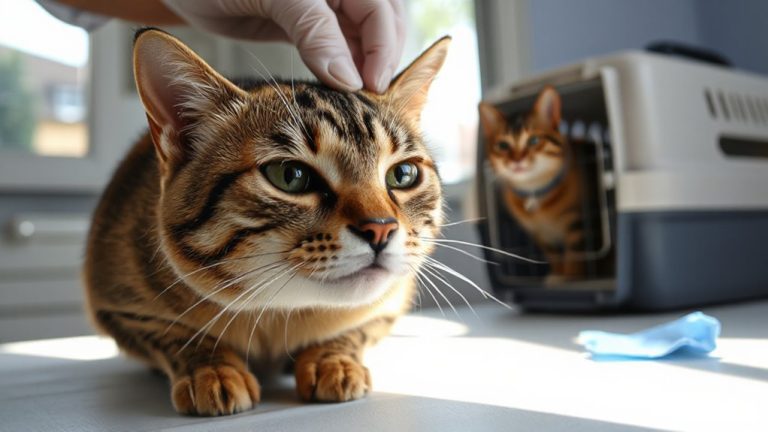
While cleaning your pet’s face, take the chance to closely examine their eyes, as early detection can prevent serious complications. Look for cloudiness, redness, or excessive tearing-these may signal corneal ulcers, which are painful erosions on the eye’s surface. Corneal ulcers often result from trauma or infection and require immediate veterinary assessment to prevent vision loss. Check for dullness or thick discharge; these are common signs of dry eye, a condition caused by insufficient tear production. Dry eye, or keratoconjunctivitis sicca, is diagnosed when tear production falls below 10 mm/min on a Schirmer tear test. Left untreated, it leads to chronic irritation and corneal scarring. Use a clean, damp cloth to gently wipe the eye area, avoiding direct contact with the cornea. Regular observation during face cleaning helps identify abnormalities early, ensuring timely intervention and maintaining ocular health.
Check Your Pet’s Eyes in 5 Quick Steps
Start by positioning your pet in a well-lit area, ideally near a natural light source to enhance visibility. Gently tilt their head slightly upward to examine eye anatomy clearly. First, check symmetry-both eyes should align without protrusion or sunken appearance. Second, inspect the cornea for clarity; cloudiness may indicate damage or disease. Third, observe the conjunctiva, which should be pink and moist, not red or dry. Fourth, assess tear production by watching for consistent moisture; insufficient wetness suggests inadequate tear film. Fifth, look for any discharge, crust, or foreign material. Normal tear production maintains ocular lubrication and prevents irritation. Each step takes under 10 seconds but offers critical insight into ocular health. Regular evaluation helps detect abnormalities early. You don’t need tools-just good light and a calm pet. Perform this check weekly, or every time you clean their face, to monitor changes accurately.
Know What Healthy Pet Eyes Look Like
Healthy pet eyes are bright, clear, and free of discharge-your first clue to overall wellness. You should expect clear membranes lining the eyelids and covering the eyeball; they’re smooth and pale pink, resembling dental floss in texture. A trace of normal discharge may appear overnight, typically clear or slightly crusty, but it shouldn’t reappear throughout the day. The surface of the eye-cornea-must be glossy and transparent. Any cloudiness indicates potential issues. Pupils should be equal in size and react quickly to light. The eye should sit centered in the socket, with no visible bulging or sinking. Nictitating membrane, or third eyelid, must remain hidden. Its protrusion suggests irritation or illness. You’ll notice immediate differences if something’s off. Regular observation helps you spot deviations early. Healthy eyes reflect good systemic health-don’t overlook their importance.
Watch for These Common Eye Issues
Keep an eye out for common ocular problems-early detection improves outcomes. Corneal ulcers are a frequent issue, especially in breeds with prominent eyes like pugs or Persians. These are open sores on the cornea, often caused by trauma or foreign bodies. Look for squinting, tearing, or cloudiness. Untreated, they can lead to perforation within 24–72 hours. Dry eye, or keratoconjunctivitis sicca, results from insufficient tear production. Normal tear production is 15–25 mm/min on a Schirmer tear test; values below 10 mm/min indicate dry eye. You may notice thick discharge, redness, or a dull corneal surface. The condition is common in cocker spaniels and brachycephalic dogs. Chronic cases risk corneal pigmentation and vision loss. Both corneal ulcers and dry eye require veterinary diagnosis and targeted treatment. Regular screening during face cleaning allows timely intervention. Using appropriate best eye drops for dogs can help manage symptoms and support ocular health in affected pets.
Catch Infection or Injury Early
How quickly can you spot the early signs of ocular injury or infection in your pet? Early detection begins with daily observation during routine face cleaning. Pets with genetic predispositions, such as brachycephalic breeds, are prone to corneal ulcers and dry eye due to shallow orbits and protruding globes. Check for subtle changes: mild epiphora, blepharospasm, or ocular discharge. Environmental irritants like dust, smoke, or allergens can trigger conjunctivitis or corneal abrasions. Inspect the conjunctiva for erythema and the cornea for cloudiness or vascularization. Use a magnifying lens if needed. Pupillary light reflex should be brisk and bilaterally symmetrical. Persistent tearing or squinting may indicate foreign body presence or early ulceration. Assess tear production with a Schirmer tear test strip if chronic dryness is suspected. Rapid intervention prevents progression. Regular monitoring allows baseline establishment, aiding in identifying deviations promptly.
When to See the Vet for Eye Issues
You’ve already learned to recognize subtle changes like epiphora, blepharospasm, or corneal cloudiness during daily inspections. Any sign of eye pain-such as pawing, squinting, or photophobia-demands immediate veterinary evaluation. Pets with vision loss may bump into furniture or hesitate on stairs, indicating possible retinal detachment or glaucoma. Acute symptoms like sudden cloudiness, severe redness, or unequal pupil size require same-day care. Intraocular pressure above 25 mmHg often confirms glaucoma. Corneal ulcers, visible with fluorescein staining, need prompt treatment to prevent rupture. Untreated infections can progress to endophthalmitis, threatening the globe. Chronic dry eye, diagnosed via Schirmer tear test readings below 10 mm/min, predisposes to corneal scarring. You must seek help before irreversible damage occurs. Early intervention preserves ocular structure and function. Delay risks permanent blindness or surgical removal. Immediate vet assessment guarantees accurate diagnosis and targeted therapy.
Turn Eye Checks Into a Routine
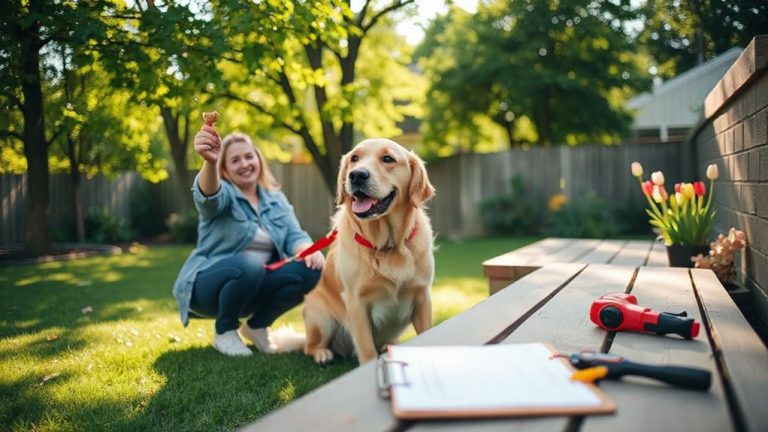
A consistent eye examination routine can detect early signs of ocular disease before irreversible damage occurs. Perform checks weekly using a well-lit area and a handheld magnifying lens with at least 3x magnification. Begin by gently retracting the lower eyelid to inspect the conjunctiva and sclera for redness, discharge, or opacity. Routine consistency guarantees familiarity with your pet’s baseline eye health, improving early anomaly detection. Use positive reinforcement-such as verbal praise or a small treat-to create a stress-free experience, increasing cooperation over time. Examine corneal clarity by shining a penlight at a 45-degree angle; a healthy cornea reflects light uniformly without cloudiness. Note any excessive tearing, squinting, or pigment changes. Repeat examinations at the same time each week to reinforce behavioral predictability. Proper technique combined with positive reinforcement enhances compliance. Record observations in a pet health log to track changes and support veterinary assessments.
On a final note
You should check your pet’s eyes every time you clean their face. This routine helps detect changes early. Normal eyes are clear, bright, and free of discharge. Look for redness, cloudiness, or excessive tearing. Swelling, squinting, or colored discharge indicate trouble. Use a soft, damp cloth to wipe gently from inner to outer corner. Catch problems early to prevent vision loss or infection spread. See your vet promptly if symptoms persist.