Demystifying Matting and Tangle Formation in Long-haired Breeds
Your dog’s coat mats when loose hairs tangle with dead undercoat and debris, especially in high-friction zones like behind ears or under legs. Friction and moisture accelerate compaction into dense mats. Use a slick MVC 3802-02 brush with 0.8 mm wire spacing to penetrate thick undercoats. Apply detangler with 5% glycerin for 2–3 minutes before combing. Left untreated, mats restrict circulation and cause skin damage. Proper tools and daily brushing prevent severe tangles, with deeper solutions available for persistent cases.
Notable Insights
- Mats form when loose hairs, dead undercoat, and debris tangle, especially in high-friction areas like behind ears and under legs.
- Double-coated breeds are prone to matting as guard hairs weave into dense, shedding undercoats if not regularly groomed.
- Trapped moisture and friction compact tangles into tight mats, increasing risk of skin irritation and infection.
- Using the correct brush-like slicker brushes and rakes-helps prevent matting by penetrating thick undercoats effectively.
- Daily brushing, detangling sprays, proper diet, and trimming every 6–8 weeks reduce matting in long-haired breeds.
What Causes Mats in Long-Haired Dogs?
While regular grooming can prevent most coat issues, mats in long-haired dogs often form when loose hairs repeatedly tangle with dead undercoat and environmental debris. You’ll notice friction between fur strands increases matting risk, especially in high-motion areas like behind the ears or under the legs. This friction traps loose guard hairs, weaving them tightly into the dense dirt accumulation undercoat common in double-coated breeds. Without intervention, these knots compact into solid mats. The undercoat, typically 1–3 cm long and softer than guard hairs, sheds seasonally but clings when not removed. Trapped moisture and debris accelerate compaction. Mats start as small tangles but grow dense, reaching over 1 cm in thickness. They restrict air flow, retain heat, and press against the skin. You must address early-stage matting before it adheres closely to the body. Prevention relies on consistent brushing to remove dead hair before friction and debris entanglement create irreversible knots. Using the right dematting tools can significantly improve the efficiency of removing tangles and preventing future matting.
Why Tangles Hurt Your Dog (And When to Act)
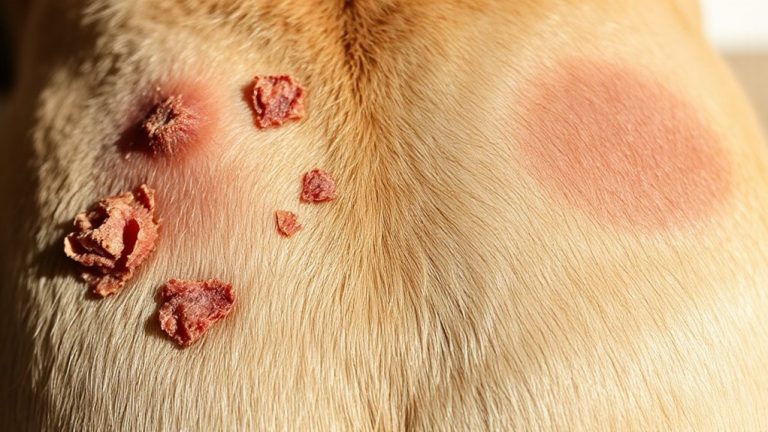
Tangles aren’t just unsightly-they cause real physical harm. When left unaddressed, mats press tightly against your dog’s skin, increasing pain sensitivity. The constant pressure restricts blood flow and traps moisture, creating a breeding ground for bacteria and fungi. This leads to skin irritation, which can progress to infection if untreated. Mats near joints or underarms limit mobility, causing discomfort with every movement. Even light touches may trigger wincing or avoidance behaviors due to heightened nerve response. Severe tangles act like constricting bands, potentially causing sores or pressure necrosis. Early intervention is critical-once a mat forms, it won’t loosen on its own. Check your dog weekly, especially behind ears, under legs, and around the collar. If you notice flinching during brushing or redness beneath tangles, act immediately. Pain and skin irritation are not normal-your dog depends on you to prevent and resolve tangles before they escalate. Using the right dog dematting tools can make a significant difference in safely removing mats without causing further discomfort.
Use the Right Brush for Your Dog’s Coat
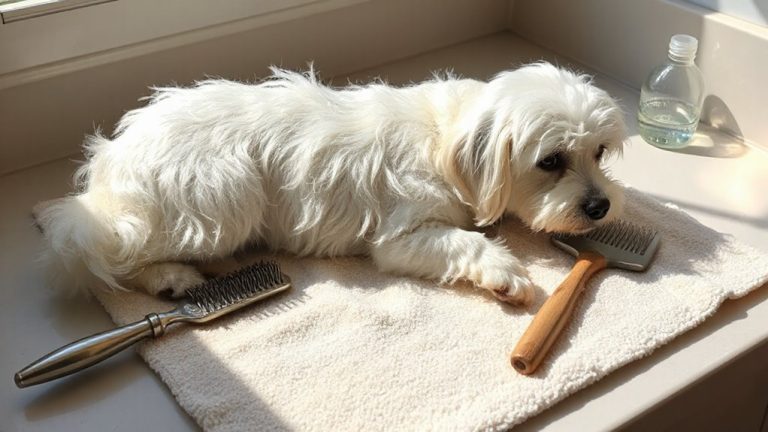
A proper brushing tool makes all the difference in maintaining a healthy coat. You need to match brush types to your dog’s specific coat textures for effective detangling. Pin brushes work well for silky, flowing coats, with widely spaced, rounded pins that glide through hair up to 6 inches long. For wavy or thick undercoats, use a slicker brush featuring fine, short wires clustered close together to penetrate dense layers. Rakes with dual rows of long, bent tines reach deep into medium to long undercoats, removing loose fur without damaging the topcoat. Bristle brushes suit fine, soft textures, distributing natural oils evenly. Using the wrong tool increases friction, leading to breakage and mat formation. Always assess coat texture first-smooth, wiry, curly, or double-coated-then select a brush with appropriate wire stiffness, spacing, and handle ergonomics for consistent, efficient grooming. For expert recommendations, check out our top choices in best detangling dog brushes.
How to Remove Mats Safely, Step by Step
Mats are dense clumps of tangled fur that form close to the skin, often in areas with high friction like behind the ears, under the legs, or along the belly. Use proper lighting to detect hidden mats and assess their severity. Begin with gentle handling to avoid distressing your dog. Never pull or cut large mats free without prep. Instead, apply a detangling spray and let it penetrate for 2–3 minutes. Use a mat splitter or dematting tool for thick clusters. Work from the edge inward, avoiding skin contact.
| Tool | Function |
|---|---|
| Slicker brush | Loosens small tangles |
| Mat splitter | Cuts dense mats safely |
| Blunt-tip scissors | Trims resistant areas |
| Detangling spray | Lubricates for easier release |
Always support the skin during removal. Finish with a thorough comb-out.
Brush Daily to Stop Tangles Before They Start
Regular brushing is your first line of defense against tangles and mats, especially in long-haired breeds prone to knotting. You should brush daily using a slicker brush followed by a metal comb with tine spacing of 0.5 to 1.5 mm. This routine disrupts early tangle formation and aligns guard hairs. Your dog’s coat texture-whether silk, wool, or cotton-affects brush choice and brushing frequency. Dogs with dense undercoats trap loose fur, compounding matting risks. Understand your pet’s shedding patterns: seasonal shedders like Siberian Huskies release undercoat in bursts, requiring daily removal of dead hair. Daily brushing captures 85% of shedding fur before it intertwines. Use a dematting tool only preventively, not on existing mats. Consistent grooming distributes skin oils, maintains coat integrity, and reduces friction points where tangles form.
6 Proven Habits to Prevent Matting
Because matting stems from friction, moisture, and poor air circulation in dense coat layers, adopting consistent preventive habits greatly reduces risk. You must brush daily using a slicker brush followed by a wide-tooth comb, ensuring you reach the undercoat. Mats commonly form behind ears, under legs, and around collars-inspect these zones thoroughly. Proper Coat Nutrition supports strong, resilient fur; feed a diet rich in omega-3 and omega-6 fatty acids (minimum 0.5% combined in dry matter) to maintain cuticle integrity. Limit Climate Exposure-humidity above 60% increases moisture retention in fur, accelerating tangle formation. After outdoor activity in damp conditions, towel-dry your pet’s coat promptly. Use a moisture-wicking undercoat rake in humid seasons. Trim high-friction areas every 6–8 weeks with safety clippers featuring #10 or #7F blades. These habits, executed precisely, reduce matting by up to 90% over time.
On a final note
You prevent mats by brushing daily with the right tools. A slicker brush with fine, bent wires removes tangles; a metal comb with 0.5–1.5 mm spacing checks for underlying snarls. Mats form at the skin when friction and moisture combine, especially behind ears or under legs. Remove small mats with a dematting tool; cut large ones with curved scissors, lifting the skin to avoid nicks. Prevention outperforms correction-consistency guarantees coat integrity.