Designing a Weight-Loss Plan for Senior Dogs With Reduced Activity Levels
Your senior dog’s metabolism slows by 20–30%, so switch to a high-protein, low-calorie diet with named animal sources like chicken meal. Aim for under 300 kcal/cup to support muscle without adding fat. Feed 20% fewer calories than adult maintenance-about 700–900 kcal/day for a 50-pound dog-measured precisely in 8-oz cups. Split meals and exercise into two daily sessions, starting with 10-minute leash walks on soft surfaces. Monitor body condition every week using the 9-point scale; adjust as needed if ribs aren’t easily felt. You’ll soon discover how targeted changes improve long-term mobility and health.
Notable Insights
- Adjust caloric intake by reducing adult maintenance calories by 20% based on ideal body weight, not current weight.
- Feed high-protein, low-calorie senior dog food with named animal sources to preserve muscle mass.
- Measure portions accurately using an 8-oz cup and divide daily food into two scheduled meals.
- Implement low-impact exercise like two 15-minute leash walks on soft surfaces daily.
- Monitor progress weekly with body condition scoring and track mobility changes daily.
Why Senior Dogs Gain Weight (And What to Do)
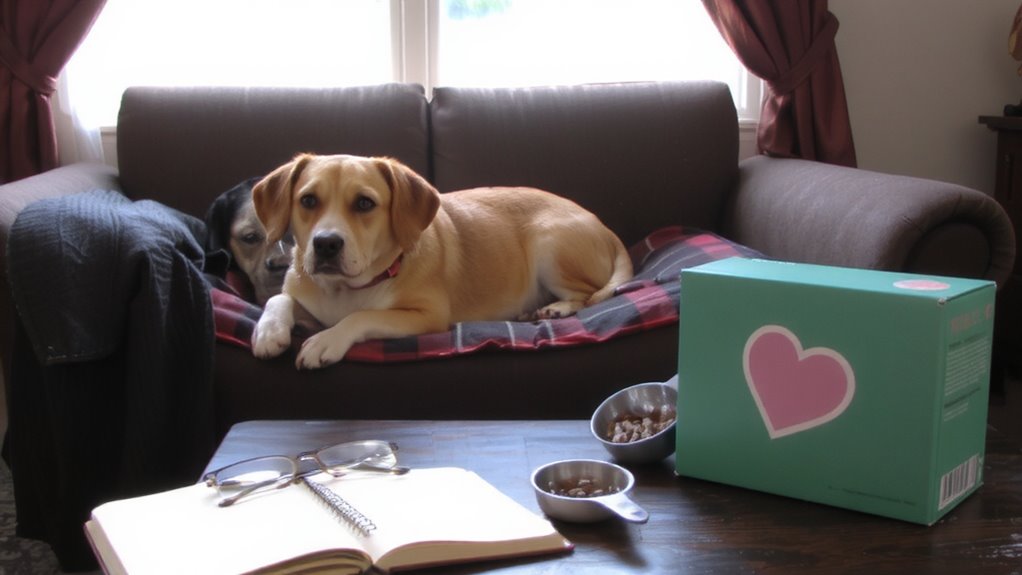
While aging naturally slows your dog’s metabolism, it doesn’t mean weight gain is inevitable. Metabolic slowdown reduces caloric needs by 20–30% in senior dogs, meaning even slight overfeeding leads to fat accumulation. You must adjust portions accordingly-typically 10–20% less than adult maintenance intake. Joint pain from osteoarthritis affects 80% of dogs over eight years, limiting mobility and further decreasing energy expenditure. Reduced activity amplifies fat storage, creating a cycle of weight gain and worsening mobility. You should assess body condition score monthly using a 9-point scale; ideal is 4–5. If ribs are not easily palpable under light pressure, calorie reduction is necessary. Implement structured, low-impact exercise like 10-minute leash walks twice daily. These steps counteract metabolic and musculoskeletal decline without straining compromised joints. Adding a high-quality glucosamine supplement can further support joint function and improve mobility in senior dogs.
Pick a High-Protein, Low-Calorie Senior Dog Food
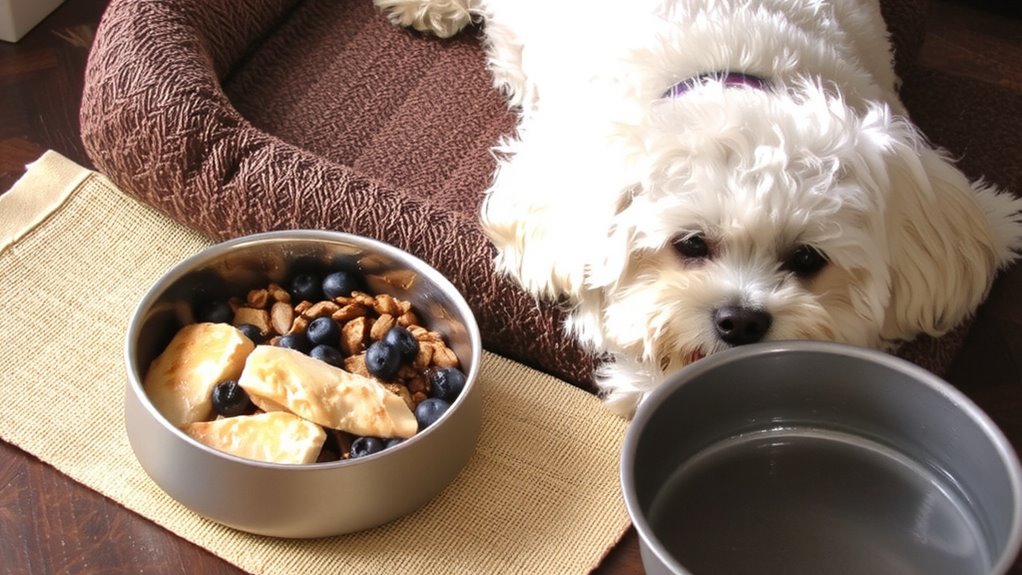
Because your senior dog’s metabolism has slowed and muscle mass tends to decline with age, choosing the right nutrition is critical for maintaining a healthy weight. Opt for a high-protein, low-calorie senior dog food to preserve lean muscle while managing intake. Prioritize protein quality by selecting formulas with named animal sources like chicken meal or fish meal listed first, ensuring digestibility and essential amino acid content. These proteins support muscle synthesis without excess fat gain. Choose foods with low calorie density-ideally under 300 kcal per cup-to limit energy intake without reducing meal volume markedly. This helps prevent hunger between meals. Commercial options labeled “light” or “senior weight management” often meet these criteria, with protein levels around 25–30% on a dry matter basis and fat content below 12%. Always verify nutrient profiles through guaranteed analysis.
Feed the Right Amount: Portion Control Made Simple
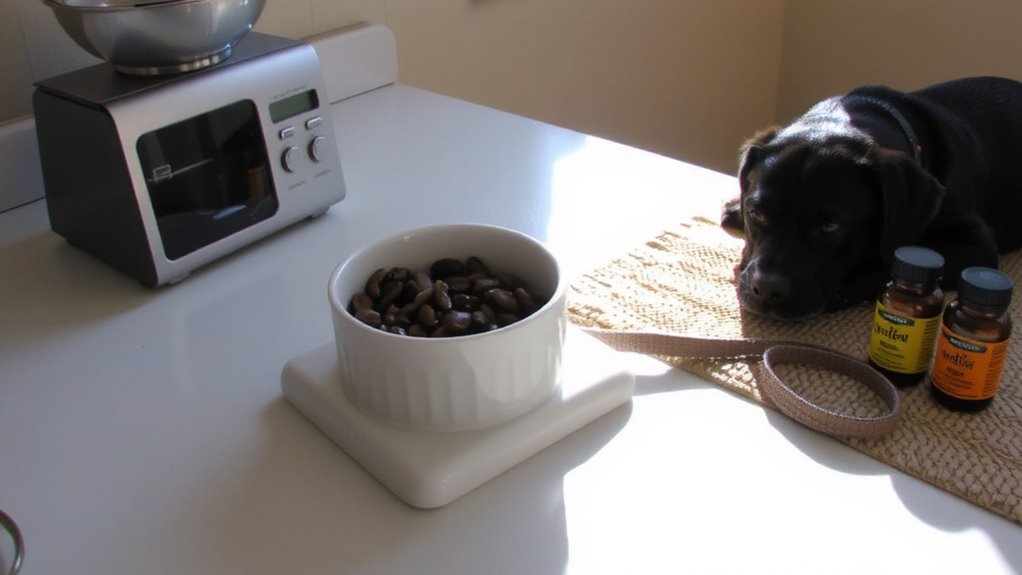
Most dogs need fewer calories as they age, and feeding the right amount is essential to prevent excess weight gain. You should base portion sizes on your dog’s ideal body weight, not current weight, to support gradual fat loss. Use calorie counting to track intake accurately-many senior dog foods list metabolizable energy (kcal/cup) on the label. As a general rule, reduce daily caloric intake by 20% from maintenance levels. For example, a 50-pound dog at ideal weight needs roughly 700–900 kcal/day, depending on activity. Measure food with a standard 8-oz measuring cup to guarantee precision. Free-choice feeding increases risk of overconsumption. Divide daily portions into two meals to regulate metabolism. Adjust portion sizes every four weeks based on weight loss of 1–2% of body weight per week. Consistent calorie counting guarantees you stay within target ranges without guesswork.
Start a Safe Exercise Routine for Older Dogs
If your senior dog has been cleared by a veterinarian for physical activity, beginning a structured exercise routine can support joint health, cardiovascular function, and weight management. Start with gentle walking for 10 to 15 minutes daily, gradually increasing to 30 minutes total, split into two sessions. Controlled leash walks reduce joint stress while improving circulation. Use supportive harnesses to enhance joint support, especially for arthritic dogs. Avoid high-impact activities like jumping or sprinting. Monitor gait and stride length-uneven steps may indicate pain. Ideal surface types include packed dirt or rubberized paths, which reduce limb loading by up to 25% compared to concrete. Maintain a heart rate of 70–100 bpm, below 60% of maximum capacity. Consistent activity increases synovial fluid production by 18%, aiding cartilage nutrition. Adjust duration, not intensity, to prevent fatigue.
Track Progress Beyond the Scale
Your senior dog’s progress shouldn’t rely solely on the numbers shown on a scale. Weight is just one indicator. More telling signs include body condition and mobility changes. Use these markers weekly to assess improvement.
| Observation | Frequency |
|---|---|
| Body condition score (1–9 scale) | Weekly |
| Ease rising from lying position | Daily |
| Stair navigation ability | Every other day |
| Play engagement duration | Weekly |
A decreasing body condition score toward ideal range (4–5) indicates fat loss. Improved mobility changes-like quicker rise times or sustained walking-signal musculoskeletal benefits. Monitor stance symmetry and gait cadence. Note reluctance to jump or limb favoring. These performance metrics offer objective feedback. Combine with visual assessments: you should feel, but not prominently see, ribs; waist should be visible from above. Consistent logs help detect trends before weight shifts appear. Accurate tracking guarantees you’re addressing health, not just pounds.
Know When to Adjust (And Call the Vet)
Consistent tracking reveals patterns that guide next steps in your senior dog’s weight-loss journey. If weight loss stalls for more than two weeks despite dietary compliance, reassess caloric intake and activity levels. Sudden weight gain or lethargy may signal underlying issues like joint pain or medication side effects. Chronic joint pain reduces mobility, slowing calorie expenditure and hindering progress. Monitor for stiffness, reluctance to move, or yelping during activity-early signs of discomfort. Some medications, such as corticosteroids, cause increased appetite and fluid retention, counteracting weight-loss efforts. Review all prescriptions with your vet. Adjustments may include switching to joint-supportive formulations like glucosamine-chondroitin supplements or modifying dosage. If diet, exercise, and tracking aren’t delivering results, consult your veterinarian. Bloodwork and physical exams can identify metabolic imbalances or medication-related complications. Timely intervention guarantees safe, effective weight management tailored to your senior dog’s physiological needs. Incorporating high-quality dog joint supplements can support mobility and comfort during weight loss.
On a final note
You can manage your senior dog’s weight effectively with targeted nutrition and activity. Feed a high-protein, low-calorie diet containing at least 25% crude protein and fewer than 300 kcal per cup. Measure portions precisely-use a digital scale or 8-oz measuring cup daily. Implement low-impact exercise: 15-minute leash walks twice daily reduce joint stress. Monitor body condition score monthly. Adjust only with veterinary guidance.