Support Feeding Convalescing Pets Using Syringes Without Aspiration Risks
Use a 3–10 mL oral syringe and feed at 0.25–0.5 mL per 1–2 seconds to match your pet’s swallowing reflex. Position them upright, head level with shoulders, to align the esophagus and reduce aspiration risk. Offer a veterinary liquid diet at 1.0–1.2 kcal/mL with a heavy cream-like consistency. Watch for coughing or labored breathing-early signs of aspiration. Keep sessions under 20 minutes in a quiet space to limit stress. Proper technique and monitoring guarantee safer recovery support. More critical safety steps follow.
Notable Insights
- Use a 3–10 mL oral syringe and feed slowly at 0.25–0.5 mL per 1–2 seconds to prevent choking.
- Position the pet upright with head aligned to shoulders to promote safe swallowing and reduce aspiration risk.
- Administer only veterinarian-approved liquid or pureed diets with a heavy cream-like consistency for safe delivery.
- Watch for coughing, gagging, or labored breathing during feeding-stop immediately if signs occur.
- Feed in a calm, quiet space and limit sessions to 10–20 minutes to reduce stress and fatigue.
How to Syringe Feed Your Pet Safely
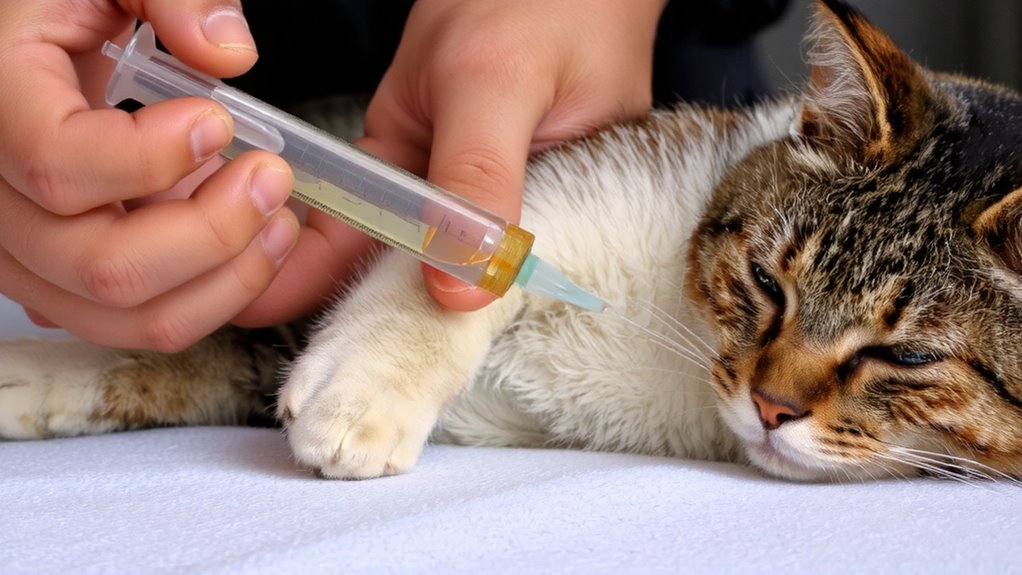
While your pet may resist eating due to illness or recovery, syringe feeding can guarantee they receive necessary nutrition. Proper technique minimizes aspiration risks. Use a 3–10 mL oral syringe as your primary feeding tool, depending on pet size-smaller animals require precise volume control. Avoid Luer-lock types; they’re designed for injections, not feeding. Position your pet upright, head level with the shoulders, to align the esophagus and reduce inhalation risk. Insert the syringe tip gently at the side of the mouth, between cheek and teeth. Dispense food slowly-0.25 to 0.5 mL per 1–2 seconds-to allow swallowing. Monitor pet behavior closely: stress signals like head shaking or pawing indicate discomfort. Pause if coughing occurs. Never force feed. Consistent use of correct feeding tools and calm handling increases compliance. Administer prescribed volumes per veterinary guidelines to maintain caloric intake without overdistension.
Choose the Right Food for Syringe Feeding
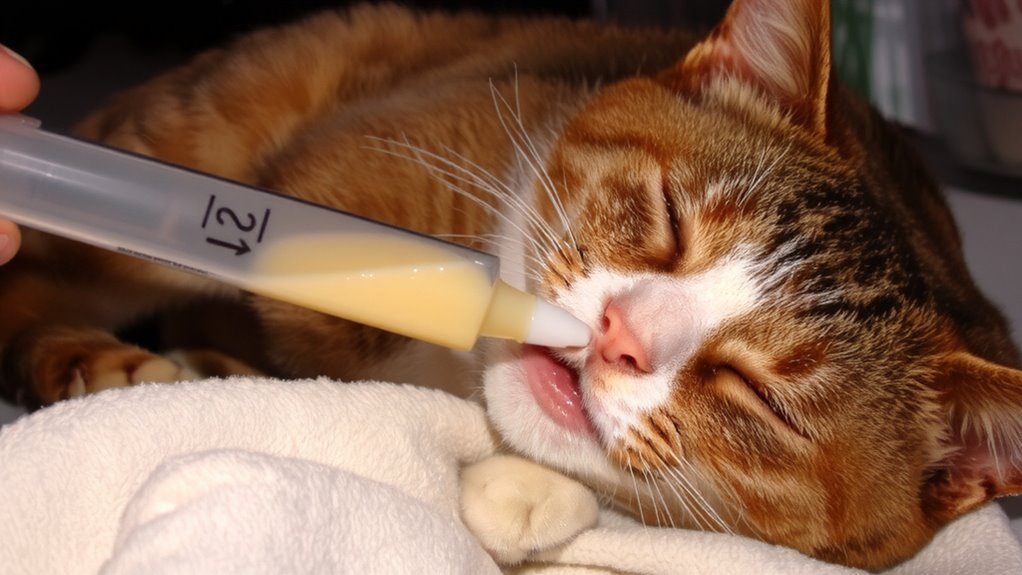
The right food makes all the difference when syringe feeding your pet. You need proper nutritional balance and ideal food consistency to prevent complications. Homemade blends and commercial liquid diets are common, but not all meet your pet’s metabolic needs. Always consult your vet to match the formula to your pet’s condition.
| Food Type | Caloric Density (kcal/ml) | Recommended Use |
|---|---|---|
| Veterinary liquid diet | 1.0–1.2 | Recovery, precise nutrition |
| Pureed wet food | ~0.8–1.0 | Short-term feeding |
| Blended homemade | Variable | Only with vet approval |
| Water-diluted formula | <0.8 | Hydration support only |
Thick mixes resist flow; too thin lacks nutrients. Aim for a smooth, pourable texture like heavy cream. Consistency affects delivery speed and aspiration risk. Never compromise nutritional balance for ease of use. Use only sieved, lump-free preparations.
Spot the Signs of Aspiration Immediately
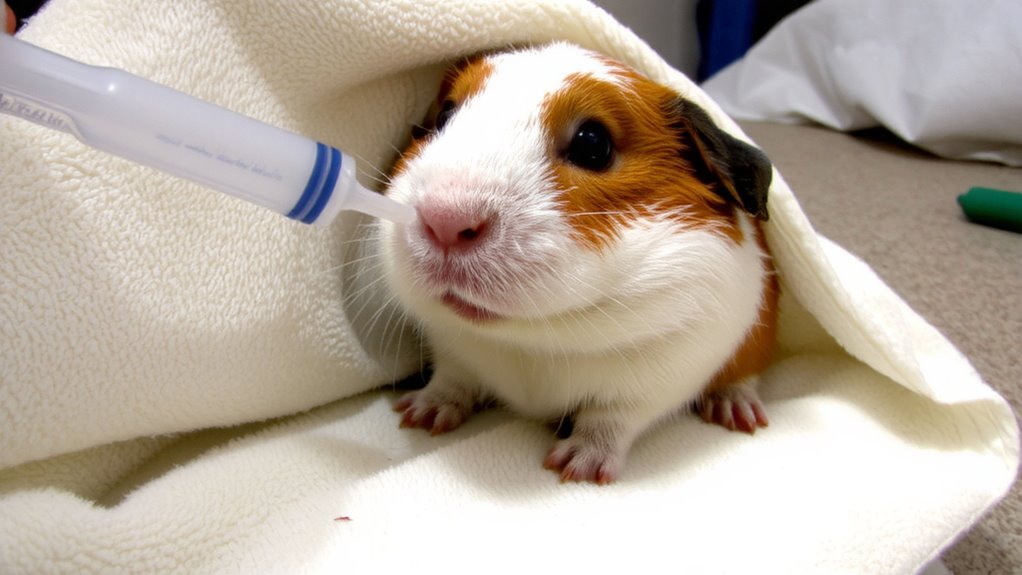
You’ve chosen the right food for syringe feeding, but even a perfect formula can cause serious problems if it enters the lungs instead of the stomach. Aspiration symptoms include sudden coughing, gagging, labored breathing, or wheezing during or after feeding. Nasal discharge, cyanosis (blue-tinged gums), or rapid heart rate may follow. These signs indicate misplaced food in the airway. An immediate response is critical-stop feeding instantly. Withdraw the syringe and hold your pet upright to minimize inhalation. Observe closely for continued distress, which may progress to pneumonia. Aspiration can occur silently, with subtle signs like lethargy or decreased oxygen saturation. Use slow, controlled boluses of 1–2 mL at a time, allowing full swallows. Keep your pet’s head level with the spine during feeding. Early recognition and precise technique reduce risks markedly. Always consult a veterinarian if aspiration symptoms appear.
Calm Your Pet for Stress-Free Feeding
If your pet resists syringe feeding, reducing stress starts with creating a quiet, familiar environment. Pet comfort is essential for effective nutritional support. Choose a low-noise area, free from foot traffic or sudden movements. Use a soft blanket or familiar bedding to simulate a secure space. Begin each feeding routine at consistent times daily to build predictability. Most pets adapt within 3–5 days when timing and location remain stable. Hold your pet gently but securely, supporting the chest, not the neck. Aim the syringe at the back of the cheek pouch, not directly into the throat, to minimize distress. Deliver food at 1–2 ml per second to allow swallowing. A 10–20 minute feeding window reduces fatigue. Proper pet comfort improves compliance and supports recovery efficiency. Incorporating top anti-stress products can further ease anxiety during feeding sessions.
Know When to Call the Vet During Recovery
Why might your pet’s recovery take a sudden turn for the worse? Sudden declines can stem from infection, dehydration, or undiagnosed internal issues. Recognizing emergency symptoms early improves outcomes. Watch closely during recovery-subtle changes can signal serious complications. If you notice any of the following, seek immediate veterinary consultation.
| Sign | What It Might Mean |
|---|---|
| Pale gums | Anemia or poor circulation |
| Labored breathing | Respiratory distress |
| Persistent vomiting | Internal blockage or toxicity |
| Lethargy unresponsive to stimuli | Neurological or systemic failure |
| Refusal to eat for 24+ hours | Risk of hepatic lipidosis in cats |
Emergency symptoms like these require urgent care. Delaying veterinary consultation can compromise organ function. Monitor temperature, heart rate, and hydration daily. Use a rectal thermometer for accuracy-normal range is 100.5–102.5°F. Prompt intervention saves lives.
Prevent Aspiration With Safe Feeding Practices
When delivering nutrition to a recovering pet via syringe, maintaining proper head and neck alignment is critical to reduce the risk of aspiration. Keep your pet in an upright feeding posture-their head should be level with or slightly above the shoulders. This alignment helps guide food into the esophagus and minimizes airway exposure. Use a slow, controlled delivery method by advancing the syringe plunger steadily. Administer no more than 1 milliliter per minute for every 5 pounds of body weight. Position the syringe at a 90-degree angle to the mouth, not pointed toward the cheek or throat, to avoid triggering gag reflexes. Never force feed. Let swallowing occur naturally between small boluses. Proper syringe angle and feeding posture collectively reduce aspiration risks. Monitor for coughing, nasal discharge, or distress-these signal possible complications. Consistency and patience are essential. Safety hinges on technique, not speed.
On a final note
You must prioritize safety during syringe feeding. Use liquid or gruel-form food with a viscosity of 50–150 mPa·s to guarantee smooth delivery. Administer 1–5 ml per squeeze, depending on pet size, to prevent choking. Keep the syringe tip angled toward the cheek, not the throat. Watch for coughing or nasal discharge-signs of aspiration. Maintain an upright feeding position, mimicking gravity-assisted digestion. If distress occurs, stop immediately and assess.