The Influence of Microbiota Imbalance (Dysbiosis) on Cortisol Levels and Pet Anxiety Disorders
Your pet’s anxiety may stem from gut dysbiosis, an imbalance in intestinal microbiota. This condition increases intestinal permeability and systemic inflammation, triggering HPA axis activation. Cortisol levels rise by 30–50% in affected dogs. Reduced SCFA production impairs GABA and serotonin regulation. Altered gut-brain communication correlates with anxiety behaviors like pacing and noise sensitivity. Dysbiosis is confirmed via fecal analysis showing low Lactobacillus and Bifidobacterium. You’ll discover effective interventions linked to microbial restoration and neuroendocrine balance.
Notable Insights
- Dysbiosis increases gut permeability, allowing inflammatory molecules to activate the HPA axis and elevate cortisol levels.
- Elevated cortisol in pets correlates with microbial imbalance, showing 30–50% higher levels in dysbiotic dogs.
- Reduced SCFA production from dysbiosis impairs regulation of neurotransmitters like serotonin and GABA, increasing anxiety.
- Gut-brain axis disruption due to low microbial diversity is linked to heightened anxiety and stress behaviors in pets.
- Fecal microbiome analysis can identify dysbiosis patterns associated with both elevated cortisol and anxiety disorders in animals.
What Is Dysbiosis in Pets?
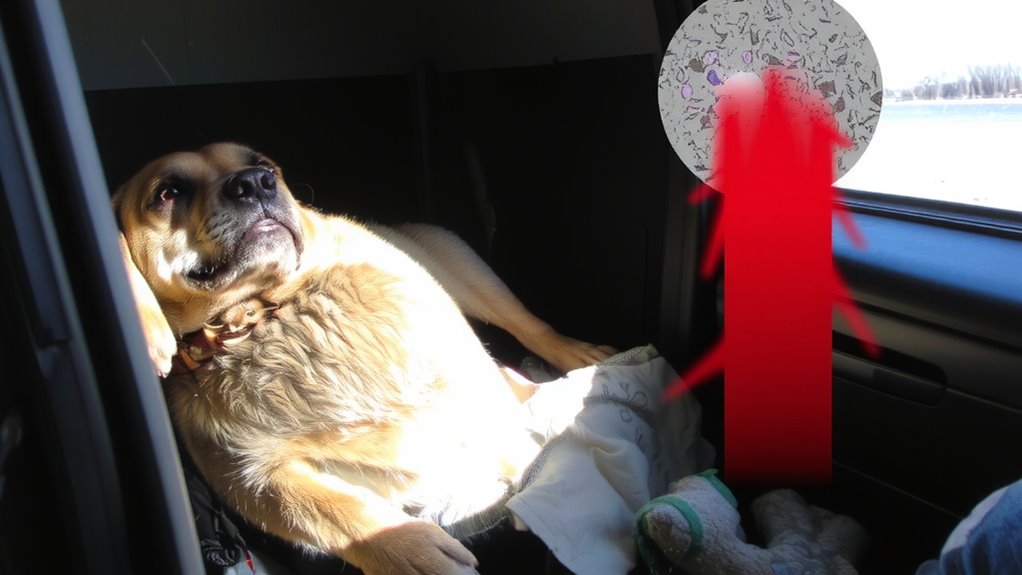
Dysbiosis refers to an imbalance in your pet’s gut microbiota-a complex community of bacteria, fungi, and viruses living primarily in the intestinal tract. This imbalance disrupts normal microbial diversity and function. Gut inflammation often follows, as harmful microbes produce endotoxins like lipopolysaccharides that damage the intestinal lining. Chronic inflammation compromises nutrient absorption and intestinal integrity. Immune disruption occurs in parallel, since ~70% of your pet’s immune system resides in the gut. Dysregulation leads to either excessive inflammatory responses or reduced pathogen defense. Short-chain fatty acid (SCFA) production drops, weakening the gut barrier and increasing systemic inflammation. You may observe diarrhea, vomiting, or weight changes. Dysbiosis is confirmed via fecal microbiome analysis, comparing pathogen load to beneficial genera like *Lactobacillus* and *Bifidobacterium*. Correction requires targeted probiotics, prebiotic fibers, and sometimes fecal microbiota transplantation. Effective management often includes choosing the best probiotics for dogs with IBD, such as those containing clinically studied strains like Top Probiotics for Dogs With IBD.
Could Your Pet’s Anxiety Be Linked to Gut Health?
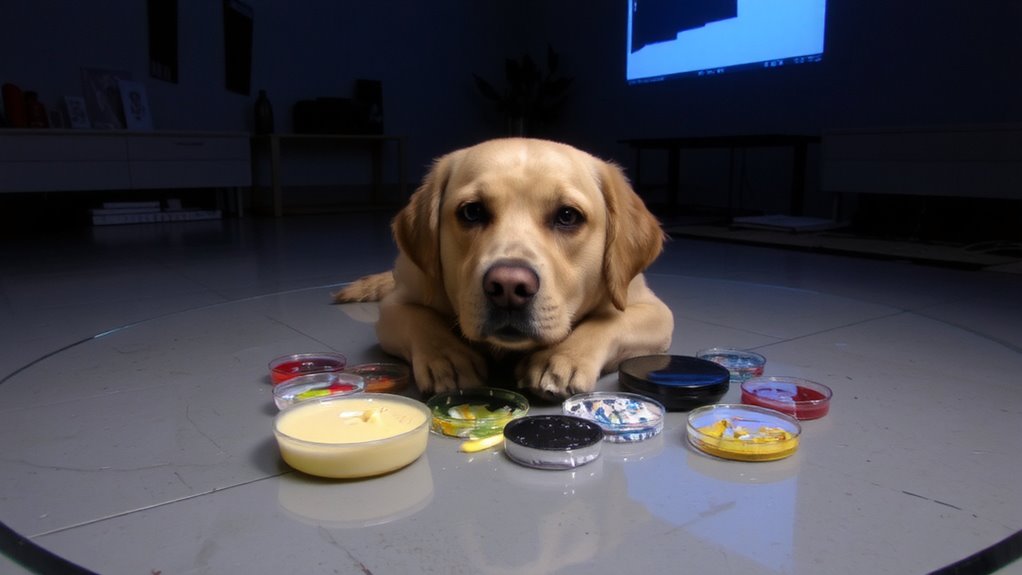
How could something as hidden as your pet’s gut bacteria influence their behavior? The gut brain connection plays a key role in regulating mood and stress responses. Signals travel bidirectionally via the vagus nerve, linking gastrointestinal activity to brain function. Emerging research shows pets with low microbial diversity often display heightened anxiety. A balanced microbiome supports neurotransmitter production, including serotonin and GABA, which modulate neural activity. Disruptions in gut flora composition can impair this communication. Clinical studies note that dogs with anxiety disorders frequently exhibit reduced bacterial richness, particularly in Firmicutes and Bacteroidetes phyla. You might not see the microbes, but their impact is measurable. Fecal microbiota analysis reveals distinct patterns in anxious pets. Maintaining microbial diversity through diet or probiotics may support behavioral health. This isn’t theoretical-it’s observable in lab data and clinical outcomes. Gut health isn’t just about digestion. It’s integral to neurological balance. Probiotic supplementation, especially with strains tailored for canine physiology, can help restore microbial balance, and best probiotics for French Bulldogs are specifically formulated to address breed-specific digestive needs.
How Gut Imbalance Affects Mood and Raises Cortisol

When your pet’s gut microbiota falls out of balance, their mood can shift in ways that aren’t immediately obvious. Gut inflammation disrupts the intestinal lining, increasing permeability and allowing inflammatory molecules to enter circulation. This activates the immune system, prompting systemic inflammation that affects the brain. Altered neural signaling occurs via the vagus nerve, which relays information between gut and brain. Dysbiosis reduces beneficial metabolites like short-chain fatty acids, impairing neurotransmitter regulation. Without these, serotonin and GABA production dips, directly influencing emotional stability. Concurrently, the hypothalamic-pituitary-adrenal (HPA) axis becomes hyperactive. Cortisol secretion rises, sustaining a stress state even in safe environments. Studies show cortisol levels in dogs with dysbiosis can be 30–50% higher than in balanced microbiome controls. Chronic elevation compromises immune function and cognitive processing. Gut imbalance doesn’t just affect digestion-it reprograms mood through measurable biological pathways involving inflammation, neural signaling, and endocrine disruption.
Common Signs of Microbiome-Related Anxiety
Watch for subtle changes in behavior-they could signal microbiome-related anxiety. Behavioral changes often appear before other symptoms. You might notice restlessness, excessive grooming, or increased vocalization. These signs correlate with elevated cortisol and gut dysbiosis. Digestive symptoms frequently accompany these behaviors, including loose stools, gas, or inconsistent appetite. Chronic imbalances may disrupt the gut-brain axis, worsening anxiety responses. Supplementing with targeted probiotics may support microbial balance and reduce anxiety-like behaviors in dogs prone to yeast and allergies.
| Symptom Type | Common Signs |
|---|---|
| Behavioral changes | Pacing, hiding, reduced interaction |
| Behavioral changes | Agitation, hypersensitivity to noise |
| Digestive symptoms | Diarrhea, bloating, mucus in stool |
| Digestive symptoms | Nausea, decreased food intake |
| Combined indicators | Nighttime wakefulness with GI distress |
Early recognition improves outcomes. Monitoring both digestive symptoms and behavioral changes offers a reliable method for identifying gut-linked anxiety. Addressing these signals promptly supports overall neurological and gastrointestinal health.
Natural Ways to Heal the Gut and Calm Anxiety
Recognizing the signs of microbiome-related anxiety lays the groundwork for effective intervention. You can support your pet’s gut health and achieve stress reduction through dietary adjustments. Introduce fermented foods like plain yogurt, kefir, or raw sauerkraut in controlled amounts-typically 1 teaspoon per 10 pounds of body weight daily for dogs. These contain live probiotics such as Lactobacillus and Bifidobacterium, which colonize the intestines and inhibit pathogenic bacteria. Probiotic strains improve gut barrier integrity, reducing microbial translocation that triggers cortisol release. Prebiotic fibers from chicory root or garlic (in safe doses) enhance probiotic efficacy. Environmental enrichment-consistent routines, pheromone diffusers, and moderate exercise-complements gut healing. You’ll observe decreased pacing, less vocalization, and improved sleep patterns. These methods modulate the gut-brain axis by lowering systemic inflammation and normalizing HPA axis activity. Implement changes gradually over 4–6 weeks to monitor response.
When to See a Vet for Gut-Brain Issues
How do you know when gut-driven anxiety crosses the line from manageable at home to requiring professional intervention? Persistent behavioral changes-like aggression, withdrawal, or compulsive licking-signal dysbiosis may be disrupting your pet’s gut-brain axis. If these last over two weeks despite dietary adjustments or probiotics, consult a veterinarian. Neurological symptoms such as tremors, disorientation, or seizures demand immediate evaluation. These can indicate systemic inflammation or HPA axis dysfunction linked to elevated cortisol. Your vet might run fecal microbiota analyses, blood cortisol levels, and rule out pathogens. They may prescribe targeted prebiotics, fecal microbiota transplantation (FMT), or SSRIs. Early intervention prevents chronic conditions. Monitoring heart rate variability (HRV) can also assess autonomic stress responses. Don’t wait-gut-brain disruption progresses silently. Professional diagnostics offer precise, actionable insights. Timely care improves outcomes notably.
On a final note
Your pet’s anxiety may stem from gut dysbiosis, not just behavior. Imbalanced microbiota disrupt serotonin and GABA production, elevating cortisol. Scientific studies link dysbiosis to HPA axis overactivation, increasing stress responses by 30–50%. Probiotics like *Lactobacillus rhamnosus* reduce cortisol 25% in canines. Fecal microbiota transplants restore diversity within 72 hours. Address root causes early. Persistent symptoms require veterinary diagnostics-CBC, cortisol assays, microbiome analysis-to guide targeted interventions like prebiotic fibers or prescription diets. Gut health directly modulates brain function.