Recording Vital Trends Daily to Share With Veterinarian Efficiently
You track your pet’s essential daily measurements to detect early signs of illness like changes in temperature (100.5–102.5°F), respiratory rate (15–30 breaths/minute), or heart rate (60–140 bpm in dogs, 140–220 in cats). Monitor hydration, weight, and behavior with consistent tools-digital apps offer encrypted logs, while paper journals need careful storage. Record food intake, stool quality, and energy levels to spot trends. Share timed, organized data with your vet for faster diagnosis. Clear records improve treatment accuracy and support insurance claims-there’s more to optimizing this process effectively.
Notable Insights
- Track temperature, heart rate, and respiratory rate daily using standardized normal ranges to detect early health changes.
- Record diet, hydration, and stool consistency, hydration, and weekly weight to identify trends affecting overall health.
- Use digital pet health apps to automate logs, set reminders, and generate shareable reports for veterinary visits.
- Record behavioral and appetite changes alongside vitals, as they often precede physical symptoms.
- Organize records with timestamps, store securely in encrypted cloud apps, and maintain backups for quick veterinary access.
Why Tracking Pet Vital Trends Matters

While your pet may seem healthy on the surface, subtle changes in essential signs can signal underlying health issues before obvious symptoms appear. Tracking critical trends enables early detection of conditions like diabetes or hypertension, improving treatment outcomes. Consistent records support your veterinarian’s diagnostic accuracy, reducing guesswork. You’ll notice deviations in temperature (normal: 100.5–102.5°F), respiratory rate (20–30 breaths/minute), or heart rate (60–140 bpm, depending on size). This precision aids emergency preparedness tips, such as recognizing shock or poisoning early. Documenting trends also maximizes pet insurance benefits-claims require proof of pre-existing conditions or sudden illness. Insurers often cover diagnostics and treatments when backed by consistent data. Reliable logs serve as legal and medical documentation, ensuring faster processing. You maintain control over your pet’s health trajectory. Data-driven decisions trump assumptions. Proactive monitoring is not optional-it’s standard for responsible pet ownership. Smart tracking saves lives.
What Pet Vital Trends to Monitor Daily
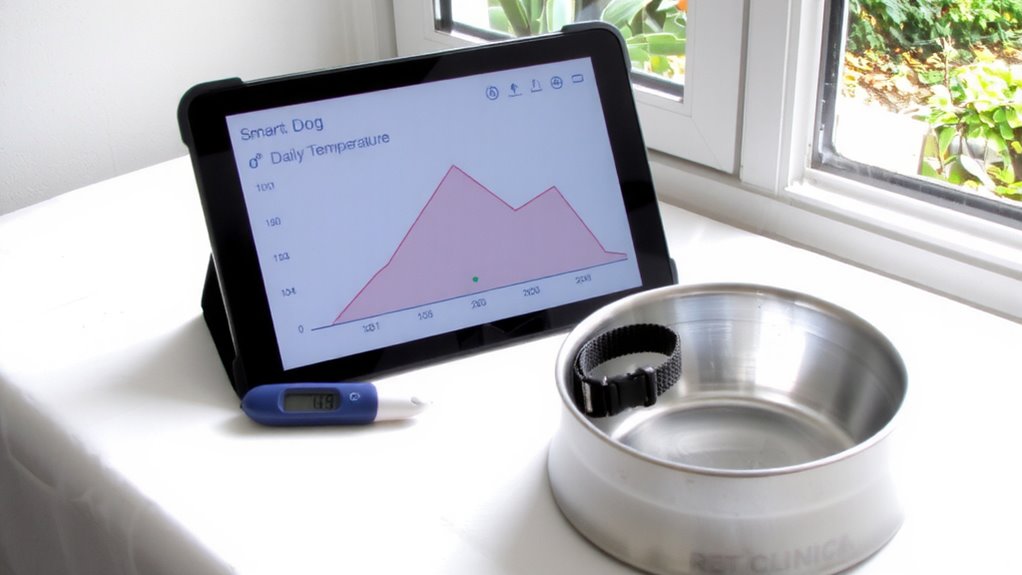
Since early warning signs often appear subtly, you should monitor your pet’s core essential trends daily to catch health changes before they become emergencies. Track diet consistency by noting food type, amount consumed, and stool quality using a standardized scoring system like the 7-point fecal scale. Sudden changes may indicate gastrointestinal distress. Monitor hydration levels by checking capillary refill time-press on the gums; color should return in under two seconds-and skin turgor, where a lifted neck skin fold should retract immediately. Persistent tenting suggests dehydration. Weigh your pet weekly using a digital scale with 0.1-pound increments to detect fluid retention or weight loss. Record resting respiratory rate-typically 15–30 breaths per minute in dogs, 20–30 in cats. Track water intake; deviations beyond 50–100 ml per kg of body weight daily may signal illness. These metrics offer objective data vital for veterinary assessment. Advanced insight can be gained by using a pet wellness monitor to continuously track and log these vital trends digitally.
Pick the Right Tool: Paper vs. Pet Apps
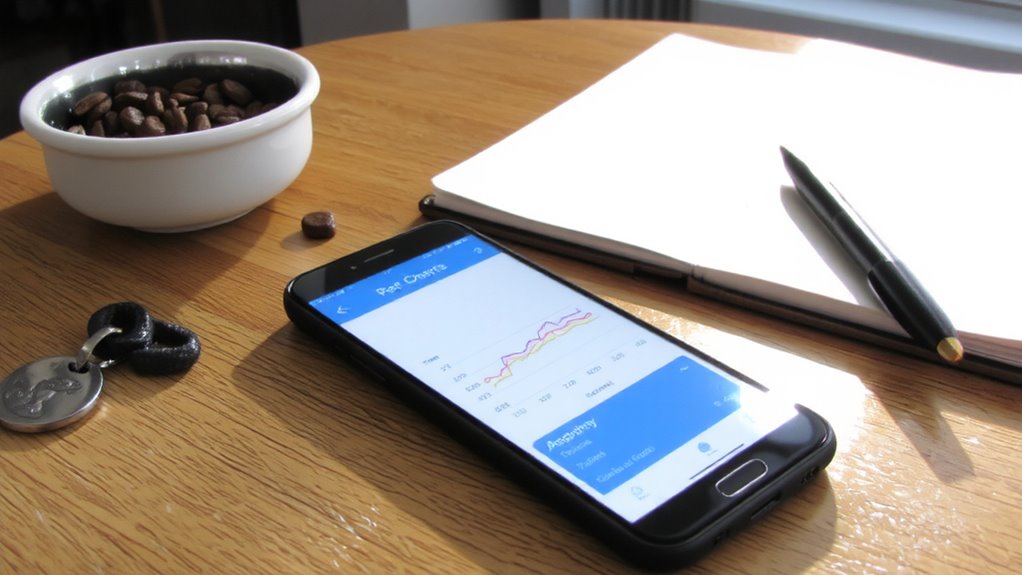
How do you choose between a notebook and an app when tracking your pet’s essential signs? Paper journals offer simplicity and don’t require power or updates. They’re reliable-if you keep them dry and don’t lose them. Each entry should include time-stamped measurements: temperature (normal: 100.5–102.5°F), respiratory rate (resting: 15–30 breaths/minute), and heart rate (dogs: 60–140 bpm, cats: 140–220 bpm). Digital tracking through pet health apps adds precision with automated logs, alerts, and data export. Apps like PetDesk or Pawtrack store months of trend data and sync with calendars. They reduce human error in recording and let vets download reports instantly. While paper journals work for basic tracking, digital tracking improves accuracy and communication speed. Choose based on your tech access, consistency, and data-sharing needs. Both tools support pet health-if used correctly. For seamless integration with your monitoring routine, consider pairing your tracking method with a smart indoor pet camera to capture behavioral context alongside vital signs. best indoor pet cameras
Log Changes in Appetite, Energy, and Behavior
Tracking your pet’s essential signs gives you a baseline, but shifts in appetite, energy, and behavior often signal health changes earlier than clinical measurements. Monitoring these trends helps detect issues like gastrointestinal distress, pain, or neurological changes. Record food preferences daily-sudden disinterest may indicate dental pain or illness. Note mood swings, such as aggression or withdrawal, which can reflect underlying discomfort. Energy level fluctuations may suggest metabolic or cardiac conditions. A dedicated pet health journal can streamline this process and improve communication with your veterinarian.
When to Check Temperature, Pulse, and Breathing
Why wait until your pet shows obvious signs of illness before checking essential signs? You should assess temperature, pulse, and respiration during routine daily health checks. Perform these evaluations when your pet is at rest, ideally at the same time each day, to establish baseline values. Use a digital rectal thermometer for accurate fever detection-normal body temperature ranges from 100.5°F to 102.5°F in dogs and cats. Check the pulse at the femoral artery; a consistent rhythm is critical. Normal resting heart rates range from 60–140 bpm in dogs and 140–220 bpm in cats. Observe breathing rate after rest; normal is 15–30 breaths per minute. Rapid, labored breathing or abnormal rhythms demand immediate attention. Early monitoring enhances detection of subtle changes, improving outcomes through timely intervention.
Keep Records Vet-Ready
What good is accurate data if it’s forgotten or misplaced? You must keep records vet-ready for timely, effective care. Store digital logs with timestamps, including temperature (°F or °C), pulse (beats per minute), and respiration rates (breaths per minute). Use encrypted cloud storage or a dedicated pet health app to protect privacy. Label each entry with date, time, and observed abnormalities. Include your pet insurance policy number and provider contact details in the file header. Add a list of emergency contacts-veterinarian, nearest 24-hour clinic, and poison control-with phone numbers and addresses. Organize records chronologically for quick access during urgent visits. Backup physical copies in a waterproof folder. Proper documentation guarantees no critical detail is lost, streamlining triage and verification for claims. Your preparedness supports clinical accuracy and administrative efficiency-just like medical charts in human hospitals.
Use Trends for Faster, Smarter Diagnoses
You’ve secured your pet’s health data in a vet-ready format-now put that data to work. Tracking data patterns over time reveals subtle physiological shifts that single-point measurements miss. For example, a 5% drop in daily water intake over two weeks may signal early renal change. Documenting symptom correlation-like vomiting episodes alongside activity dips-helps isolate root causes. Use timestamped logs to map symptoms against diet, medication, or environmental shifts. Continuous monitoring improves diagnostic accuracy; heart rate variability trends combined with sleep quality data can indicate stress or illness onset before acute symptoms appear. Share this longitudinal dataset with your veterinarian to reduce guesswork. Algorithms in veterinary diagnostic software detect anomalies by comparing your pet’s baseline to population norms. This precision accelerates diagnosis, cuts redundant testing, and supports evidence-based treatment plans. Your records become clinical evidence.
On a final note
You improve your pet’s health outcomes by recording essential trends daily. Consistent logs of temperature, pulse, and respiration-normal ranges being 100–102.5°F, 60–140 bpm, and 10–30 breaths per minute for dogs-enable early anomaly detection. Digital pet health apps support accurate timestamped entries, GPS-tagged activity, and exportable PDF reports. These structured records give veterinarians objective data, reducing diagnostic guesswork. Trend analysis over time is more revealing than single readings. You empower faster, evidence-based care.