How to Identify and Eliminate High-Calorie Human Foods From Your Pet’s Diet
You might think table scraps are harmless, but they’re often packed with hidden calories. One tablespoon of peanut butter has 90–100 kcal-like a full meal for a small dog. Avoid high-calorie human foods like cheese, bacon (40–50 kcal per slice), and sugary snacks, which disrupt your pet’s nutritional balance. Stick to low-calorie treats such as carrot slices or green beans, each under 10 kcal. Limit treats to 10% of daily intake-about 40 kcal for a 20-pound dog. Use measuring spoons or a kitchen scale for accuracy. Conditions like hypothyroidism can mimic weight gain, so if your pet gains 10% over ideal weight, consult your vet. Adjust portions using the resting energy requirement formula: 70 × body weight (kg)^0.75. Feed measured meals twice daily and avoid free-feeding. A sudden change in weight or energy levels signals the need for a vet check, including blood work. You’ll find better ways to support your pet’s health with the right plan.
Notable Insights
- Check labels for hidden sugars and fats, as over 50 sugar aliases and high-fat ingredients signal calorie-dense human foods unsafe for pets.
- Avoid feeding cheese, bacon, sweets, and sauces, which are high in calories and can lead to obesity or pancreatitis in pets.
- Measure portions using kitchen scales or spoons, as even small amounts like one tablespoon of peanut butter can equal a full meal for a small dog.
- Replace high-calorie scraps with safe, low-calorie treats like carrot slices or green beans, each under 10 calories.
- Limit treats to 10% of daily calories and consult a vet if weight gain occurs, as it may indicate underlying health issues.
Spot Hidden Calories in Human Food
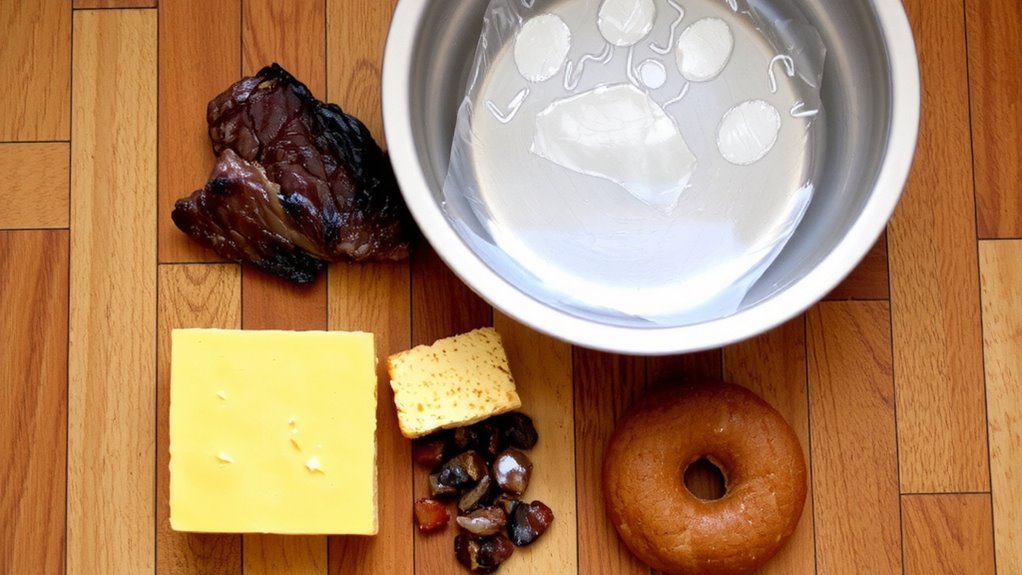
While you might assume table scraps are harmless, many human foods contain concealed calories that can disrupt your pet’s nutritional balance. Calorie density varies widely across common human foods, often exceeding daily requirements in small portions. For example, one tablespoon of peanut butter contains approximately 90–100 kcal, equivalent to a full meal for a small dog. High fat and sugar content contribute markedly to this concentration. Ingredient transparency is critical-labels may list sugar under 50+ aliases, masking its presence. Always review nutrition facts panels for total calories per serving and macronutrient ratios. Hidden sources like sauces or processed snacks often pack 2–3 times more energy than plain proteins. Without clear labeling, estimating intake becomes unreliable. Choose whole, unprocessed foods when sharing with pets, and prioritize items with documented nutritional profiles. Monitoring calorie density and demanding ingredient transparency protects your pet from unintended weight gain and metabolic imbalances.
Avoid These High-Calorie Human Foods
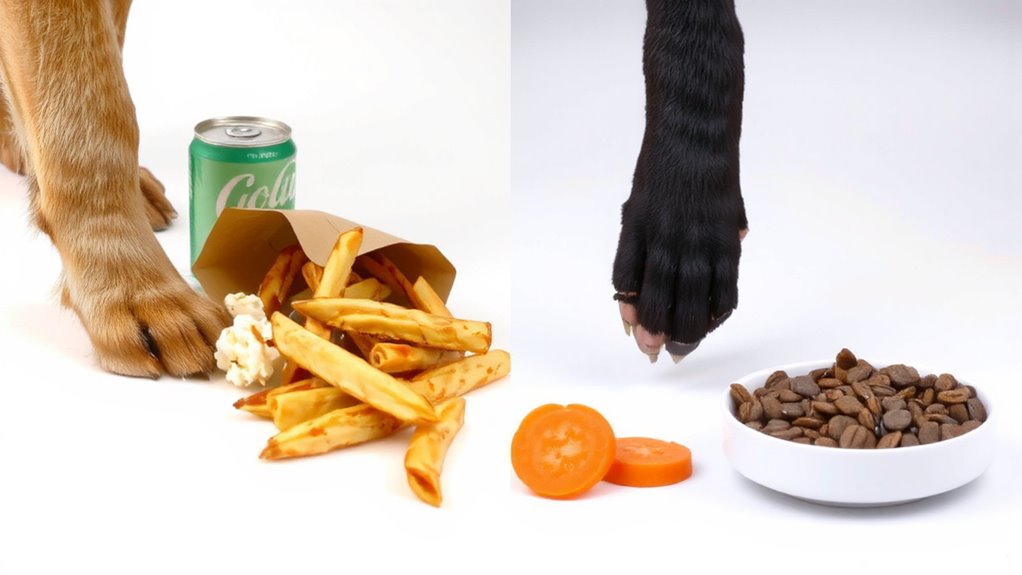
What exactly makes certain human foods dangerous for your pet? Many contain excessive fats, sugars, and calories unsuitable for animal metabolism. Feeding table scraps regularly disrupts nutritional balance and promotes obesity. Items like cheese, bacon, and sweets deliver dense caloric loads-just one slice of bacon contains 40–50 kcal, a significant amount for small dogs. Large portions override portion control, increasing risks of pancreatitis and diabetes. High-calorie foods often lack essential vitamins and minerals pets require. Chocolate, grapes, and onions are toxic, but even “safe” human foods pose health threats when fed routinely. Caloric needs for pets are species- and weight-specific; an average 20-pound dog requires only 400–500 kcal daily. Exceeding this via table scraps compromises health. Strict portion control prevents overfeeding. Eliminate high-calorie human foods entirely to maintain dietary precision and metabolic function. Prevention is more effective than treatment.
Choose Safe, Low-Calorie Pet Treats
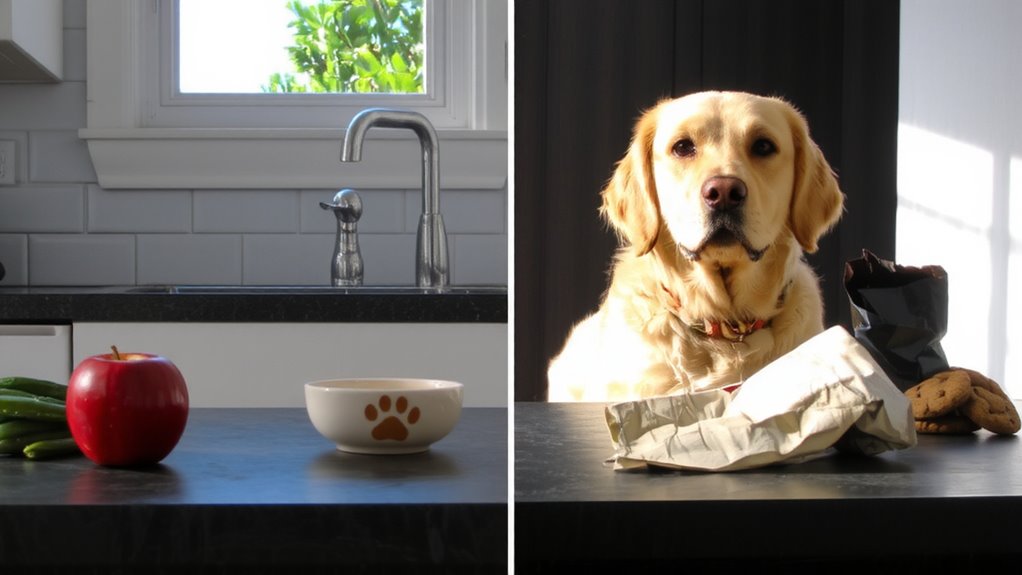
How do you guarantee your pet enjoys treats without compromising their health? Choose safe, low-calorie pet treats designed for nutritional balance. Opt for treat alternatives like dehydrated green beans, carrot slices, or commercially available dental chews with fewer than 10 calories per piece. These options support oral health and minimize caloric intake. Practice portion control: limit treats to 10% of your pet’s daily caloric needs. For a 20-pound dog, that’s no more than 40 calories daily from treats. Use a measuring spoon or a kitchen scale to verify accuracy. Low-calorie doesn’t mean low-value-look for treats with added fiber or functional ingredients like glucosamine. Always read the label: ingredients should include whole foods, not fillers. Consistent portion control and smart treat alternatives prevent weight gain and maintain metabolic health. Your pet stays satisfied, active, and within ideal body condition. For interactive feeding that promotes mental stimulation and controlled consumption, consider stuffing a Kong with low-calorie fillings.
Know When to See a Vet for Weight
Why is your pet gaining weight despite a controlled diet and regular exercise? Sudden or unexplained weight gain may signal underlying medical conditions such as hypothyroidism, Cushing’s disease, or metabolic disorders. Weight monitoring should be consistent-use a digital scale weekly and record results to track trends. A 10% increase over ideal body weight in dogs or cats qualifies as overweight; 20% or more is obesity. Body condition scoring (BCS), a 5- or 9-point system, helps assess fat coverage objectively. If your pet scores above the healthy range or shows difficulty moving, labored breathing, or lethargy, schedule a vet consultation. Blood tests, urinalysis, and physical exams help diagnose hormonal imbalances or organ dysfunction. Early vet consultation guarantees timely interventions, improving long-term health outcomes.
Get Your Family to Stop Overfeeding
Is it really just one treat, or are those small gestures adding up faster than you realize? Overfeeding often stems from unconscious family habits, where each member gives extra food without tracking total intake. Studies show that pets can consume up to 30% of their daily calories from table scraps. Humans misjudge portion control, offering portions far exceeding recommended caloric limits. For a 20-pound dog, just 100 extra calories daily leads to a one-pound weight gain per month. Involve all household members in monitoring feeding routines. Use a measuring cup for treats, limiting them to no more than 10% of daily intake. Replace food-based interactions with play or grooming to shift behavior. Consistent portion control prevents excessive calorie accumulation. Adjusting family habits guarantees adherence to dietary goals, reducing obesity risks. Unified rules improve compliance. Small, repeated actions have measurable metabolic impacts-track them.
Build a Healthy Feeding Plan
While your pet’s ideal feeding plan depends on species, age, and activity level, establishing a structured routine is essential for long-term health. Portion control prevents overfeeding and maintains ideal body condition. Use a calibrated measuring cup or digital scale to dispense food, adhering to manufacturer guidelines adjusted for your pet’s resting energy requirements (RER = 70 × body weight in kg^0.75). Meal timing supports metabolic efficiency-feed dogs twice daily; cats benefit from multiple small meals mimicking natural feeding behavior. Avoid ad libitum feeding, which disrupts insulin regulation. For overweight pets, reduce intake by 20–30% while preserving protein intake to prevent muscle loss. Schedule meals at consistent times daily to regulate digestion and energy use. Adjust portions every 4–6 weeks based on weight trends. This systematic approach integrates portion control and meal timing to optimize nutrient uptake, minimize fat accumulation, and support metabolic stability.
On a final note
You must eliminate high-calorie human foods to maintain your pet’s healthy weight. Foods like cheese, bacon, and sugary snacks can exceed 200 kcal per serving, contributing to obesity. Replace them with vet-approved treats under 35 kcal each. Measure daily intake: treats should not exceed 10% of total calories. Consult your vet to create a balanced feeding plan. Consistency prevents chronic conditions like diabetes.