Why Facial Hygiene Is Crucial for Breeds With Excessive Tear Production
You must clean your dog’s face daily if they produce excess tears, as pooled moisture softens skin and erodes its protective barrier. Porphyrins in tears oxidize and stain light fur, while creating an acidic, damp environment where *Staphylococcus* and *Proteus* thrive. Use pH-balanced (6.2–7.5), ophthalmologically tested wipes with cellulose fibers to gently remove debris. Left unchecked, irritation escalates to maceration, pruritus, and infection. Proper hygiene prevents complications-and reveals what lies beneath persistent staining.
Notable Insights
- Breeds with excessive tear production are prone to tear stains due to porphyrins in tears that discolor light-colored fur.
- Moisture from constant tearing softens facial skin, weakening its barrier and increasing infection risk.
- Poor facial hygiene allows bacteria like *Staphylococcus* and *Proteus* to thrive in damp, porphyrin-rich environments.
- Daily cleaning helps prevent skin irritation, maceration, and chronic conditions like lichenification around the eyes.
- Regular use of gentle, pH-balanced wipes supports ocular health and reduces the risk of secondary infections.
Which Breeds Are Most Prone to Tear Stains?
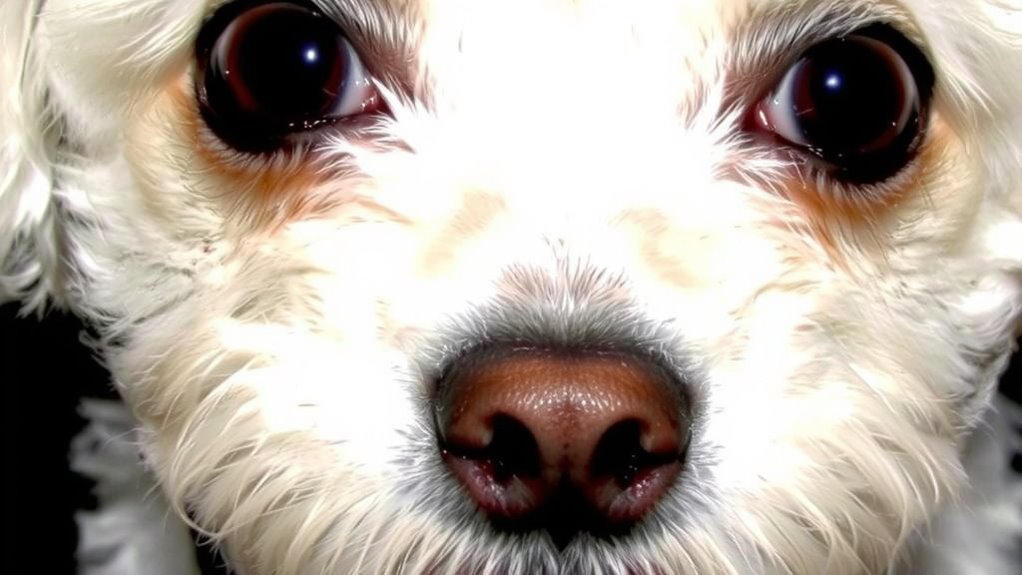
Why do some dogs develop dark, unsightly streaks around their eyes while others don’t? Breed genetics and facial structure determine your dog’s susceptibility to tear stains. Brachycephalic breeds-like Pugs, Shih Tzus, and Bulldogs-have shallow eye sockets and protruding eyes due to compressed skull anatomy, impairing proper tear drainage. This structural flaw causes tears to overflow onto the face. Maltese, Bichon Frises, and Poodles often inherit genes that increase lacrimal secretion or produce porphyrin-rich tears, which oxidize and stain light-colored fur pink or brown. Tear duct placement, eyelid conformation, and hair growth patterns further influence moisture retention. Flat-faced dogs retain more moisture in facial folds, creating an environment conducive to staining. You’ll notice staining starts at the inner canthus, where the nasolacrimal duct opens. These anatomical and genetic predispositions make certain breeds consistently prone to persistent facial discoloration despite hygiene efforts. Effective management often includes using top-rated tear stain removal products that target porphyrin buildup and prevent further discoloration.
How Tear Stains Irritate Your Dog’s Skin
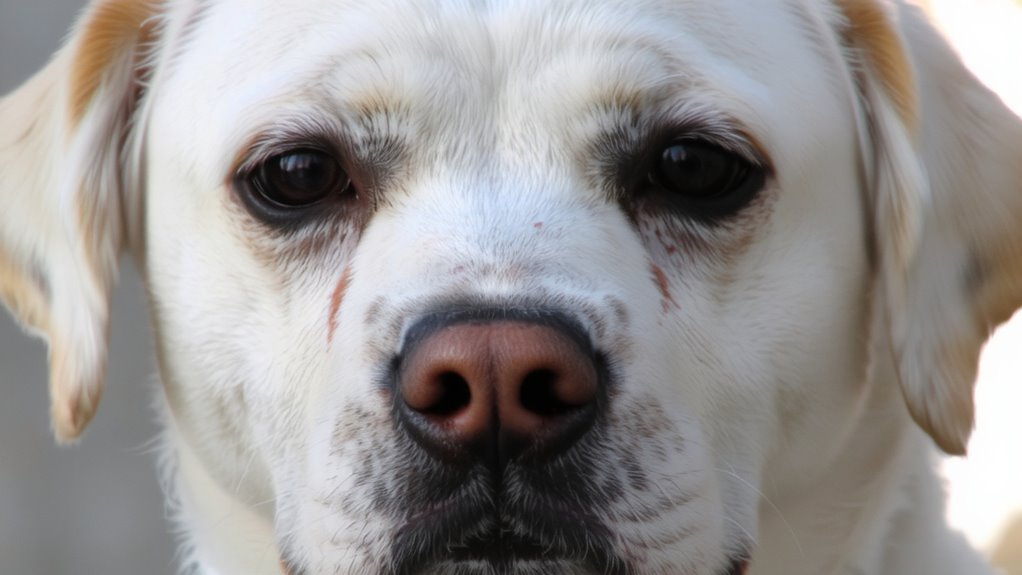
What happens when tear stains linger too long around your dog’s eyes? They create constant moisture, setting the stage for skin irritation and bacterial buildup. Prolonged dampness softens the skin, weakening its protective barrier. This compromised epidermis becomes vulnerable to inflammation and microbial invasion. The porphyrin pigments in tears further promote bacterial growth, particularly *Proteus* and *Staphylococcus* species. Without intervention, the periorbital and muzzle regions develop erythema, maceration, and pruritus. Chronic exposure leads to lichenification-thickened, darkened skin caused by persistent rubbing. The pH of wet fur drops, creating an acidic environment that exacerbates discomfort. You’ll notice staining isn’t just cosmetic; it’s a clinical sign of underlying dermatological stress. Left untreated, secondary infections may require topical or systemic antibiotics. Regular monitoring and moisture control are essential to maintaining healthy facial skin, especially in brachycephalic or small breeds with impaired tear drainage.
How to Clean Your Dog’s Face Every Day
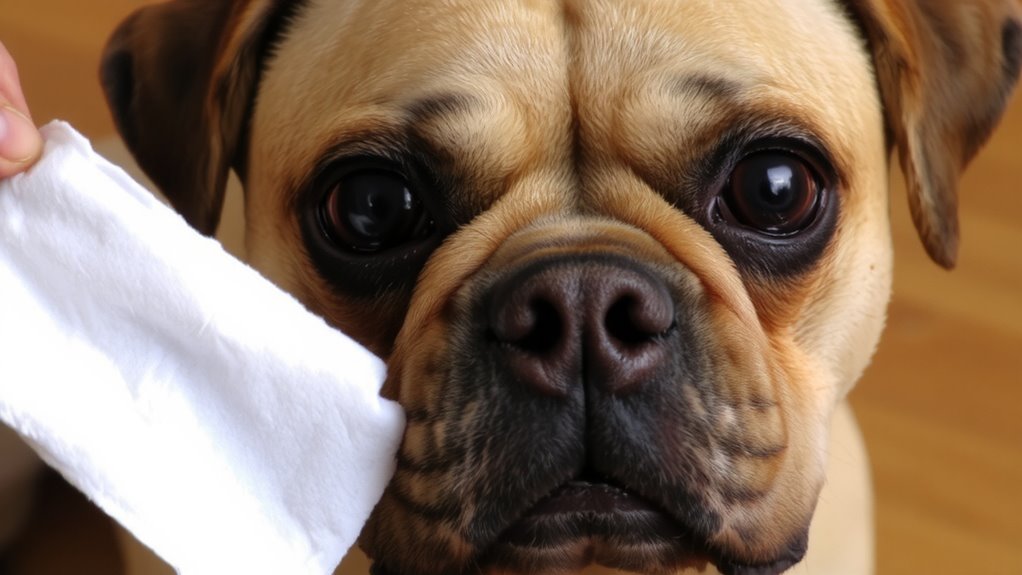
Daily facial cleaning is essential for breeds prone to excessive tear production, especially brachycephalic dogs with shallow tear ducts and poor drainage. You should clean your dog’s face at least once daily to prevent moisture buildup and bacterial growth. Use soft cotton pads soaked in lukewarm water or a vet-approved solution to gently wipe the periocular and muzzle areas. Apply light pressure in circular motions, which also provides mild facial massage to stimulate tear duct drainage. Avoid abrasive materials or excessive rubbing, which can irritate sensitive skin. Focus on folds and creases where discharge accumulates. Clean from the inner eye outward to reduce contamination risk. Cotton pads are ideal-they’re lint-free, non-abrasive, and minimize fiber residue. Consistent technique prevents biofilm formation and supports skin integrity. Daily care controls tear staining and reduces dermatitis risk, particularly in breeds like Pugs, Shih Tzus, and Maltese.
Best Wipes and Cleansers for Sensitive Dog Faces
You already know the importance of consistent cleaning to manage tear buildup, but the products you choose play an equally important role in maintaining facial health. Select wipes and cleansers with a pH balance close to canine skin’s natural range of 6.2–7.5 to avoid irritation. Hypoallergenic formulas reduce the risk of adverse reactions, especially in breeds prone to sensitivities like Maltese or Poodles. Look for alcohol-free, fragrance-free options containing soothing ingredients such as chamomile or aloe vera. Pre-moistened wipes with gentle cellulose fibers effectively lift debris without abrasion. Cleansers with low surfactant concentrations maintain skin integrity during daily use. Products tested ophthalmologically are safe near the eyes. Use wipes with bacteriostatic properties to inhibit microbial growth in moist facial folds. Reputable brands list pH levels and ingredient profiles on packaging-verify these before purchase. Always perform a patch test when introducing a new product.
When to See a Vet for Eye Infections
How quickly should you act when your dog’s eyes appear red or swollen? Immediately. Redness swelling indicates inflammation, often from infection or irritation. If you notice excessive eye discharge-especially if yellow, green, or thick-it likely signals bacterial infection. Normal tear production is clear and minimal; abnormal discharge suggests pathology. Persistent symptoms beyond 24 hours require veterinary diagnosis. Untreated infections can lead to corneal ulcers or vision loss. Your vet may perform a Schirmer tear test, fluorescein staining, or intraocular pressure measurement. Do not use over-the-counter drops without professional guidance-they might worsen underlying conditions like glaucoma. Conjunctivitis,keratoconjunctivitis sicca, and blocked nasolacrimal ducts all present similar symptoms but demand different treatments. Early vet intervention guarantees accurate diagnosis and prevents chronic ocular disease. Monitor closely for increased squinting, photophobia, or cloudiness-these are urgent signs. Prompt care protects your dog’s long-term eye health.
Daily Grooming for Tear-Stain Prone Breeds
Routine care between veterinary visits plays a key role in maintaining ocular health, especially for breeds genetically predisposed to excessive lacrimation. Daily grooming minimizes tear-stain development and prevents bacterial buildup. You should perform gentle facial massage around the medial canthus to stimulate natural drainage. Apply light pressure in circular motions for 30 seconds per eye using a clean fingertip. This encourages tear duct expression, reducing overflow onto facial fur. Use a veterinarian-approved, non-irritating ocular cleanser with a pH of 7.0 to 7.4. Moisten a sterile cotton pad and wipe from the inner to outer canthus once daily. Avoid alcohol-based solutions, which disrupt the ocular surface. Clip hair around the eyes to within 0.5 cm to reduce moisture retention. Consistent technique and proper tools decrease chromodacryorrhea incidence by up to 68% when performed daily.
On a final note
You must clean your dog’s face daily to prevent tear stains and skin irritation. Use hypoallergenic wipes with 0.2% chlorhexidine for effective, safe cleaning. Breeds like Maltese and Pekingese need consistent grooming due to excessive lacrimation. Persistent redness or discharge warrants veterinary evaluation to rule out infections or duct issues. A 1-inch pad gently wipes under the eyes, avoiding corneal contact. Regular care prevents bacterial overgrowth and staining.