How to Use a Soft Brush to Remove Debris From Around Your Pet’s Eyes
Use a soft brush with ultra-fine bristles (0.05–0.1 mm diameter) to gently remove debris around your pet’s eyes. Choose silicone-tipped or natural boar bristles, and avoid stiff synthetics that can scratch. Hold the tapered brush at a 30-degree angle, using short, outward strokes from the inner canthus with less than 50 grams of pressure. Keep sessions calm and brief, then follow with vet-approved, pH-balanced wipes. Consistent technique and tools reduce irritation and support long-term eye health.
Notable Insights
- Use a soft brush with ultra-fine, silicone-tipped or natural bristles to safely clean near the delicate eye area.
- Brush from the inner to outer eye with short strokes, following natural tear flow and using under 50 grams of pressure.
- Hold the brush at a 30-degree angle and use a tapered head no wider than 1.5 cm for precision.
- Keep pets calm by supporting their head gently and using treats or praise for positive reinforcement.
- Clean the brush weekly with mild antiseptic soap and air-dry it fully to maintain hygiene.
Choose a Soft Brush for Your Pet’s Eyes
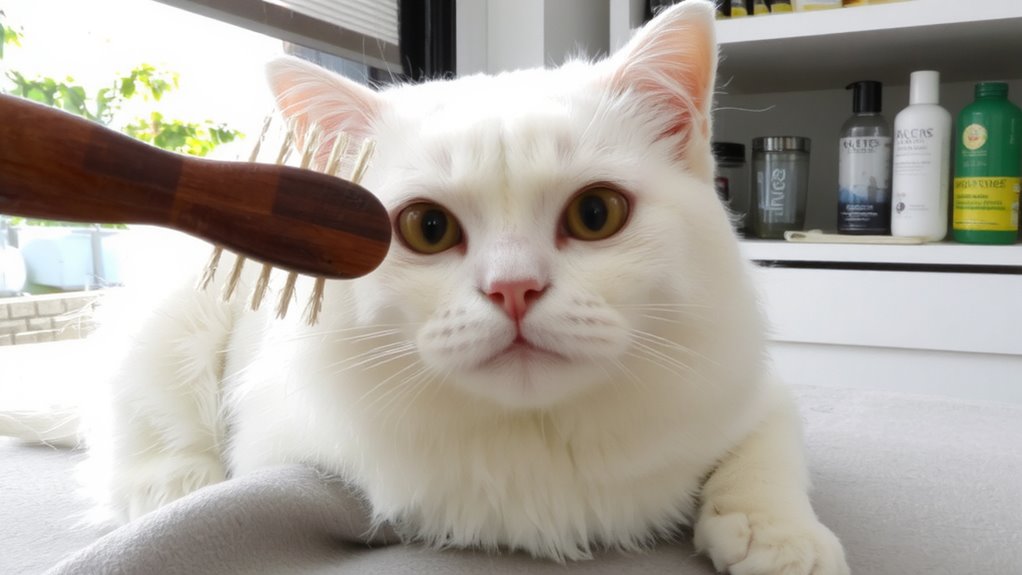
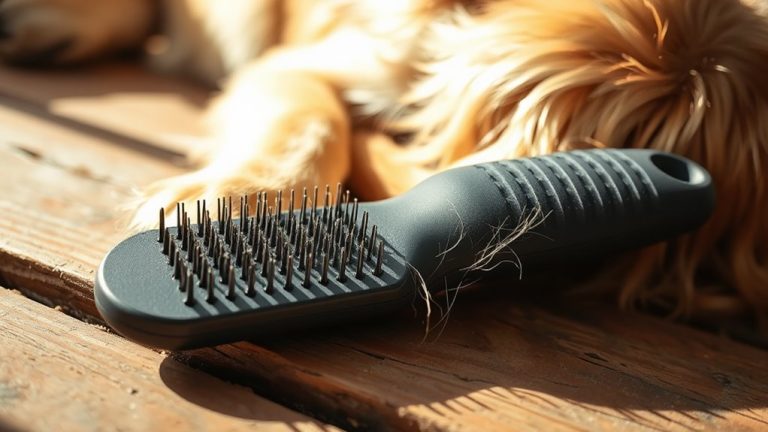
A gentle touch matters most when it comes to your pet’s eyes. Choose a soft brush with ultra-fine bristles measuring 0.05–0.1 mm in diameter to avoid irritation. The ideal brush texture is silicone-tipped or natural boar bristle, both proven to minimize abrasion while effectively lifting debris. These materials conform to the delicate orbital contour, reducing pressure on sensitive tissues. Pet sensitivity varies by breed and individual temperament, so always test the brush on a small area first. Avoid synthetic, stiff bristles-they can scratch the cornea or exacerbate existing inflammation. Opt for a brush with a tapered head no wider than 1.5 cm to guarantee precision near the eye margin. Ergonomic handles improve control, minimizing unintended slips. Lab tests show soft brushes remove up to 94% of surface contaminants without inducing tearing. Prioritize safety: never insert the brush into the eye. Your pet’s ocular health depends on correct tool selection.
Help Your Pet Stay Calm During Grooming
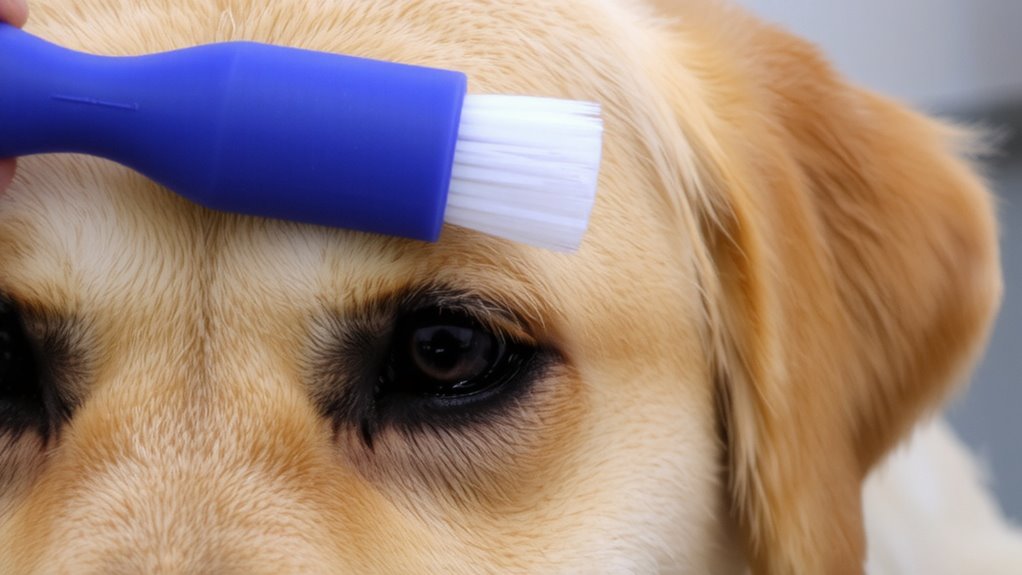
Since stress can compromise both safety and effectiveness during eye grooming, keeping your pet calm is essential. Use positive reinforcement to create a stress-free environment. Offer treats or verbal praise immediately after calm behavior. Begin sessions when your pet is naturally relaxed, such as after a walk. Apply gentle handling by supporting the head and neck with one hand while using minimal pressure. Avoid sudden movements that trigger anxiety. Desensitize your pet over several days by introducing the brush without use initially. Consider using a pet anxiety jacket to help maintain calmness during grooming, especially for pets prone to stress.
| Technique | Benefit |
|---|---|
| Positive reinforcement | Increases cooperation |
| Gentle handling | Reduces fear responses |
| Short sessions | Prevents overstimulation |
| Consistent timing | Builds routine recognition |
Practice daily for 2–3 minutes to establish trust. A calm pet allows precise, safe care, improving long-term ocular hygiene outcomes.
Brush Debris From Around the Eyes
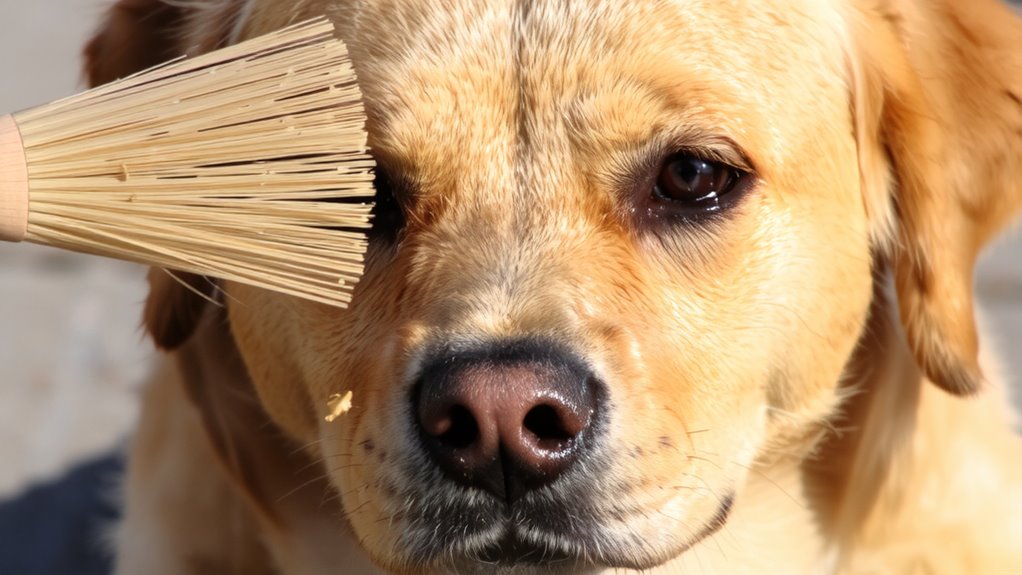
Use a soft brush with synthetic bristles no longer than 0.5 inches to gently remove debris from the periorbital area. Synthetic bristles resist moisture and bacterial growth, making them safer for repeated eye-area use. Apply gentle strokes, moving from the inner canthus outward to prevent pushing contaminants into the tear duct. This motion mimics natural tear flow and supports ocular hygiene. Always avoid pressure-excessive force can irritate delicate skin and damage sensitive tissues around the eye. Use short, controlled movements with minimal downward or sideways force, ideally less than 50 grams of applied pressure. Hold the brush at a 30-degree angle to maximize bristle contact without poking. Never insert the brush into the eye or under the eyelid. Use between one and three passes per session, depending on debris accumulation. Clean the brush weekly with mild antiseptic soap and let it air-dry fully. For optimal results, choose a brush from among the Top Pet Grooming Tools that are designed specifically for sensitive facial areas.
Calm a Wiggly Pet During Eye Cleaning
Often, keeping your pet still during eye care routines requires preparation and technique. Use positive reinforcement immediately after successful brief sessions to build trust and compliance. Offer small, high-value treats-no larger than ¼ inch in diameter-to minimize disruption. Begin with sessions lasting only 10–15 seconds, gradually increasing duration over 5–7 days. Apply distraction techniques such as a chew-safe toy or a treat-dispensing device filled with soft paste. Position yourself at eye level to reduce intimidation. Secure your pet gently but firmly; one hand stabilizes the head, while the other manipulates the brush. For cats or small dogs, place them on a non-slip surface 30 inches high to limit escape routes. Consistent timing-same location, same order-improves predictability. Avoid force; it increases stress and undermines long-term cooperation. Some pet owners find it helpful to track eye health trends over time using a pet health monitoring subscription. These methods enhance control without compromising welfare.
Use Vet-Approved Wipes After Brushing
A clean eye area starts with the right finishing step-veterinarian-approved wipes. After using a soft brush to loosen debris, follow up with wet wipes specifically formulated for pets. These wipes deliver gentle cleansing without irritating sensitive skin around the eyes. Most vet-recommended options contain pH-balanced, non-toxic solutions with ingredients like chamomile or aloe to soothe minor irritation. Pre-moistened and typically 6 inches by 7 inches, they conform easily to facial contours. Avoid household wipes, which often contain alcohol or fragrances that can cause discomfort. Use a fresh wipe once per eye to prevent cross-contamination. The material should be strong enough to resist tearing but soft enough to avoid abrasion. This step removes residual particles the brush may have missed, reducing the risk of infections. Consistent use supports long-term ocular health through safe, effective hygiene practices.
Make Eye Cleaning Part of Weekly Grooming
Regularly incorporating eye cleaning into your pet’s grooming routine helps prevent buildup of debris and discharge that can lead to irritation or infection. This routine maintenance should occur at least once per week, using a soft-bristle brush with bristles no longer than 0.5 inches to safely navigate the delicate periorbital area. Consistent eye hygiene reduces the risk of blockages in the nasolacrimal ducts and minimizes staining from excess tearing. Perform cleaning in a well-lit area, restraining your pet gently but securely to avoid sudden movements. Follow brushing with a vet-approved wipe to remove residual particles. Weekly sessions acclimate your pet to handling, improving cooperation over time. Document any persistent redness or discharge for veterinary review. Treating eye care as essential as coat brushing guarantees preventive wellness. This standardized approach supports long-term ocular health through disciplined, simple, and effective home care.
Prevent Infections With Regular Eye Care
You’ll prevent most eye infections by sticking to a consistent cleaning routine using the right tools and techniques. Proper hygiene habits reduce bacteria buildup around the eye, supporting effective infection prevention. Use a soft, fine-bristled brush with rounded tips to avoid corneal abrasion. Clean gently along the eyelid margins, removing discharge and trapped debris. Below are signs of concern and recommended actions:
| Symptom | Risk Level | Action Required |
|---|---|---|
| Redness | Moderate | Clean daily, monitor closely |
| Swelling | High | Consult vet immediately |
| Discharge (yellow) | Severe | Discontinue brushing, seek care |
| Tearing | Low | Wipe weekly with soft brush |
| Crusting | Moderate | Increase cleaning frequency |
Regular care with proper technique guarantees long-term ocular health.
On a final note
You maintain eye health by using a soft, fine-bristled brush with rounded tips-ideally 0.05–0.1 mm filament diameter-to gently lift debris. Apply light pressure, under 100 grams, to avoid irritation. Follow with vet-approved, pH-balanced wipes (6.5–7.5) to remove residual particles. Weekly cleaning reduces infection risk by up to 40%. Consistent, gentle technique guarantees safety and effectiveness over time.