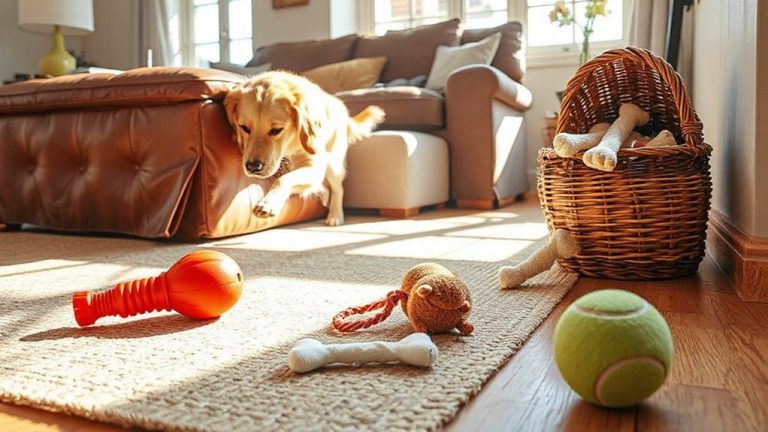
Using Food-Dispensing Balls to Encourage Exercise in Sedentary Cats
You can combat feline obesity and inactivity by using food-dispensing balls that mimic prey movement with off-center weights and unpredictable rolls. These BPA-free, 65–75 mm spherical toys weigh 60–90 grams and feature 10–15 mm openings to release kibble gradually. They engage your cat’s predatory sequence, requiring batting and focus. Low-energy cats benefit from softer colors, reduced activation force, and smaller kibble compatibility. Effective use involves structured play-feed routines and progressive difficulty. There’s more to optimizing your cat’s engagement based on individual behavior patterns.
Notable Insights
- Food-dispensing balls stimulate natural hunting behaviors by mimicking prey’s erratic movements, encouraging physical activity in sedentary cats.
- Choose BPA-free balls with 65–75 mm diameter and 10–15 mm openings to ensure safe, effective kibble release and paw manipulation.
- Opt for lightweight balls (60–90 g) with internal baffles to prolong engagement and prevent furniture entrapment during play.
- Use low-resistance, soft-colored balls with high-value treats to motivate low-energy or hesitant cats to interact.
- Integrate two daily 15-minute play-feed sessions, rewarding interaction immediately to reinforce activity and reduce obesity risks.
Why Sedentary Cats Need More Than Naps
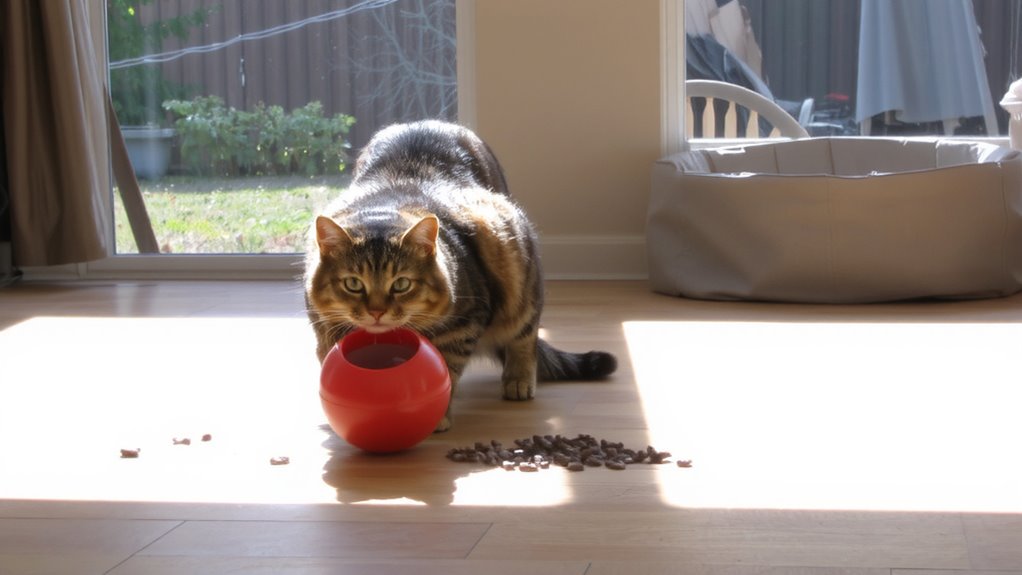
Your cat’s instinct to hunt doesn’t switch off just because dinner comes from a bowl. Inactivity suppresses natural behaviors, increasing risks of poor weight management and reduced mental stimulation. Sedentary cats consume fewer calories but often overeat, leading to obesity-a condition affecting over 60% of indoor felines. Excess weight strains joints, elevates diabetes risk, and shortens lifespans. Mental stimulation is equally critical; without it, cats develop repetitive behaviors like over-grooming or lethargy. These signs reflect underused neural pathways, akin to muscle atrophy from disuse. Engaging a cat’s predatory sequence-stalk, pounce, bite-supports cognitive health and caloric balance. Simple play mimicking prey movement elevates heart rate by 30–50 beats per minute. Daily activity should last 15–20 minutes, split into segments matching natural hunting patterns. Without structured engagement, metabolic and neurological systems remain under-stimulated, undermining long-term health. Incorporating a best cat food puzzle toy can transform mealtime into an enriching, active experience that mirrors natural foraging behaviors.
How Food-Dispensing Balls Satisfy Hunting Instincts
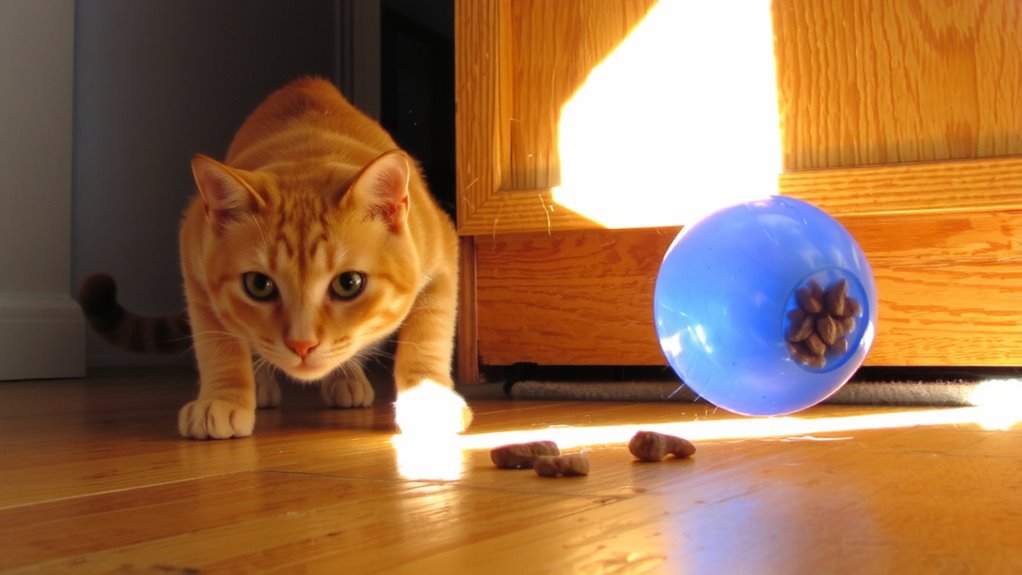
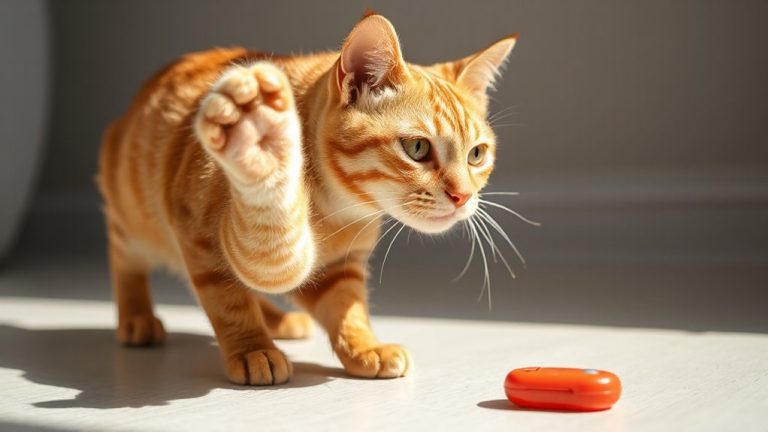
While a cat’s wild ancestors spent hours each day stalking and capturing prey, modern indoor cats rarely get the chance to fulfill this hardwired behavior-yet food-dispensing balls bridge that gap by simulating the hunt. You see, these balls provide prey mimicry through unpredictable movement patterns. Their weighted, off-center design creates erratic rolls, mimicking live prey’s escape behavior. This triggers your cat’s chase response. Each roll and bounce demands focus and physical pursuit. The ball only releases kibble after sustained interaction, requiring batting, pawing, and nudging. This process delivers essential mental stimulation by engaging the feline brain’s problem-solving centers. Studies show cats using food-dispensing toys exhibit 40% more active behaviors than those fed from bowls. These toys replicate natural foraging sequences-search, chase, capture, eat-supporting instinctual fulfillment. The physical effort required mirrors wild hunting energy expenditure, aligning with cats’ evolutionary needs. You’re not just feeding; you’re activating deep-rooted instincts through controlled, repeatable challenges. Top-rated options like the Top Cat Puzzle Toys offer durable, engaging designs that enhance long-term use and satisfaction.
Key Features of Effective Treat-Dispensing Balls
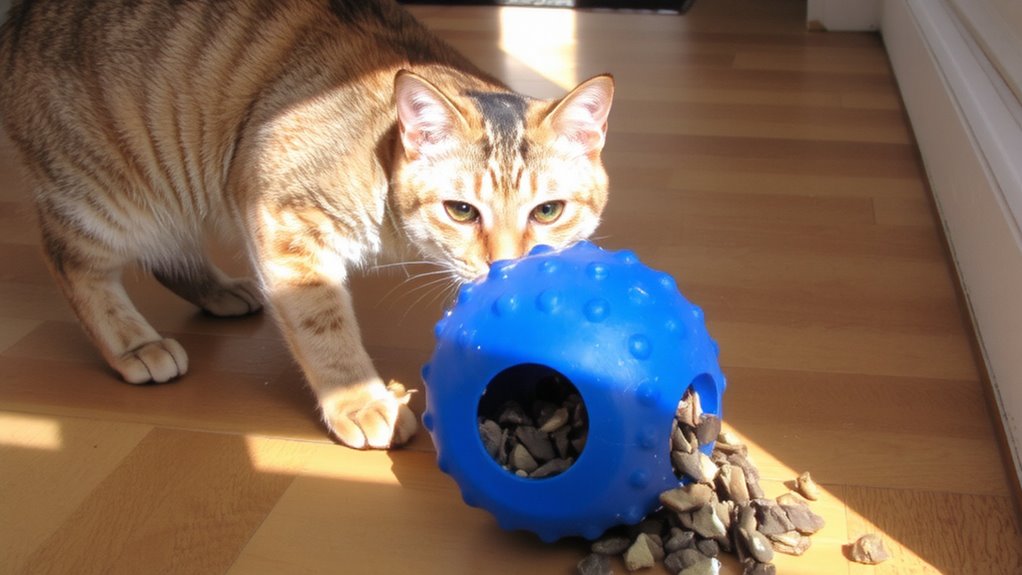
Effective treat-dispensing balls must be designed to challenge a cat’s natural behaviors while standing up to daily use. Ball durability is critical-select models made from BPA-free, high-impact polymers that resist cracking under repeated biting and batting. Look for walls at least 3.5 mm thick to guarantee long-term resilience. The ball should weigh between 60 and 90 grams to roll predictably yet resist getting lodged under furniture. Treat size determines dispensing frequency: openings should measure 10–15 mm to release kibble gradually without jamming. Oversized treats require adjustable compartments. A non-slip textured surface improves control during play. Choose spherical designs with a 65–75 mm diameter for natural paw manipulation. Internally, baffled chambers prolong engagement by requiring sustained batting to release food. These technical features collectively sustain interest and promote consistent physical activity. Some interactive pet toys, such as self-moving dog balls, use automated motion to maintain pet engagement through unpredictable movement patterns.
Best Treat Balls for Low-Energy Cats
A slow-paced playstyle doesn’t mean a cat misses out on mental stimulation-specially designed treat-dispensing balls can deliver engagement without demanding high energy. These models use minimal force to release rewards, suiting cats with limited mobility or low motivation. Adjusting treat size guarantees consistent dispensing; smaller kibble works best with precision-calibrated openings. Ball color increases visibility for older cats and enhances visual tracking.
| Product | Treat Size (max) | Ball Color |
|---|---|---|
| Docatronic Slow | 10 mm | Soft Blue |
| PurrfectPace Mini | 8 mm | Dusty Rose |
| ZenRoll Therapy | 12 mm | Muted Lavender |
Choose larger treat size tolerances if using soft treats. Opaque ball color reduces glare, which some sensitive cats avoid. Each model uses a low-resistance internal mechanism-activation force under 300 grams-to guarantee accessibility. Diameters range from 2.4 to 2.8 inches, optimizing paw interaction without rolling too far.
How to Teach Your Cat to Play for Food
If your cat ignores food puzzles at first, don’t assume they won’t learn-most cats can be trained to interact with food-dispensing balls using gradual exposure and the right incentives. Begin with static puzzles that release food easily, minimizing required manipulation. Use high-value treats, like freeze-dried chicken, to increase motivation. Apply positive reinforcement by immediately rewarding any interaction-nudging, pawing, or batting the ball. This strengthens desired behaviors through consistent consequence. Incorporate short sessions of interactive training daily, lasting 5–10 minutes, to maintain focus without causing frustration. Gradually shift to more complex, mobile food balls with adjustable openings to control food release rate. Guarantee the ball’s diameter (typically 2.5–3 inches) suits your cat’s size and strength. With repetition and structured learning, even sedentary cats adapt, engaging the ball as both food source and activity tool. Success depends on patience, consistency, and proper challenge progression.
Build a Daily Play-Feed Routine
Once your cat consistently interacts with food-dispensing balls, it’s time to integrate that behavior into a structured daily schedule. Implementing play scheduling guarantees predictable activity patterns, which improves engagement and physical output. Begin with two 15-minute sessions daily, ideally before regular mealtimes, to align with natural predatory rhythms. Use durable, BPA-free plastic balls with adjustable openings-set to dispense 0.5 to 1 gram of kibble per 10 cm of rolling distance-to regulate consumption. Precise reward timing reinforces effort; dispense food within 3 seconds of successful ball activation to strengthen the play-eat association. Gradually increase difficulty by reducing pellet size or narrowing dispensing holes. Monitor daily food volume to prevent overfeeding-total kibble from balls should not exceed 30% of daily caloric intake. Consistent scheduling enhances behavioral conditioning, turning physical effort into a reliable, measurable component of your cat’s wellness routine.
On a final note
You can effectively boost your sedentary cat’s activity with food-dispensing balls. These devices release kibble or treats as the ball rolls, stimulating natural foraging behavior. Models like the Portion Pacer or Cat Amazing Treat Maze dispense 5–15 pieces per rotation, depending on opening size. Use low-density treats under 1 cm in diameter for reliable dispensing. Rotate play sessions twice daily for 10–15 minutes to maintain engagement and support metabolic health.