Treating Road Rash Injuries on Outdoor Cats With Proper Antiseptic Solutions
You should treat road rash in outdoor cats immediately using 0.05% chlorhexidine, which reduces bacterial load without damaging tissue. Gently restrain your cat with a towel, exposing only the wound. Irrigate with 30–60 mL of sterile saline or diluted antiseptic using a syringe to remove debris. Pat dry with sterile gauze, then apply a non-irritating antimicrobial ointment. Avoid alcohol or hydrogen peroxide-they delay healing. Monitor for redness, swelling, or pus, which suggest infection. Early action improves recovery outcomes. There’s more to take into account for complete wound care.
Notable Insights
- Clean road rash injuries with 0.05% chlorhexidine solution to reduce bacterial load and prevent infection.
- Use sterile saline or diluted antiseptic to gently irrigate wounds, removing debris without damaging tissue.
- Avoid alcohol, hydrogen peroxide, and strong iodine, as they harm healthy tissue and delay healing.
- Apply a non-adherent dressing after cleaning to protect the exposed dermal tissue during recovery.
- Monitor for infection signs like redness, swelling, pus, or warmth, and seek vet care if present.
What Is Road Rash in Outdoor Cats?
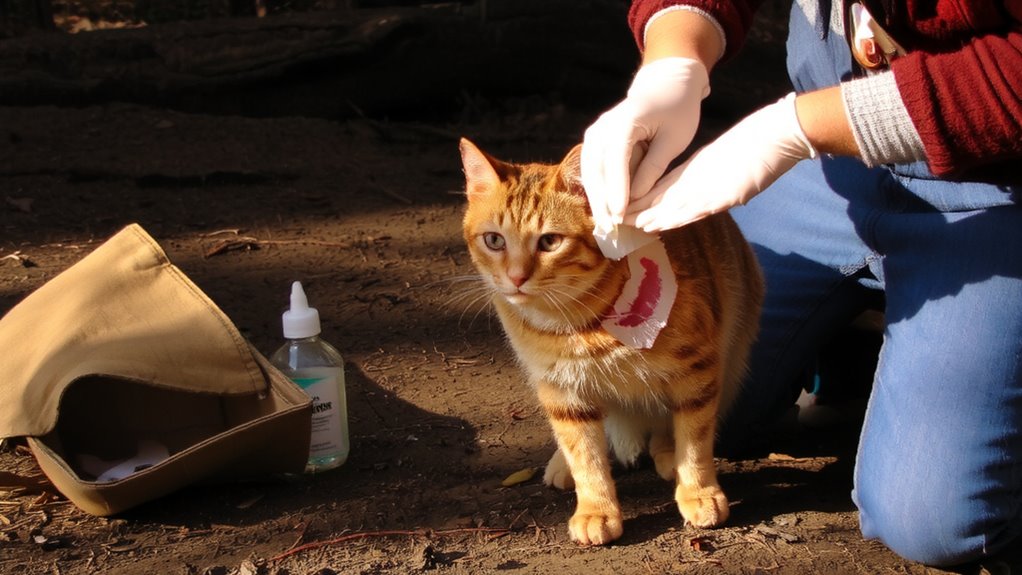
Road rash in outdoor cats refers to traumatic skin abrasions caused by contact with rough surfaces, typically during high-speed impacts like being hit by a vehicle or sliding across pavement. These injuries remove protective epidermal layers, exposing dermal tissue to contamination. Debridement and antiseptic irrigation with 0.05% chlorhexidine solution reduce bacterial load. Left untreated, road rash can lead to infection, delayed healing, or systemic complications. Outdoor cats face added risks: prolonged sun exposure increases photosensitivity in denuded skin, raising chances of ultraviolet-induced tissue damage. Concurrent flea prevention is critical, as open wounds attract ectoparasites seeking warm, moist environments. Topical selamectin (6 mg/kg) applied post-wound stabilization prevents infestation without interfering with granulation tissue. Monitor lesions daily for erythema, purulent exudate, or necrosis. Healing duration ranges 7–21 days, depending on lesion depth and hygiene. Proper intervention limits complications in active outdoor felines.
How to Hold Your Cat Gently for Treatment
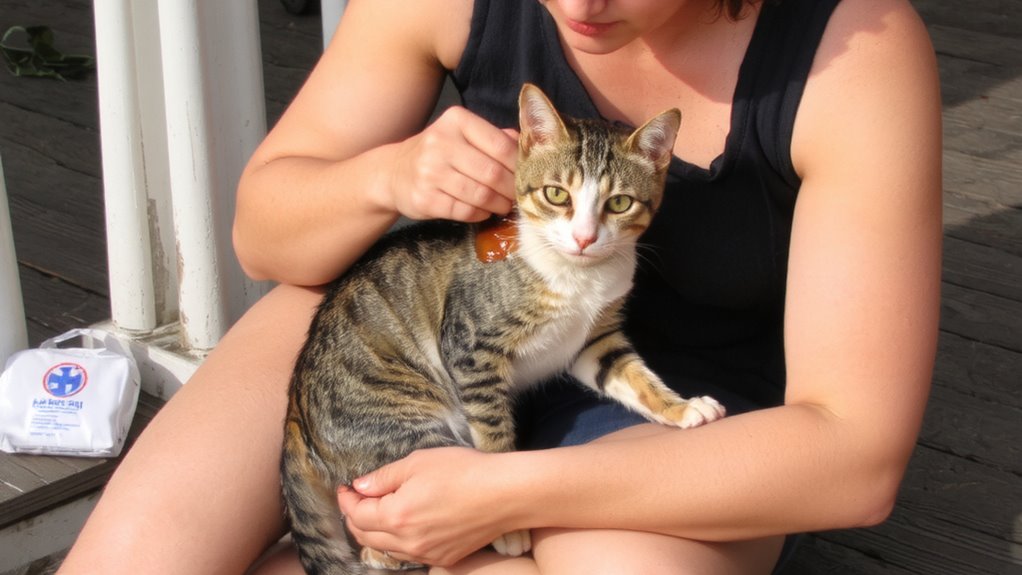
Handling your cat properly during treatment starts with creating a controlled, low-stress environment. Use calming techniques such as soft lighting, minimal noise, and gentle verbal reassurance to reduce anxiety. Begin with non-restrictive restraint methods: place one hand firmly over the shoulders and the other under the hindquarters, supporting the body fully. Wrap your cat in a lightweight towel, leaving only the injured area exposed-this reduces struggling and prevents scratches. Apply even pressure without restricting breathing. If necessary, use a muzzle or Elizabethan collar temporarily, ensuring a two-finger gap at the neck for safety. Always monitor respiratory rate-30 breaths per minute is normal at rest. Avoid scruffing unless trained; improper technique can cause injury. Proper restraint guarantees accurate, safe treatment application. Calming techniques combined with correct restraint methods improve cooperation and reduce treatment time. For longer recovery periods, consider using a soft or inflatable Elizabethan collar alternative to enhance comfort while preventing wound contact.
Best Antiseptics for Road Rash in Cats
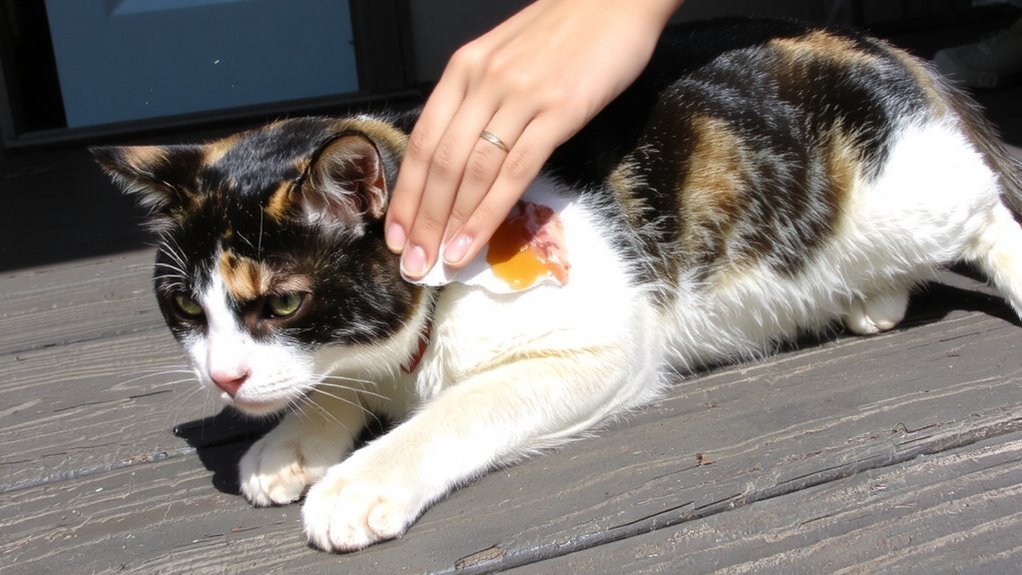
While not all antiseptics are safe for feline use, choosing the right one is critical to prevent infection without harming delicate tissue. You need solutions that balance antiseptic safety with effective wound healing. Avoid alcohol, hydrogen peroxide, and iodine-these damage tissue and delay recovery. Instead, opt for mild, vet-approved options designed for cats.
| Antiseptic | Concentration | Use Case |
|---|---|---|
| Chlorhexidine | 0.05%–0.1% | Broad-spectrum, minimal tissue irritation |
| Povidone-Iodine | 1% diluted | Effective bacteria control, rinse after |
| Saline Solution | 0.9% NaCl | Non-irritating rinse, ideal for flushing |
Chlorhexidine is often best-its residual effect lasts up to 6 hours. Always confirm antiseptic safety with your vet. Proper selection supports wound healing without toxic side effects.
How to Clean Road Rash Wounds on Cats
Start by gently restraining your cat to prevent sudden movement during cleaning-have a helper hold the cat securely but calmly if needed. Use sterile saline or a diluted antiseptic solution for thorough wound irrigation, flushing debris with at least 30–60 mL using a syringe. This pressure mimics clinical standards, removing contaminants without damaging tissue. Avoid hydrogen peroxide or alcohol, which impair healing. After irrigation, pat the area dry with sterile gauze. Apply an appropriate antimicrobial ointment if the wound is minor and not oozing. For open or abraded surfaces, proceed with non-adherent dressing application to protect the site. Secure the dressing with a light wrap or protective collar to prevent removal. Keep the wound dry and undisturbed. Change the dressing every 24 hours or sooner if soiled. Proper technique reduces complications and supports faster re-epithelialization.
Signs of Infection in Cat Road Rash
One in five outdoor cats with road rash develops a secondary infection if wounds aren’t monitored closely. Watch for swelling redness around the injury site-this indicates inflammatory response. Increased warmth and tenderness are common with localized infection. Pus discharge appears as thick, yellowish or greenish fluid, signaling bacterial proliferation. Normal healing produces minimal clear exudate; pus is abnormal. Infection can compromise tissue repair, delaying recovery by days or weeks. Capillary refill time exceeding two seconds in surrounding skin suggests compromised circulation. You may also notice altered behavior like lethargy or grooming avoidance. These signs occur within 24–72 hours post-injury. Do not wait for systemic symptoms. Swelling redness that spreads beyond the wound margin indicates pathogen migration through dermal layers. Pus discharge often contains neutrophils, cellular debris, and bacteria like Staphylococcus or Pasteurella. Early detection limits complications and reduces treatment complexity.
When to Take Your Cat to the Vet for Road Rash
How do you know when road rash in your cat requires professional care? Assess wound severity first. Superficial scrapes may heal at home, but deep abrasions with exposed tissue or persistent bleeding need veterinary evaluation. Wounds larger than 1 inch in diameter or those on joints, face, or paws often require clinical treatment. Tetanus risk is low in cats but increases with contaminated wounds, especially from soil or rust contact. Signs like muscle stiffness, tremors, or difficulty swallowing suggest possible tetanus and demand immediate care. Infection that resists home antiseptics-odor, pus, worsening redness-also requires professional intervention. Delayed healing, swelling, or systemic symptoms like fever indicate deeper complications. Your cat’s behavior matters; lethargy or refusal to eat signals distress. When in doubt, consult a vet. Early treatment reduces scarring and prevents secondary conditions. Professional debridement and antibiotics may be necessary.
Preventing Road Rash in Outdoor Cats
Keeping your outdoor cat safe from road rash begins with understanding their environment and limiting exposure to high-risk situations. Cat behavior often leads them to roam near roads, increasing exposure to outdoor risks like traffic and abrasive surfaces. You can reduce injury chances by supervising outdoor time or using a secure harness and leash. Consider installing cat-specific fencing or enclosed outdoor pens (catios) to allow safe exploration.
| Prevention Method | Effectiveness |
|---|---|
| Supervised outdoor time | High |
| Catios or enclosures | Very High |
| Reflective collar use | Moderate |
| Roadside barriers | High |
| Behavior training | Moderate |
These solutions directly address common outdoor risks. Understanding cat behavior helps you anticipate dangerous situations. Reflective collars improve visibility during low light, reducing collision chances. Catios, ideally 6 feet high with mesh overhead, prevent escapes. Training cats to respond to cues takes 2–4 weeks but reduces road proximity incidents.
On a final note
You must treat road rash promptly to prevent infection. Use a surgical-grade antiseptic like 2% chlorhexidine gluconate, which kills 99.9% of bacteria within 30 seconds. Clean wounds with sterile saline first, then apply antiseptic with a nonwoven pad. Avoid alcohol or hydrogen peroxide-they damage tissue. Monitor for swelling, pus, or redness spreading beyond 1 cm per day. Seek veterinary care if infection signs appear or the wound is deeper than 3 mm.