Customizing Weight-Loss Diets for Large-Breed Dogs Prone to Joint Stress
Every extra pound on your large-breed dog adds four pounds of joint stress per step, accelerating cartilage damage and osteoarthritis. Feed a high-protein diet (25–30% DM) to maintain muscle and stabilize joints. Supplement with fish oil providing 20–40 mg EPA+DHA per pound daily to reduce inflammation. Add glucosamine at 20 mg per pound daily to support cartilage repair. Use precise portion control to create a 10–20% caloric deficit, and monitor weekly weight and mobility changes-improvements in stride and lameness reveal what lies ahead with consistent management.
Notable Insights
- Prioritize high-quality protein (25–30% DM) to preserve muscle and support joint stability during weight loss.
- Select weight-loss diets low in fat (8–12% DM) and rich in omega-3s to reduce joint inflammation.
- Supplement with glucosamine (20 mg/lb/day) and EPA/DHA (20–40 mg/lb/day) to support cartilage and mobility.
- Implement a 10–20% caloric deficit with precise portion control, feeding twice daily for metabolic stability.
- Monitor progress weekly via body weight, lameness score, and stride changes, adjusting calories if stalled.
Why Joint Pain Worsens With Extra Weight in Big Dogs
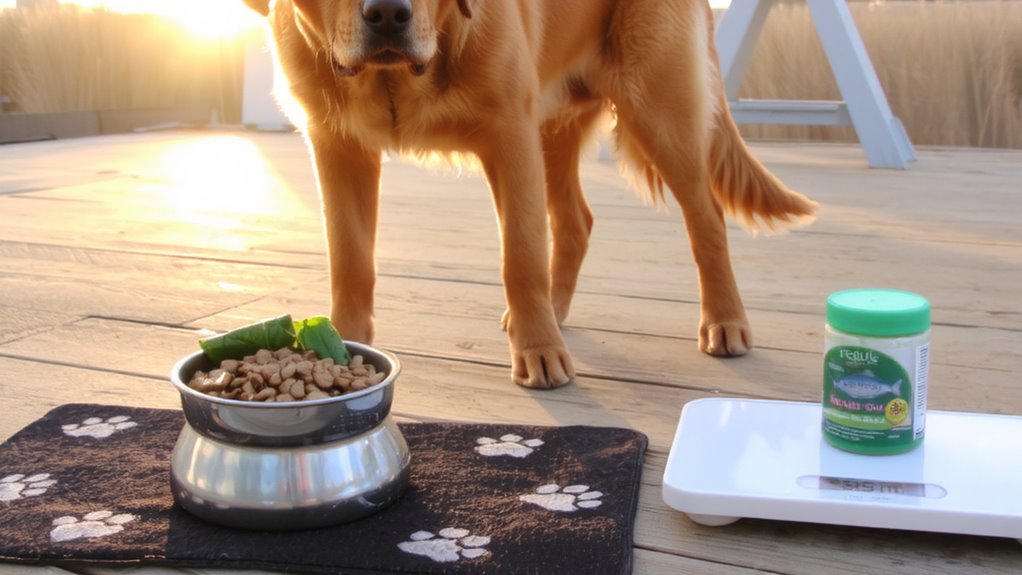
Every extra pound on a large-breed dog adds about four pounds of pressure on their joints with each step. That means a 10-pound overweight dog endures an additional 40 pounds of joint stress per stride. This excess load accelerates cartilage degradation, reducing the joint’s natural shock absorption. Over time, the damaged cartilage fails to regenerate, leading to friction between bones. That friction fuels chronic joint inflammation, further weakening mobility. Inflamed synovial membranes release enzymes that worsen cartilage breakdown, creating a destructive cycle. Radiographic studies show overweight dogs develop osteoarthritis earlier than lean counterparts. Reduced activity from pain leads to muscle atrophy, decreasing joint stability. Biomechanical stress concentrates on focal points, increasing wear. You can’t reverse cartilage degradation, but limiting load helps slow progression. Weight loss directly reduces joint inflammation markers. You’re not just cutting calories-you’re decreasing structural damage with every pound lost. Incorporating high-quality dog joint supplements can further support cartilage health and reduce inflammation.
Feed the Right Protein Level to Spare Joints
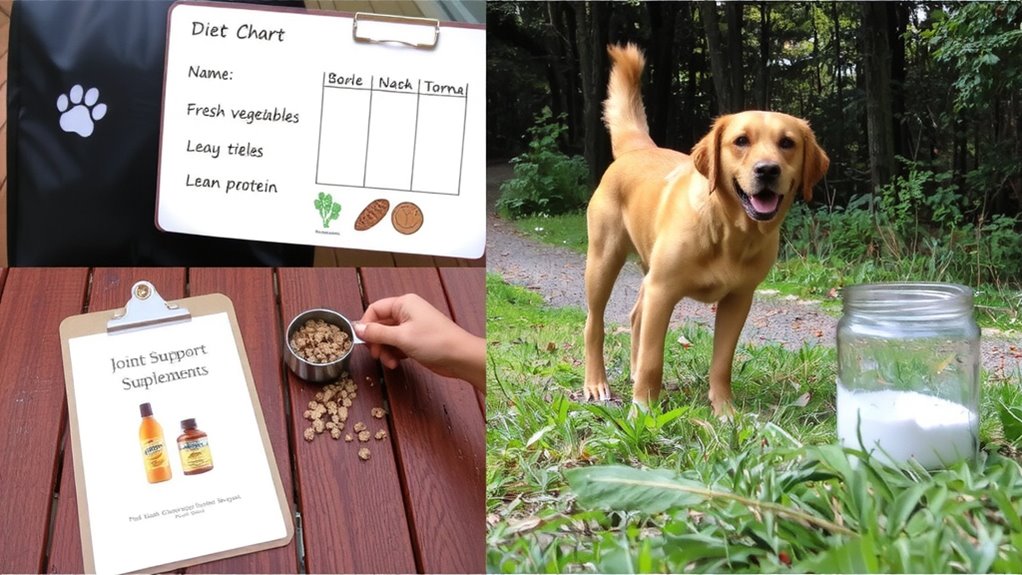
While managing your dog’s weight, don’t cut protein-maximize it. Large-breed dogs need sufficient protein to maintain lean muscle mass during weight loss, which supports joint stability. Aim for diets with 25–30% metabolizable protein on a dry matter basis. High-quality protein sources like egg, chicken, and fish provide essential amino acids vital for tissue repair. These sources offer superior amino acid balance compared to plant-based proteins, ensuring your dog gets adequate lysine, leucine, and methionine. Muscle preservation reduces mechanical stress on joints, acting like internal bracing. Low-protein diets can lead to muscle atrophy, worsening joint function. Choose commercial weight-loss foods formulated specifically for large breeds-they balance caloric restriction with ideal protein. Avoid generic “light” formulas that skimp on protein. Proper amino acid intake sustains cartilage turnover and overall joint integrity during weight loss.
Boost Mobility With Omega-3s From Fish Oil

Since excessive joint inflammation can hinder your dog’s mobility during weight loss, supplementing with omega-3 fatty acids from fish oil helps modulate the inflammatory response at the cellular level. The primary fish oil benefits come from eicosapentaenoic acid (EPA) and docosahexaenoic acid (DHA), which reduce pro-inflammatory cytokine production. High-quality fish oil supplements contain at least 180 mg EPA and 120 mg DHA per gram. These omega-3s support joint lubrication support by enhancing synovial fluid viscosity, improving cartilage resilience. Dosing typically ranges from 20–40 mg combined EPA+DHA per pound of body weight daily. Consistent use over 8–12 weeks yields measurable mobility improvements in controlled trials. Omega-3s also lower c-reactive protein levels, a biomarker of systemic inflammation. Choose molecularly distilled fish oil to avoid contaminants. Refrigerate after opening to prevent oxidation. This targeted support maintains joint function while your dog loses weight. For optimal results, select one of the top-rated fish oil supplements based on purity, potency, and veterinary recommendations.
Add Glucosamine and EPA for Joint Repair and Fat Burn
Joint health and fat metabolism don’t usually appear in the same conversation, but for dogs with joint stress, pairing glucosamine and EPA creates a powerful synergy. Glucosamine supplementation supports cartilage regeneration by supplying glycosaminoglycan precursors, typically dosed at 20 mg per pound of body weight daily. It reduces joint friction and aids structural repair in weight-bearing joints. Simultaneously, epa benefits include reduced inflammation and improved fat oxidation. EPA, an omega-3 fatty acid, works at the cellular level to inhibit pro-inflammatory eicosanoids, with effective doses ranging from 20 to 50 mg per pound daily. Together, they ease joint discomfort while enhancing metabolic efficiency. This dual action supports mobility and accelerates fat loss. You’ll often see improved stride length and reduced lameness within 8 to 12 weeks. Always choose vet-approved supplements with third-party purity testing. Combining glucosamine and EPA isn’t just additive-it’s synergistic for large-breed dogs needing joint repair and fat burn. For senior dogs, choosing high-quality best glucosamine supplements can significantly enhance joint support and overall mobility.
Create a Safe, Balanced Diet for Large-Breed Weight Loss
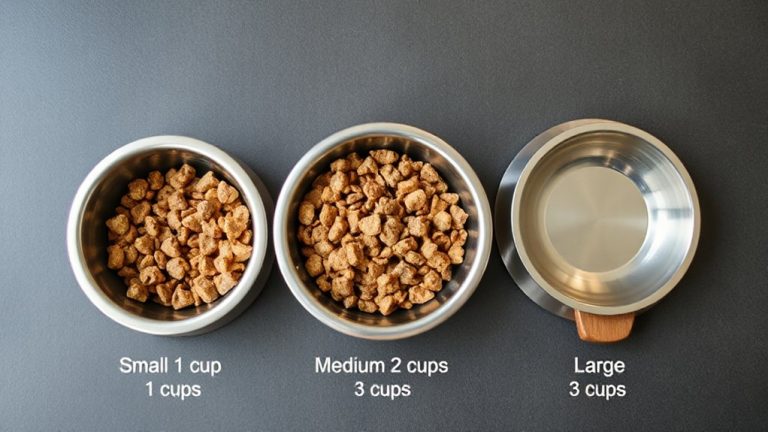
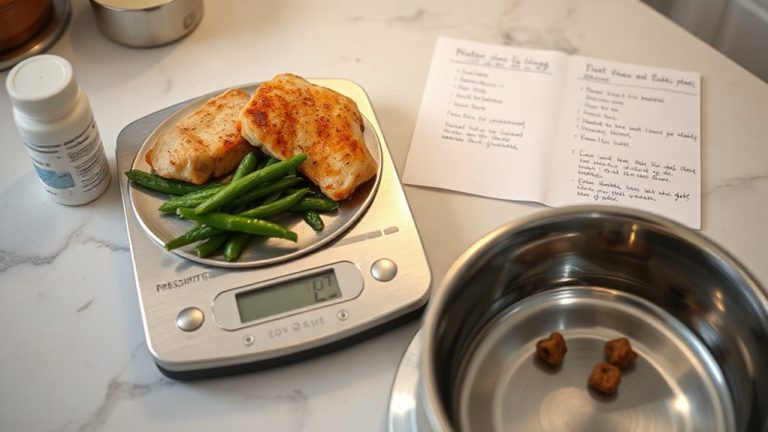
For large-breed dogs needing weight loss, a properly balanced diet isn’t just about fewer calories-it’s about optimizing nutrient density and joint support. You must prioritize high-quality protein (at least 25% crude protein) to maintain lean muscle. Use portion control to manage intake-measure food precisely, ideally using a kitchen scale. Feed two meals per day to stabilize blood sugar and reduce begging. Meal timing should align with activity, ideally 30 minutes post-light exercise. Choose diets with controlled fat (8–12%) and added fiber (5–8%) to enhance satiety without excess energy. Avoid free-feeding. Include balanced calcium (around 1.2%) to support bone health during weight loss. A safe deficit is 10–20% below maintenance calories. Always shift food gradually over seven days. This precision guarantees safe, sustainable loss while protecting joint integrity.
Track Progress by Weight and Movement Improvements
You’ve set up a balanced, joint-supportive diet with precise protein, fat, and calcium levels-now it’s time to measure how well it’s working. Weight tracking is essential; use a digital scale weekly to log changes with 0.2 kg precision. Aim for 1–2% body weight loss per week to avoid metabolic strain. Simultaneously, document mobility milestones using a standardized lameness score (0–4 scale) during controlled walks and stair navigation. Note improvements like reduced lag time during activity or increased stride length. Adjust caloric intake by 5–10% if weight loss stalls beyond two weeks. Use pressure-sensitive gait analysis apps if available to quantify limb loading changes. Combine weight tracking with objective mobility milestones to assess joint function and dietary efficacy. This dual approach allows for data-driven adjustments, ensuring your dog loses fat without sacrificing lean mass or joint stability.
On a final note
You must balance nutrition and joint support in large-breed weight loss. Feed 1.5–2.0 g of high-quality protein per kg of body weight daily to preserve muscle. Supplement with 50 mg EPA and 20 mg glucosamine per kg of body weight to reduce inflammation. Add 1,000 mg fish oil (containing 18% EPA/DHA) per 20 lbs of body weight. Monitor weight weekly and adjust calories by 5–10% as needed.