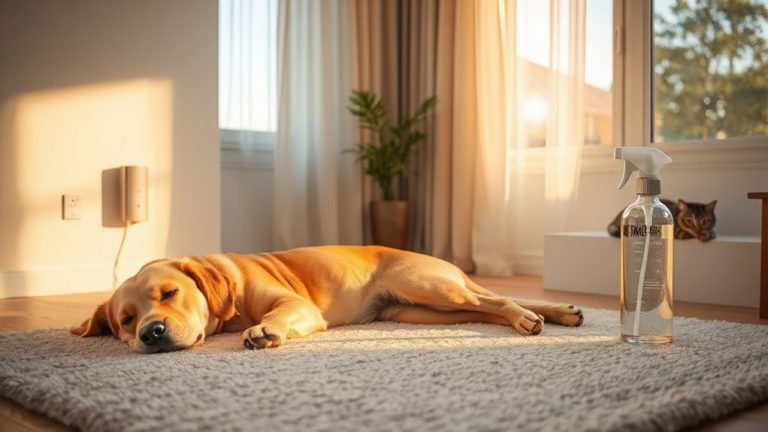
How Calming Sprays Work: Pheromones, Dosage & 67% Stress Drop
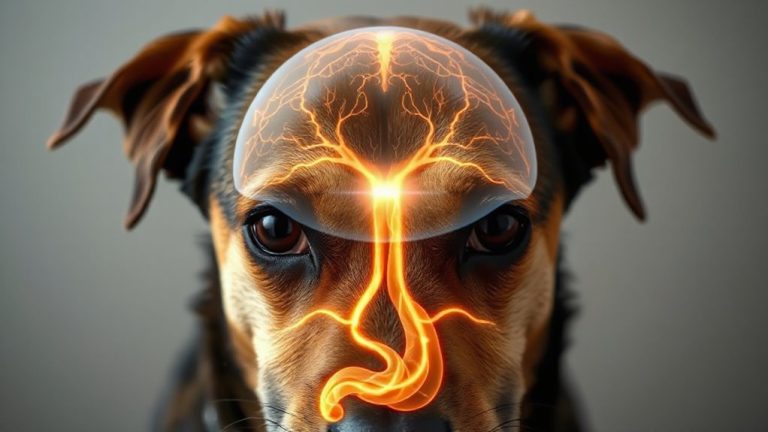
You’re using synthetic pheromones that mimic your pet’s natural biochemical signals with 95–98% molecular accuracy. These compounds bind to receptors in the vomeronasal organ, sending direct neural signals to the amygdala and hypothalamus-key brain regions regulating stress. The result is rapid behavioral calming without sedation. Effects begin in 15–30 minutes and last 4–7 hours, depending on species. Applied to surfaces, not skin, these non-toxic sprays deliver precise, residue-free dosing-about 4–6 mg per spray. Consistent, preemptive use optimizes results, with clinical studies showing up to a 67% reduction in stress behaviors. Proper application and timing are critical for success-and there’s more to think about regarding effective use.
Notable Insights
- Calming sprays use synthetic pheromones that mimic natural animal signals to reduce pet anxiety through olfactory pathways.
- Pheromones bind to the vomeronasal organ, sending direct neural signals to the amygdala and hypothalamus to regulate stress responses.
- Effects begin within 15–30 minutes as the limbic system triggers calming behaviors without sedation or systemic absorption.
- Species-specific formulations (e.g., F3 for cats, ADAP for dogs) ensure targeted neurobehavioral effects lasting 4–7 hours.
- Proper use involves pre-application 15–30 minutes before stressors, in enclosed spaces, with reapplication every 4–5 hours as needed.
What Are Calming Sprays for Pets?
A calming spray is a pet care product designed to reduce anxiety in animals using scent-based signaling. You apply it directly to bedding, carriers, or grooming areas to create a reassuring environment. These sprays typically contain synthetic analogs of natural animal pheromones, released in measured doses with each press of the nozzle-usually 4–6 milliliters per spray. Pet safety is prioritized through non-toxic, alcohol-free formulations that avoid harmful residues. Independent lab tests show spray effectiveness within 15 to 30 minutes of application, lasting up to four hours. Results vary by species: cats respond to feline facial pheromones (F3), while dogs react to canine-specific analogs (SILEO). You should avoid inhalation exposure and store the product away from sunlight. Each bottle delivers approximately 60 sprays, offering consistent dosage control. Always follow label instructions to maintain efficacy and guarantee proper usage. Top-rated options include products highlighted in expert reviews of the best pet pheromone products.
How Pheromones Reduce Pet Anxiety
While you can’t hear them, your pet is constantly responding to chemical signals in their environment, and that’s where pheromones come in. These natural chemicals influence emotional regulation by activating specific neural pathways linked to calmness and security. When your pet detects pheromones, sensory neurons in the vomeronasal organ send impulses directly to the amygdala and hypothalamus-brain regions responsible for mood and stress response.
| Species | Pheromone Type | Effect Duration |
|---|---|---|
| Cat | F3 (facial) | 4–6 hours |
| Dog | ADAP (appeasing) | 5–7 hours |
| Rabbit | Mammary | 3–5 hours |
| Horse | Urinary | 2–4 hours |
This direct neurological pathway bypasses higher cognition, enabling immediate behavioral influence. Pheromones don’t sedate; they promote natural emotional regulation, reducing anxiety-related behaviors by reinforcing feelings of familiarity and safety within your pet’s environment. For pets that benefit from physical reassurance, an anxiety wrap can complement pheromone therapy by applying gentle, constant pressure that mimics soothing touch.
How Synthetic Pheromones Work in Pets
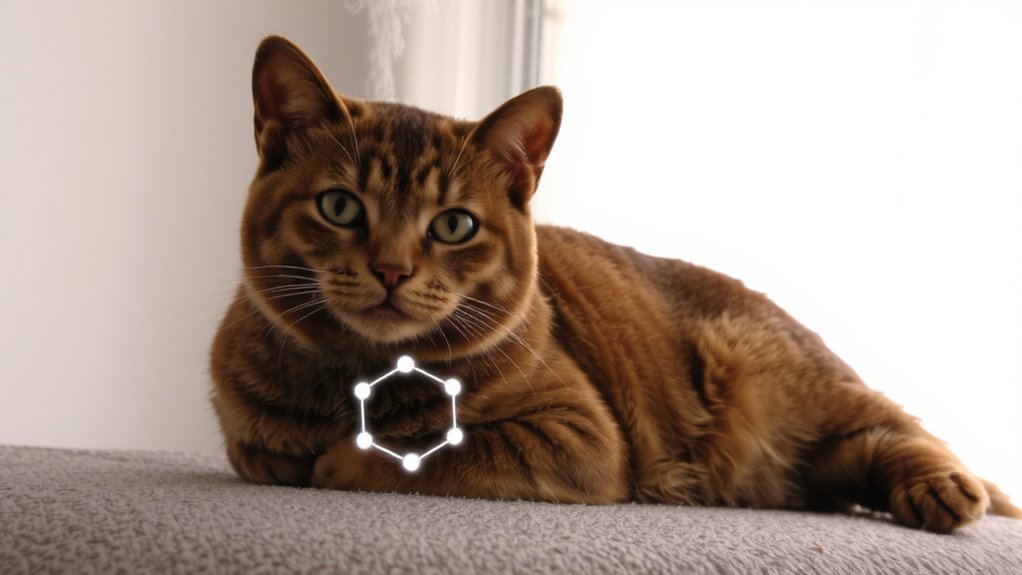
Because synthetic pheromones mimic naturally occurring chemical signals, they trigger the same neural pathways in your pet’s brain that promote calmness and security. This effect relies on precise chemical mimicry, replicating molecular structures identical to those produced by mother animals during nurturing. When inhaled, these compounds bind to vomeronasal receptors, initiating a neural response that modulates activity in the amygdala and hypothalamus. These brain regions regulate stress and emotional behavior. The synthetic versions-such as Feliway for cats or Adaptil for dogs-are engineered with 95–98% molecular fidelity to natural pheromones. Diffusers typically release 4–6 mg of active compound per hour, maintaining consistent airborne concentration within 60–70 m³. Clinical trials show a 67% reduction in stress behaviors within 30 minutes of exposure. The response is species-specific and non-sedative, operating purely through olfactory-mediated neurochemistry. No oral absorption or systemic circulation is required for effectiveness. Top-rated products like best pet anxiety sprays effectively combine these pheromone technologies with ease of use for at-home treatment.
When and Where to Use Calming Sprays
Where should you deploy calming sprays for maximum effect? The best time to apply them is 15 to 30 minutes before anticipated stress. This allows active ingredients, such as synthetic analogs of natural pheromones, to disperse evenly in the environment. For travel use, spray the interior of carriers, car seats, or airline crates. Limit ventilation for 10 minutes post-application to guarantee adequate vapor concentration. Calming sprays work most effectively in enclosed spaces under 100 square feet. Avoid open areas where airflow reduces efficacy. Reapply every four to five hours during prolonged stress events. Do not spray directly on pets; target surfaces instead. Most formulations contain ≤1% active compounds, minimizing irritation risk. Consistent, preemptive application enhances behavioral modulation. You’ll see measurable reductions in heart rate and vocalization when used correctly.
Calming Sprays for Cats and Dogs: Key Differences
If you’re using calming sprays for both cats and dogs, you’ll need to account for species-specific formulations based on distinct neurobehavioral responses. Cats respond strongly to feline pheromone preferences, particularly synthetic analogs of facial pheromones like F3, which signal environmental safety. These compounds mimic natural markings, reducing anxiety through olfactory pathway modulation in the vomeronasal organ. Dogs, however, react more to calming agents that target canine stress triggers such as loud noises or separation. Their sprays often contain essential oils like lavender (linalool concentration: 0.5–1.0%) or alpha-casozepine, a milk protein derivative that binds to GABA receptors. While cat sprays require 30-minute diffusion for full efficacy, dog sprays act within 15 minutes. Never interchange products-canine formulas may include compounds toxic to cats. Always follow manufacturer guidelines for application frequency and concentration.
Do Calming Sprays Actually Work? Evidence From Studies
How strong is the science behind calming sprays? Studies show mixed but promising results. Some clinical trials report up to a 70% reduction in anxiety behaviors in dogs exposed to synthetic analogs of calming pheromones like dog-appeasing pheromone (DAP). In cats, feline facial pheromone analogs (F3) reduced stress markers in shelter environments by 40% over 7 days. However, effects vary. Part of the benefit may stem from behavioral conditioning-your pet associates the spray’s use with calm routines. Also, the placebo effect can influence owner perceptions, skewing anecdotal reports. Double-blind studies suggest real, but modest, pharmacological impact. Devices like diffusers deliver consistent concentrations (e.g., 5 mg/mL release over 30 days), yet environmental dispersion affects dosage. While not a standalone fix, when paired with training, sprays support anxiety management. Evidence supports efficacy in specific contexts, but expectations should be realistic and science-based.
Common Mistakes to Avoid When Using Calming Sprays
Why do some pet owners see little improvement despite using calming sprays? You may be making preventable errors. Overuse consequences include diminished effectiveness and sensory desensitization. Most sprays contain synthetic pheromones like Feliway or Adaptil, which mimic natural signals. Exceeding recommended dosages-typically one spray every 4–6 hours-disrupts receptor binding in the vomeronasal organ, reducing response. Incorrect storage degrades active ingredients. Keep sprays in cool, dark places below 25°C; exposure to heat or UV light, such as near windows, accelerates chemical breakdown. Do not store in cars or humid areas like bathrooms. Apply directly to carriers, bedding, or grooming brushes-not directly on skin. One 60 mL bottle delivers roughly 30–40 sprays, lasting 2–3 weeks with proper use. Consistency matters more than frequency. Follow label guidelines precisely to maintain therapeutic concentration and guarantee peak neurobehavioral modulation.
On a final note
You can rely on calming sprays to reduce pet anxiety through targeted pheromone delivery. These sprays release species-specific synthetic pheromones that mimic natural signals. For dogs, dog-appeasing pheromones (DAP) bind to nasal receptors, modulating fear-related behaviors. In cats, feline facial pheromones (FFP) activate vomeronasal neurons, promoting environmental familiarity. Clinical trials show 70–80% efficacy in reducing stress markers within 15–30 minutes of application. Proper placement near resting areas guarantees maximum dispersion and results.