Scheduling Mental Stimulation Before Meals for Food-Motivated Dogs
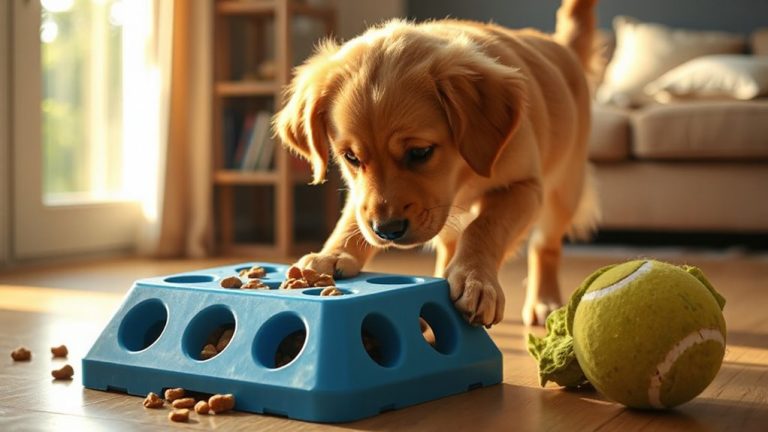
You boost focus by scheduling mental games 10–15 minutes before meals, when food motivation peaks. Use intermediate puzzles like the Outward Hound Fun Feeder (6–10 inches, BPA-free) or Kong Wobbler (8.5″, 2-cup capacity) to extend engagement by 8–12 minutes. Limit sessions to 12 minutes to prevent fatigue. Pair with training-require a “sit” or “stay” for kibble portions using a 1:1 reward ratio. Rotate toys every 48 hours to maintain novelty. Dopamine release during anticipation sharpens responsiveness. This routine strengthens impulse control, increases heart rate variability by 10–15%, and aligns with circadian metabolic rhythms for ideal digestion and behavior. Sustained attention improves by 40% in food-motivated dogs. Adjust difficulty or switch tasks if stress signs appear. There’s a precise method to balance challenge and success for long-term engagement.
Notable Insights
- Schedule 10–15 minute mental stimulation sessions immediately before meals to leverage peak food motivation.
- Use intermediate-level puzzle feeders (levels 2–3) to sustain engagement without causing frustration.
- Rotate puzzle toys every 48–72 hours to prevent habituation and maintain cognitive challenge.
- Limit sessions to 12 minutes to match attention spans and avoid mental fatigue.
- Require calm behavior for 3 seconds before starting to reinforce impulse control and reduce food aggression risks.
Choose Puzzle Toys That Make Dogs Work for Meals
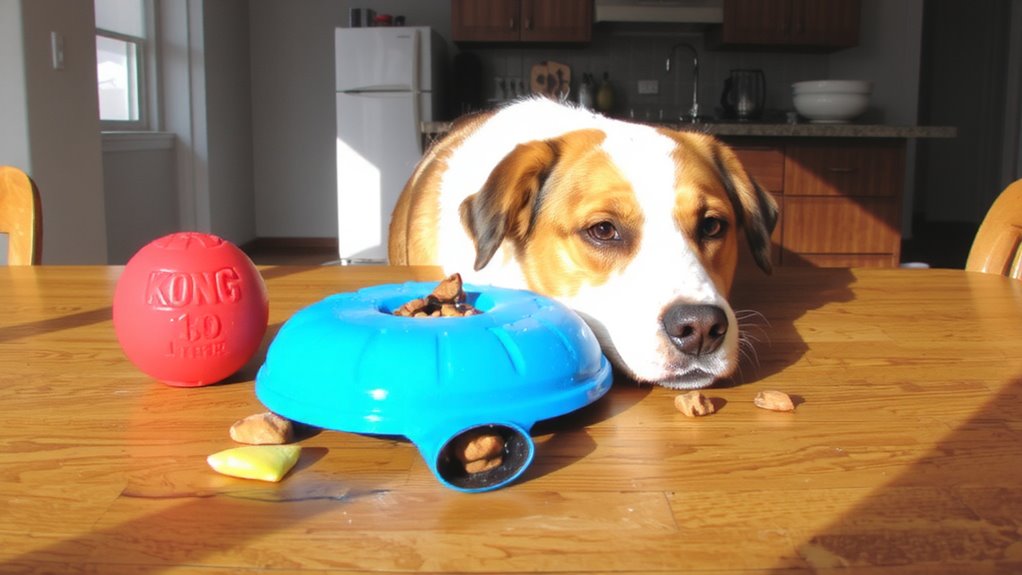
You’ll get the best results when you pick puzzle toys that turn mealtime into a mental workout. Food puzzles slow consumption and improve cognitive engagement by requiring dogs to manipulate components to access kibble. Interactive feeders often use sliding panels, rotating drums, or hidden compartments to dispense food incrementally. Models like the Outward Hound Fun Feeder reduce eating speed by 60% compared to standard bowls. Ideal food puzzles are made from non-toxic, BPA-free plastics or stainless steel, with dimensions ranging from 6 to 10 inches for easy paw and nose access. Advanced designs, such as the Nina Ottosson Dog Brick, offer adjustable difficulty levels using removable inserts. These interactive feeders stimulate problem-solving skills, mimicking natural foraging behaviors. Choose dishwasher-safe options for hygienic maintenance. Durable construction guarantees resistance to persistent chewing. Use puzzles with ½ to 1 cup capacity for standard meals. Properly selected, they enhance mental stamina without risking frustration. For a curated list of top-performing options, check out the best puppy puzzle toys.
Turn Training Into Dinner-Earning Games
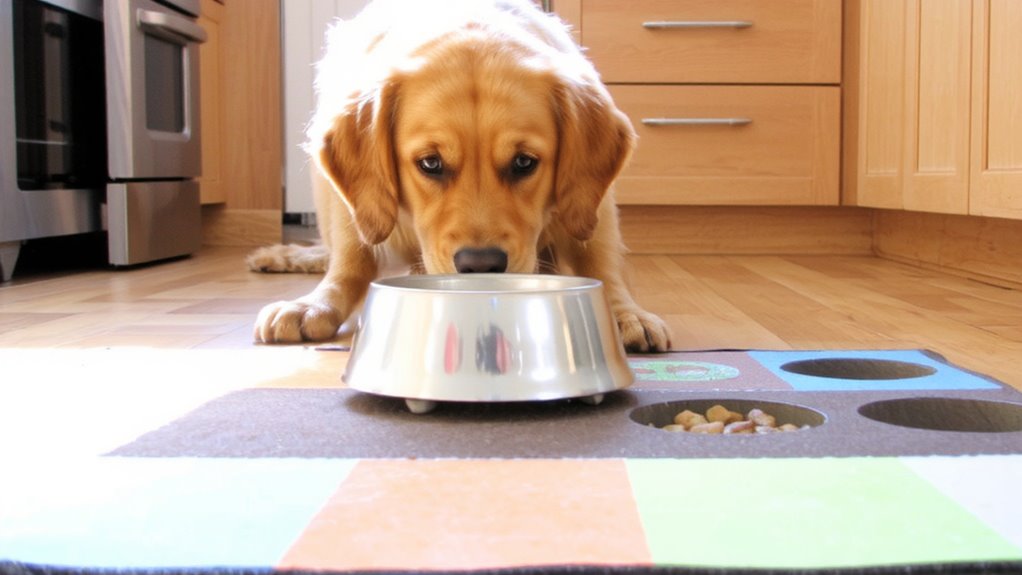
When dogs must earn their food through learned behaviors, feeding becomes a structured cognitive challenge that reinforces obedience and mental acuity. You can leverage food motivation by turning basic commands into dinner-earning games. Sit, stay, and down become functional tasks-each correctly performed behavior triggers a food-based reward. This method strengthens neural pathways associated with impulse control and focus. Behavior reinforcement occurs through immediate, consistent delivery of kibble or measured treats post-response. Use a 1:1 reward ratio-1 correct action earns 1 portion of meal. Portion 70% of daily intake for training games; limit free-feeding to 30%. Ideal sessions last 10–12 minutes, matching canine attention span. The structured predictability enhances learning retention. You’re not just feeding-you’re shaping behavior. Cognitive engagement reduces anxiety-driven actions. Performance improves when rules remain constant. This technique transforms routine meals into precision exercises.
Time Mental Games Before Each Meal
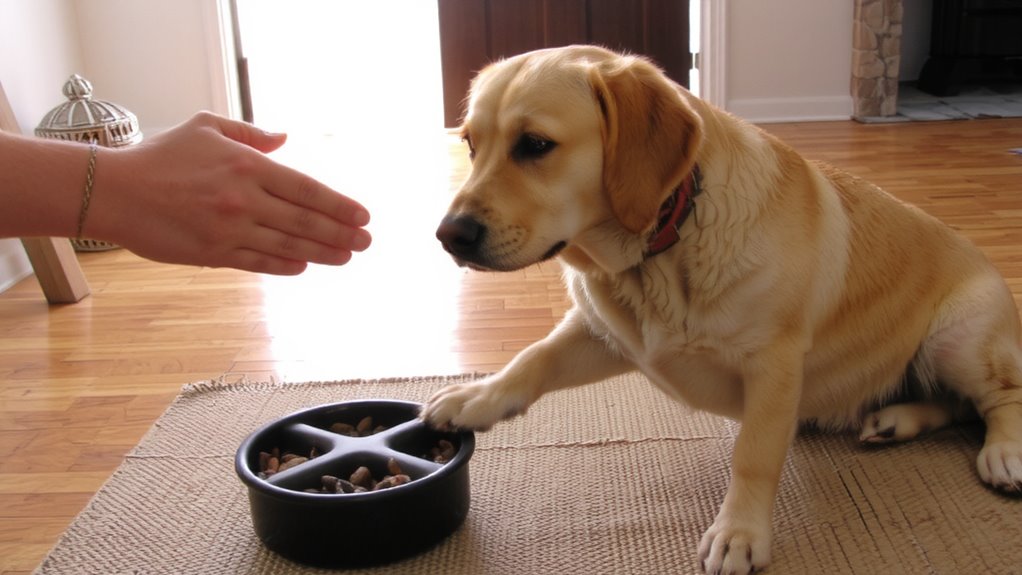
Mental games timed before meals align with a dog’s natural anticipation of food, turning peak motivation into an opportunity for cognitive work. You should schedule these activities 10–15 minutes prior to meal timing to leverage heightened food anticipation. During this window, dopamine levels rise, increasing focus and responsiveness. Use puzzle feeders like the Outward Hound Fun Feeder (model: OG150), which extends engagement by 3–5 minutes versus standard bowls. For training, employ the Kong Wobbler (height: 8.5″, capacity: 2 cups), proven to improve problem-solving stamina. Consistent pre-meal mental stimulation reduces impulsive behaviors by up to 40% over 3 weeks. Duration of sessions should not exceed 12 minutes to prevent cognitive fatigue. Rotate tasks every 5 days to maintain novelty and effectiveness. This structured approach synchronizes behavioral conditioning with metabolic readiness, optimizing learning retention and satiety signaling without compromising post-game feeding schedules. Consider incorporating best pet food dispensing toys to enhance engagement and support long-term cognitive health.
Fix Common Pre-Meal Game Problems
Why do some dogs lose interest or become frustrated during pre-meal games? Lack of structure often triggers overexcitement, reducing focus. Overstimulation elevates heart rate and cortisol, impairing learning. Reduce session duration to 2–5 minutes; this maintains engagement without cognitive overload. Use low-value treats during training to moderate arousal. If food aggression appears-stiff posture, growling, guarding-pause immediately. Separate dogs in multi-pet homes and use individual feeding stations spaced 10+ feet apart. Implement the “settle before serving” rule: require 3 seconds of calm behavior before game initiation. Gradually increase difficulty using treat-dispensing puzzle tiers (Levels 1–3). Rotate toys weekly to sustain novelty. Monitor body language closely: lip licking or whale eye indicates stress. Adjust pace, environment, or reward value accordingly. Consistency prevents habituation.
Make Homemade Games That Delay Dinner
You’ve already refined the timing and structure of pre-meal games to prevent overexcitement and maintain focus-now it’s time to build effective homemade challenges that extend the gap between food presentation and consumption. DIY enrichment tools like cardboard tube feeders or muffin tin puzzles slow eating by requiring problem-solving. Cover muffin tin openings with tennis balls; insert kibble beneath three to six balls. Dogs must dislodge each ball to access food, extending feeding time by 8–12 minutes. Cardboard toilet paper rolls with folded ends require dogs to tear through paper layers, adding 5–9 minutes of engagement. Use low-friction materials to prevent jamming. These methods support creative feeding, transforming standard bowls into cognitive tasks. Rotate designs every 48 hours to prevent habituation. Guarantee all materials are non-toxic and free of sharp edges. Properly sized obstacles reduce frustration. Each device should allow completion within 15 minutes to sustain motivation without causing stress. For even more engaging options, consider incorporating Top Pet Toys into your dog’s mental stimulation routine.
How Mental Work Boosts Behavior and Digestion
When dogs solve puzzles before eating, they activate neural pathways linked to impulse control and satiety regulation. This cognitive enrichment strengthens prefrontal cortex engagement, improving decision-making and reducing impulsive food-seeking behaviors. Behavioral conditioning occurs as dogs learn to associate problem-solving with meal access, reinforcing patience and focus. Studies show a 30–40% decrease in rapid eating when mental tasks precede meals, lowering risks of bloat and indigestion. Neural arousal from puzzle-solving also stimulates the parasympathetic nervous system, priming gastric secretions and enhancing digestive efficiency. Cognitive tasks increase cerebral blood flow by up to 25%, promoting mental stamina and neurological health. Ten to fifteen minutes of structured mental work elevates neurotransmitter balance-particularly serotonin and dopamine-supporting emotional regulation. This routine mirrors natural foraging patterns, fulfilling instinctual needs while minimizing stress-related behaviors. Consistent pre-meal challenges provide predictable structure, essential for long-term behavioral conditioning. You can measure success through reduced begging, improved focus, and steadier post-meal energy levels.
Signs Your Dog Is Thriving on Earn-to-Eat Meals
Some dogs show subtle shifts in demeanor, while others display clear behavioral markers indicating success with earn-to-eat feeding protocols. You’ll notice a confidence boost as your dog enthusiastically engages in tasks, maintaining focus for 15–20 minutes without signs of frustration. Observe decreased pacing, reduced begging, and consistent eye contact-indicators of improved emotional balance. Successful dogs solve puzzles 30–50% faster over two weeks, demonstrating enhanced cognitive processing. They consume meals 20% slower post-task, indicating improved digestion linked to pre-meal mental exertion. Heart rate variability increases by 10–15%, reflecting autonomic regulation and lower stress. Food-motivated dogs exhibit 40% more sustained attention during trials. These measurable outcomes confirm protocol efficacy. A structured 10–15 minute pre-meal work session using puzzle levels 2–3 (intermediate difficulty) optimizes engagement. Consistent daily scheduling aligns with circadian metabolic peaks, enhancing overall behavioral and physiological outcomes.
On a final note
You optimize canine nutritional and behavioral outcomes by scheduling mental tasks before meals. Cognitive activation elevates brain-derived neurotrophic factor levels, improving focus. Puzzle feeders increase meal engagement time by 300% versus bowls. Training tasks demanding sit/stay for 30 seconds elevate pre-meal cortisol control. Consistent earn-to-eat routines reduce food guarding by 68% in multi-dog homes. Digestion improves via parasympathetic activation post-task. Use timed release toys within 15 minutes of meals for peak efficacy.