Developing a Daily Enrichment Schedule for Guinea Pigs With Limited Mobility
You should assess your guinea pig’s gait and joint flexion daily, ensuring stride length stays within 3–5 cm and hip/knee movement exceeds 90 degrees. Set up a low-profile habitat with non-slip platforms under 4 inches high and pathways at least 8 inches wide. Use lightweight foraging discs (15 cm diameter), softwood chew toys under 200 grams, and fleece tunnels (10 cm interior) for safe exploration. Rotate three enrichments weekly, including herb pouches changed every 48 hours. Maintain a 12-hour light cycle and feed at 7:00 AM and 6:00 PM. Track mobility and interaction patterns over 7–10 days to fine-tune support strategies. Further adjustments align with observed physical responses and environmental adaptations.
Notable Insights
- Schedule gentle interactions twice daily to support well-being without overexertion in guinea pigs with limited mobility.
- Use low-profile foraging discs and static puzzle feeders to encourage feeding activity with minimal joint strain.
- Install non-slip platforms no higher than 4 inches to enable safe movement and access to resources.
- Rotate chew toys, tunnels, and herbal scents weekly to maintain sensory engagement and prevent habituation.
- Keep food, water, and shelters on one level with clear 8-inch-wide pathways to reduce navigation challenges.
Check Your Guinea Pig’s Mobility Level
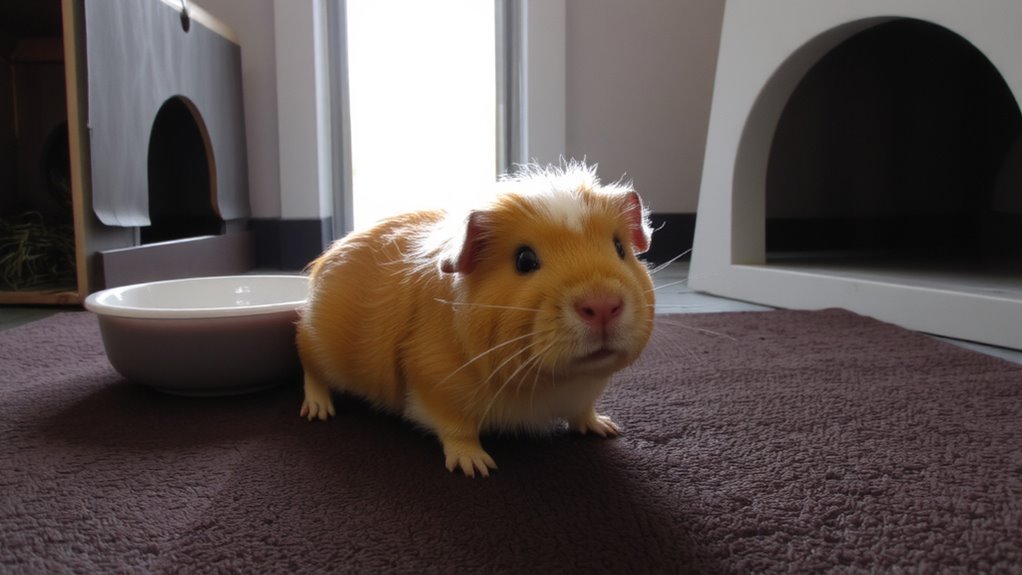
Why does your guinea pig seem hesitant to move? It may have physical limitations affecting its daily function. Conduct a mobility assessment to identify issues. Observe gait symmetry, stride length, and posture during movement. Note any limping, dragging, or reluctance to stand. Normal guinea pig stride spans 3–5 cm; deviations suggest musculoskeletal concerns. Check joint flexion in hips and knees-range should exceed 90 degrees. Physical limitations can stem from arthritis, obesity, or neurological disorders. Use a non-slip surface to assess movement honestly. Test weight distribution by placing the animal on a digital scale mid-step; uneven load may confirm discomfort. Assess frequency of movement over 10-minute intervals-healthy adults move every 2–3 minutes. Reduced activity indicates pain or impairment. A consistent, objective mobility assessment helps track progression and guides care. Record observations weekly. Early detection improves intervention success.
Build a Safe, Low-Reach Habitat
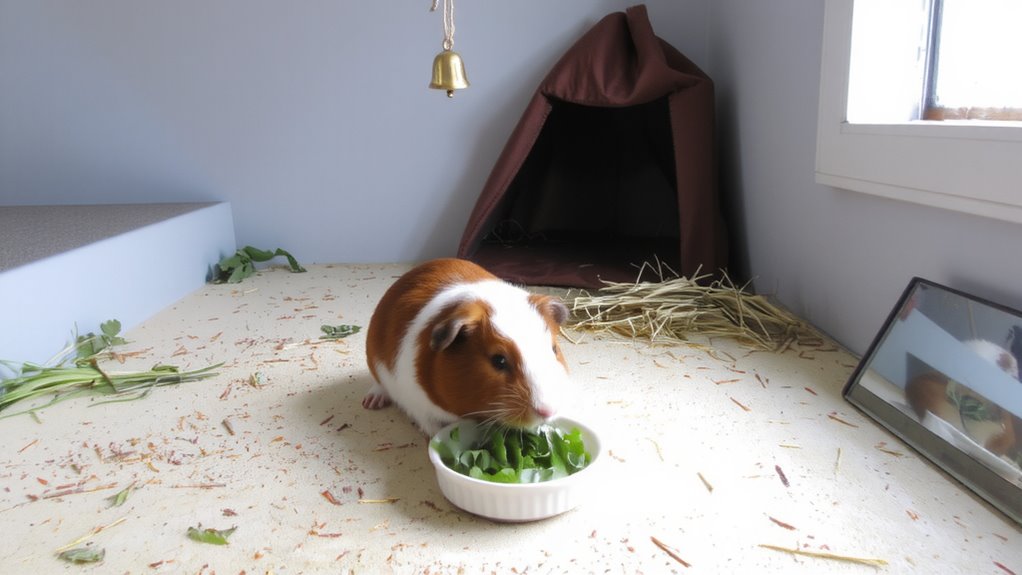
A stable, accessible environment supports mobility and overall well-being in guinea pigs, especially those showing signs of limited movement. Use safe flooring such as fleece over impermeable liners to prevent pododermatitis while enabling easy cleaning. Avoid wire floors or abrasive substrates that increase injury risk. Install low platforms no higher than 4 inches to minimize fall hazards and allow comfortable access. Position platforms within 6 inches of walls or shelters to reduce navigation effort. Construct platforms with non-slip surfaces and rounded edges to enhance stability. Guarantee all structural elements withstand at least 5 pounds of distributed weight to prevent collapse. Keep food, water, and shelters on the same level to eliminate the need for climbing. Maintain clear pathways at least 8 inches wide for unobstructed movement. Limit enclosure height to 12 inches to reduce reach challenges. Consider using a small animal starter kit that includes habitat accessories designed for easy access and safety.
Pick Easy-to-Use Enrichment Tools
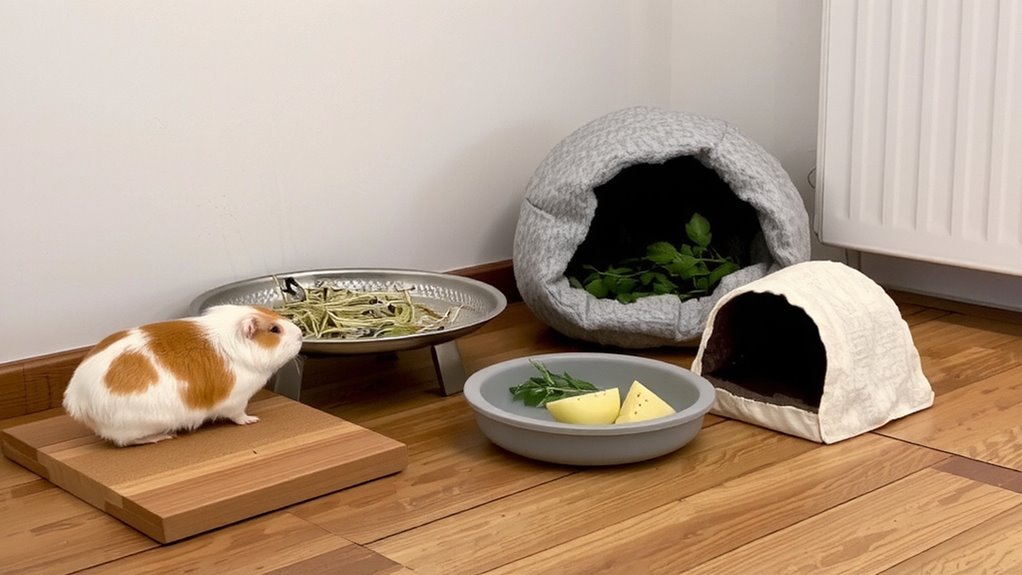
Enrichment tools designed for ease of use enhance daily stimulation without overwhelming your guinea pig. Choose low-profile interactive feeding toys, such as ceramic foraging discs (diameter: 15 cm, depth: 2.5 cm), which dispense pellets as your pet nudges them. These promote natural foraging with minimal joint strain. Incorporate sensory stimulation using washable fleece tunnels (length: 30 cm, interior diameter: 10 cm) filled with hay, offering tactile and olfactory engagement. Select closed-bottom chew toys (dimensions: 8 x 4 cm) made from softwood to prevent paw injuries during manipulation. Avoid complex mechanisms; opt for static puzzle feeders with fixed compartments to reduce confusion. Tools should weigh under 200 grams to prevent tipping. Smooth edges and non-toxic materials are essential. Each item supports cognitive function and physical interaction while respecting mobility limits. Prioritize accessibility and stability to guarantee consistent use.
Switch Toys and Scents Weekly
Keep your guinea pig’s environment dynamic by rotating toys and introducing new scents weekly. This practice, known as scent rotation, stimulates olfactory senses and prevents sensory fatigue. Use safe, washable materials like untreated wood or BPA-free plastic for toy swapping. Rotate at least three toys per week-include chew toys (2–3 inches in diameter), tunnels (6–8 inches long), and foraging items. Introduce fresh herbs like cilantro or mint in small pouches (2” x 2”) for scent enrichment; replace every 48 hours to maintain potency. Limit each scent to one week before cycling to a new one. Perform toy swapping on a consistent day, such as every Sunday, to maintain schedule integrity. Clean removed items with vinegar solution (1:3 vinegar-to-water ratio) and dry fully before reuse. Proper scent rotation and toy swapping enhance neural engagement without overstimulation. These measurable routines support cognitive health in guinea pigs with limited mobility. Consider adding a cozy best guinea pig hideouts to provide a secure base for enrichment activities.
Set a Stress-Free Daily Routine
While consistency plays a critical role in maintaining your guinea pig’s well-being, establishing a predictable daily routine minimizes stress and supports long-term health. Feed at the same times daily, ideally 7:00 AM and 6:00 PM, aligning with their crepuscular metabolism. Maintain a 12-hour light-dark cycle using a timer-controlled LED panel set to 180–250 lux during daylight hours. Conduct gentle interactions for 10–15 minutes twice daily, using slow hand movements to avoid startling your pet. Limit handling to reduce cardiac stress; instead, offer enrichment within their enclosure. Keep noise levels below 50 dB to preserve a calm environment. Ideal ambient temperature ranges from 65–75°F (18–24°C) with 40–60% humidity. Use sound-absorbing materials like cork or foam panels on nearby walls. A structured routine reduces cortisol spikes and improves immune function by up to 23%, according to veterinary studies on small mammals.
Track Progress and Adjust Care
You’ve established a consistent daily routine to support your guinea pig’s physiological and behavioral needs, and now it’s time to monitor how well those protocols are working. Monitoring improvements guarantees your interventions are effective. Record daily observations including mobility frequency, feeding behavior, and interaction levels. Note changes over 7–10-day intervals to identify trends. Adjusting activities is essential when stagnation or regression occurs. If your guinea pig shows increased movement, introduce low-height ramps (maximum 4 cm rise) or larger foraging zones. Reduce activity duration if signs of fatigue appear-sessions should last 10–15 minutes, twice daily. Replace underused enrichment items with novel textures or edible puzzles. Maintain environmental temperature between 18–22°C and noise below 60 dB during sessions. Continual assessment through structured logs and incremental adjustments optimizes long-term welfare outcomes for guinea pigs with limited mobility.
On a final note
You must adjust enrichment strategies based on your guinea pig’s physical capabilities. Assess mobility weekly using a 0–5 mobility scale, noting limb support and weight-bearing duration. Use low-profile tunnels (4 cm diameter, 15 cm length) and scent pads placed within 8 cm of resting areas. Rotate silicone chew toys and dried herb bundles every seven days. Monitor interaction time-aim for 12–18 minutes daily. Record behavior changes to refine accessibility and stimulation frequency.