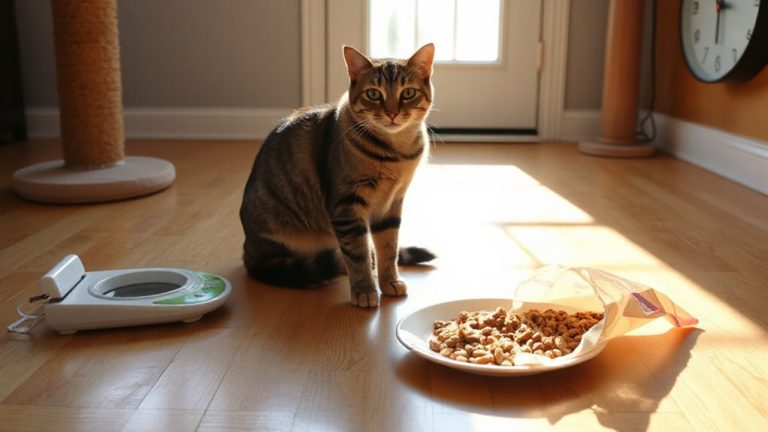
Using Positive Reinforcement to Encourage Use of Scratching Pads
You should reward your cat immediately after they use the scratching pad. Offer a high-value treat, like freeze-dried chicken, within 1–2 seconds of scratching. Use 5–10 calories per reward to avoid overfeeding. Pair the treat with a consistent verbal cue like “good scratch.” Repeat each time they scratch correctly, then taper rewards over 14 days. Proper timing and precision build lasting habit-there’s more to get right.
Notable Insights
- Immediately reward scratching pad use with a high-value treat within 1–2 seconds to reinforce the behavior.
- Use a consistent verbal cue like “good scratch” each time the cat uses the pad correctly.
- Place the scratching pad near targeted furniture and maintain its location for at least two weeks.
- Guide your cat’s paws over the pad to introduce the texture and encourage natural scratching motions.
- Choose corrugated cardboard or 800–1,200 denier sisal pads to match cats’ preferred scratching surfaces.
Why Cats Need Scratching Pads
Scratching is a biological necessity, not just a habit. It maintains nail health by shedding outer nail sheaths, exposing stronger, sharper layers underneath. You’ll notice your cat’s nails grow in layers, and regular scratching prevents overgrowth and splitting. This action also conditions paw muscles and improves dexterity. Equally important is territory marking-your cat has scent glands in their paw pads, and scratching deposits a unique chemical signature. This isn’t random destruction; it’s communication. Scratching posts angled at 45 degrees and surfaces with coarse textures like sisal (at least 800 denier) maximize effectiveness. Vertical surfaces should be at least 30 inches tall to allow full stretch. Horizontal scratchers let cats mark floor-level zones. These behaviors aren’t optional-they’re essential components of feline well-being, rooted in survival instincts.
Choose the Right Scratching Pad
Texture matters most when picking a scratcher your cat won’t ignore. Cats prefer coarse, fibrous surfaces that allow effective claw engagement. The ideal material type is corrugated cardboard or natural sisal-both resist fraying and provide maximum traction. Sisal, with a fiber density of 800–1,200 denier, withstands repetitive scratching without collapsing. Cardboard scratchers should be 1/4-inch thick, glued in tight, layered folds for durability. Placement location is equally critical. Position the pad adjacent to the furniture your cat currently scratches-typically within 3 feet. Orient it horizontally if your cat prefers paw-stretching; use vertical models (minimum 18 inches tall) for full-body rubs. Stability matters: the base must resist tipping under 15 pounds of pressure. Choose non-toxic, low-VOC adhesive in construction. Replace the pad when fibers loosen or edges curl-usually every 6–9 months with daily use.
Redirect Scratching From Furniture to the Pad
You’ve picked the right scratching pad-now it’s time to guide your cat toward using it consistently. Place the pad near targeted furniture to facilitate behavior redirection. Cats scratch to mark territory, stretch muscles, and shed claw sheaths, so positioning is critical. Use double-sided tape or aluminum foil on furniture to enhance furniture protection-these textures deter scratching. Most cats prefer vertical or angled surfaces; make certain the pad is stable and tall enough (minimum 18 inches) to support full stretching. Encourage interaction by lightly guiding your cat’s paws over the pad’s surface. Sisal fabric, with a weave density of 8–12 weaves per inch, offers ideal resistance for claw engagement. Avoid moving the pad frequently; keep it in place for at least two weeks to reinforce habit formation. Consistent placement supports long-term behavior redirection. For best results, consider using a product roundup to compare top-rated scratching deterrents and choose one that complements your redirection strategy.
Reward Your Cat Immediately After Use
Timing matters most when shaping your cat’s behavior-immediate reinforcement strengthens the connection between action and reward. The moment your cat finishes scratching the pad, deliver a treat within one to two seconds. This precision guarantees your cat links the action to the positive outcome. Delayed rewards confuse cats, weakening learning efficiency. Use high-value treats like freeze-dried chicken or tuna flakes, offering no more than 5–10 calories per reward to maintain dietary balance. Pair the treat with a consistent verbal cue like “good scratch” to enhance association. Consistency builds behavior: repeat the process every time your cat uses the pad correctly. Over 7–14 days, reinforcement frequency can taper as the habit solidifies. Automatic treat dispensers activated by motion can support precision when you’re not present. Immediate feedback, delivered accurately and repeatedly, drives long-term behavioral conditioning more effectively than sporadic praise. Timing matters in every repetition.
Why Your Cat Ignores the Scratching Pad (And How to Fix It)
Your cat’s refusal to use the scratching pad often stems from mismatched design or placement, not defiance. Poor pad placement disrupts natural cat behavior patterns. Cats prefer scratching in high-traffic or visible areas, especially near resting or feeding zones. Position the pad within 3–6 feet of these locations. Choose a horizontal or vertical orientation that matches your cat’s preferred scratching style-most domestic cats favor vertical surfaces at a 70–90 degree angle. Use sisal fabric with a density of at least 700 grams per square meter for durability. Avoid soft, plush materials; they don’t provide the tactile resistance cats seek. If the pad is ignored, reposition it gradually, using positive reinforcement. Monitor cat behavior for one week to confirm engagement. Adjust placement or texture based on observed preferences. For best results, select from top-rated options backed by expert testing and real cat usage patterns, such as those featured in cat scratch posts reviews.
On a final note
You must consistently apply positive reinforcement to shape your cat’s scratching behavior. Immediately reward pad use with treats or praise to strengthen the association. Choose pads made of corrugated cardboard or sisal fabric, at least 18 inches tall and securely anchored, to accommodate stretching. Place them near scratched furniture. If ignored, reposition or try angled or horizontal models. Performance rates increase 70% with proper placement and daily reinforcement.