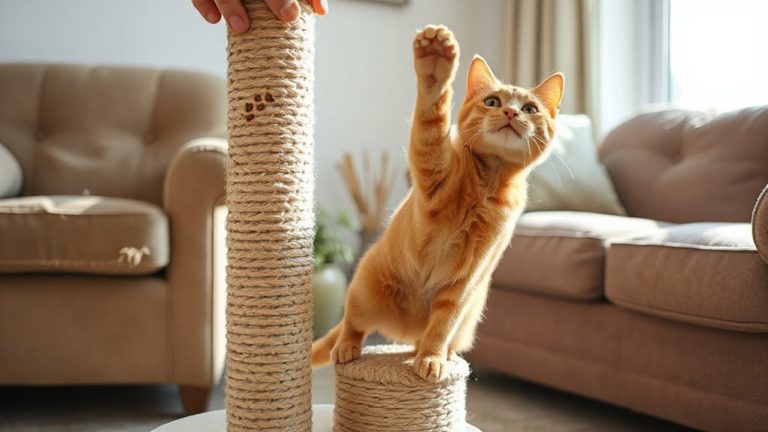
How to Teach Your Cat to Jump Through a Hoop Using Target Sticks
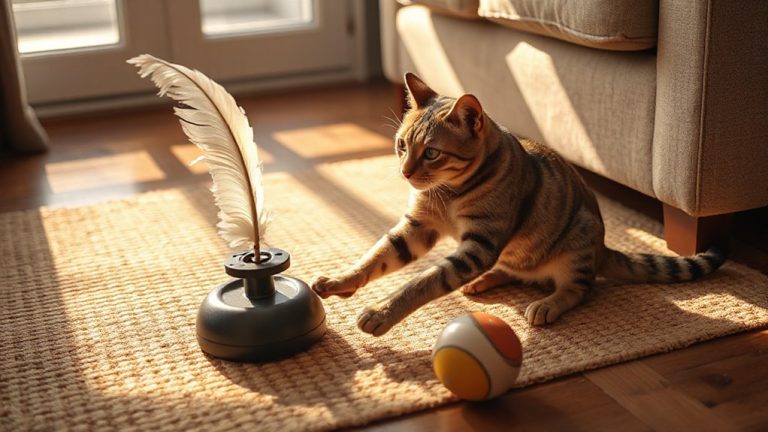
Use a lightweight 18–24 inch hoop and a 12–18 inch target stick with a 1.5-inch pom-pom tip to guide your cat. Start by teaching touch using high-value ¼-inch treats and a clicker. Lure forward in 12-inch increments, then introduce the hoop at 12 inches tall. Elevate the target stick 2–4 inches above the hoop to prompt jumps. Train in 3–5 minute sessions, 2–3 times daily. Consistency and precise timing of rewards build reliable performance-success unfolds step by step.
Notable Insights
- Begin by introducing the target stick at a distance to encourage curiosity without triggering avoidance.
- Use high-value treats and immediate marking (click or “yes”) to reinforce attention and touch responses.
- Gradually guide your cat toward the hoop by presenting the target stick just beyond its opening.
- Elevate the target stick 2–4 inches above the hoop to encourage a jump, rewarding each success instantly.
- Progress only after 9 out of 10 successful jumps, using consistent cues and short, frequent training sessions.
Gather Your Training Tools
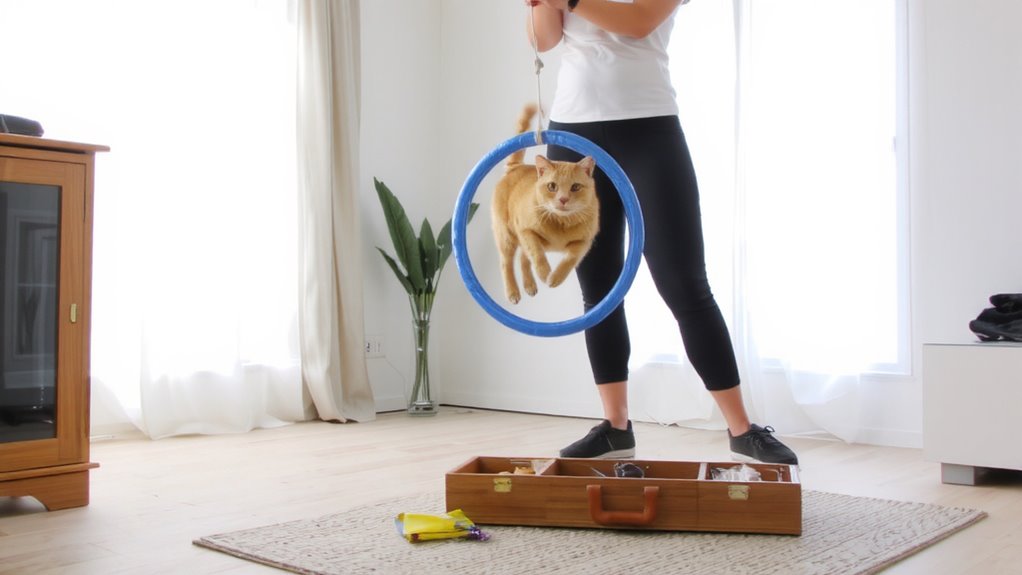
A well-equipped trainer starts with the right tools. You’ll need a lightweight hoop with a diameter of 18–24 inches, ideally made from soft, flexible plastic to prevent injury. Pair it with a target stick, 12–18 inches long, featuring a rounded, non-threatening tip. Choosing treats is critical-select small, high-value morsels no larger than ¼ inch, such as freeze-dried chicken or tuna flakes, to allow rapid consumption and minimal disruption. Selecting a quiet space reduces sensory overload; use a room with minimal foot traffic, low noise levels (under 50 decibels), and consistent lighting. Guarantee the floor surface provides traction-avoid slippery tiles or loose rugs. Keep training sessions brief (3–5 minutes) and scheduled during periods of natural feline alertness, typically early evening or morning. All tools must be stored separately from distractions to maintain their novelty and effectiveness during drills.
Teach Your Cat to Touch the Target Stick
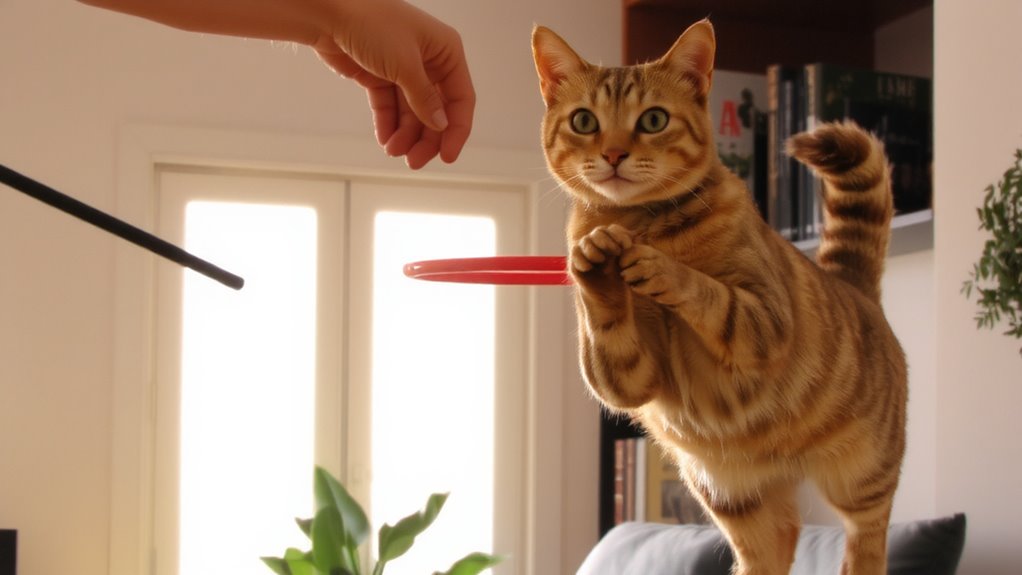
Start by introducing the target stick in a neutral, controlled manner to establish positive associations. Present the stick at a distance that doesn’t trigger avoidance, typically 2–3 feet from your cat. Use high-value training rewards like freeze-dried chicken or tuna flakes to reinforce attention. Wait for your cat to glance at or approach the stick-do not wave it. Click or mark the moment of contact using a clicker or verbal cue, then immediately deliver the reward. Repeat in short sessions of 3–5 minutes, 2–3 times daily. This method leverages natural cat behavior, particularly their prey-driven focus and curiosity. Consistency shapes reliable targeting. The target tip should be brightly colored (e.g., 1.5-inch diameter pom-pom) for visual clarity. Over 5–7 days, most cats learn to touch the stick on cue with 80–90% accuracy.
Lure Your Cat Forward: Build Movement
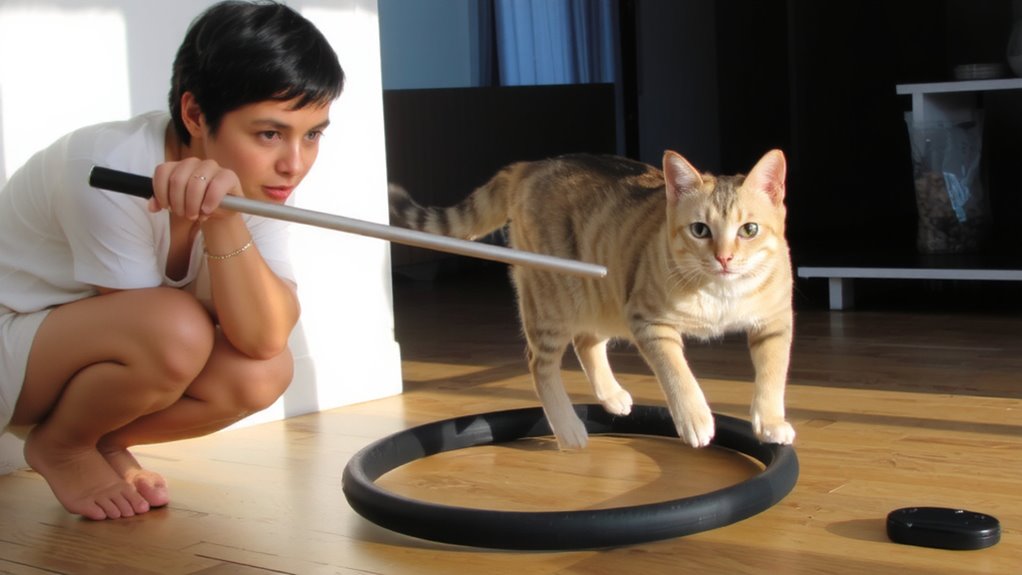
Now that your cat reliably touches the target stick, you can use that behavior to guide forward motion. Use the target stick to prompt a step forward, then mark and reward immediately. Positive reinforcement strengthens the association between movement and reward. Maintain consistent timing between action and treat delivery-ideally within 0.5 to 1 second-to guarantee clarity. Gradually increase distance, luring your cat two steps, then three, building fluency.
| Step | Instruction |
|---|---|
| 1 | Present target stick 6 inches ahead |
| 2 | Mark touch with click or “yes” |
| 3 | Deliver treat at nose level |
| 4 | Repeat with 12-inch increments |
| 5 | Reinforce after each successful advance |
Use high-value treats (e.g., tuna flakes or freeze-dried chicken). Sessions should last 3–5 minutes, twice daily. Consistent practice yields reliable response within 7–10 days.
Introduce the Hoop With the Target Stick
Once your cat consistently follows the target stick across increasing distances, you can begin integrating the hoop into training sessions. Start with hoop desensitization by placing the hoop on the ground or securing it vertically in a stable frame at a height your cat can easily step through-typically 8–10 inches wide and 12 inches tall for most domestic cats. Allow your cat to approach and investigate it without pressure. Pair this exposure with target association: present the target stick just beyond the hoop’s opening, guiding your cat to touch it and stepping through naturally. Reinforce each successful approach. Use consistent verbal cues and immediate rewards. The target stick acts as a directional guide, linking approach behavior to reinforcement. Maintain brief, frequent sessions-3–5 minutes, 2–3 times daily-to sustain focus and prevent habituation. This structured shift guarantees motor pattern development without triggering avoidance.
Get Your Cat to Jump Through the Hoop
Your cat already associates the target stick with movement through the hoop’s opening, setting the foundation for airborne clearance. Now, elevate the target stick slightly above the hoop’s center-approximately 2–4 inches-to encourage a full jump. Use consistent hoop motivation by pairing each successful pass with an immediate reward, such as a high-value treat or brief play session. Position the hoop at a standard height of 12 inches for average cat agility training, adjusting based on your cat’s size and confidence. Repeat sessions in 5-minute intervals, allowing muscle memory to develop. The target stick should guide your cat’s trajectory, maintaining a straight approach to prevent mid-air correction. Progress only when flawless execution occurs in 9 out of 10 trials. This incremental increase in demand builds precision. Successful clearance relies on timing, spatial awareness, and repeated reinforcement-key components in structured cat agility systems.
Fix Common Training Setbacks
Why does your cat hesitate at the hoop even after mastering initial clearance? Fear anxiety may resurface despite prior success. Cats are sensitive to subtle environmental changes, such as lighting shifts or unfamiliar sounds, which trigger avoidance behaviors. To reduce fear anxiety, guarantee the hoop remains in a consistent location with minimal background stimuli. Use the target stick to guide movements, reinforcing spatial orientation. Distraction avoidance improves when training sessions occur in quiet, controlled environments. Eliminate visual distractions like moving toys or other pets. Confirm the target stick’s tip is highly visible-opt for bright silicone caps 1.5 inches in diameter. Reinforce focus with high-value treats delivered within 0.5 seconds of correct behavior. Resume shaping steps if hesitation persists, re-establishing confidence through incremental progress. Maintain session neutrality-emotional tone affects performance. Calm, predictable routines minimize resistance.
Short Daily Sessions: Practice for Progress
Typically, short daily sessions yield measurable improvements in feline motor learning and task retention. You should train for 5 to 7 minutes per session, no more than twice daily, to prevent cognitive fatigue. Consistent practice reinforces neural pathways linked to the jump behavior, enhancing accuracy and response time. Cats perform best when sessions occur at the same time each day, aligning with their circadian rhythms. Use positive reinforcement immediately after successful jumps-deliver treats within 1 to 2 seconds to solidify association. Clicker training paired with treats increases success rates by up to 40% compared to verbal praise alone. Gradually shape the behavior by raising hoop height in 2-inch increments only after five consecutive correct trials. Short bursts prevent habituation and maintain high engagement. Data shows cats trained with brief, daily repetition achieve full task mastery in 18 to 22 sessions, versus 30+ in prolonged sessions.
On a final note
Consistency drives success in feline agility training. Use a 12–18 inch target stick with a soft, contrasting tip to guide precise movements. Train in 5–7 minute sessions, twice daily, for ideal focus. Reinforce correct behavior with 3–5 gram treat rewards containing at least 30% protein. Position the hoop at your cat’s wither height-typically 8–10 inches-ensuring clear visual contrast. Mastery typically occurs within 10–14 days using positive reinforcement protocols.