Using Treat Trails to Encourage Exploration in Fearful Dogs
You use treat trails to guide your fearful dog through stressful environments by placing high-value, aromatic treats every 2–3 feet in a straight line. Start in a quiet area, using soft, pea-sized rewards like freeze-dried liver to encourage forward motion. Keep sessions under 5 minutes on non-slip surfaces, maintaining a 2:1 reward-to-step ratio. This builds confidence through classical conditioning. Proper timing-rewarding within 1–2 seconds-reinforces progress. You’ll find how subtle adjustments improve outcomes over time.
Notable Insights
- Place high-value, aromatic treats 2–3 feet apart to guide fearful dogs through anxiety-inducing areas safely.
- Use soft, small treats like freeze-dried liver to maintain focus and support quick consumption during exploration.
- Start treat trails in quiet, familiar spaces with short 3–5 foot paths to ensure initial success.
- Watch for stress signals like whale eye or lip licking, and adjust distance from triggers accordingly.
- Gradually increase trail length by no more than 20% per session, repeating in similar settings 3–5 times.
What Are Treat Trails for Fearful Dogs?
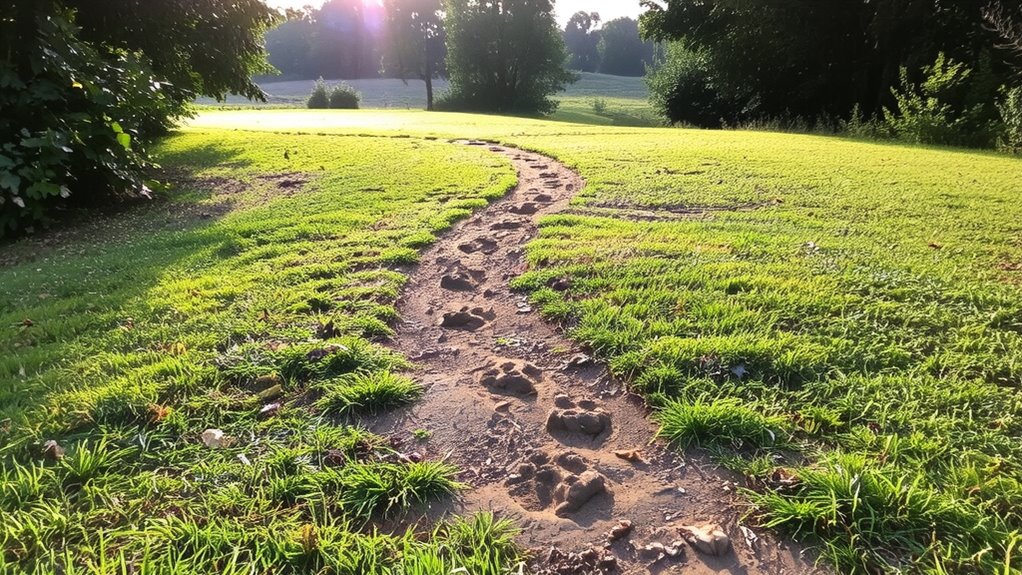
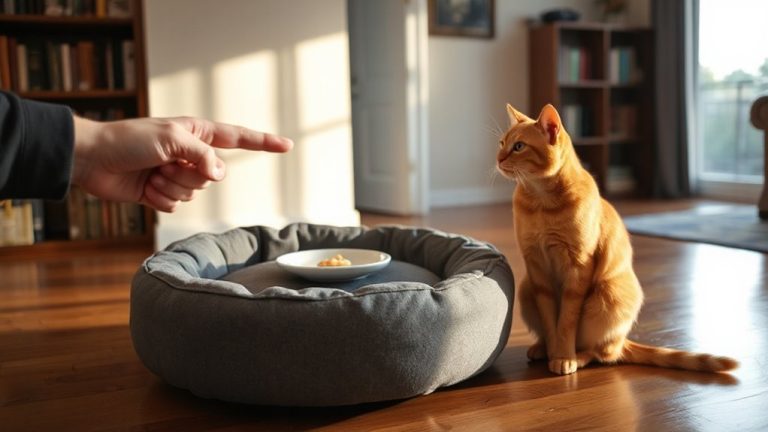
A treat trail is a training technique that uses strategically placed food rewards to guide a fearful dog through an unfamiliar or anxiety-inducing environment. You place high-value treats at regular intervals, creating a predictable path that encourages forward motion. The benefit trust builds as your dog learns that movement leads to positive outcomes. Each treat acts as a reinforcement, helping to reduce anxiety over time through repeated exposure. Use small, soft treats spaced 2–3 feet apart to maintain focus without overfeeding. Start in low-stress areas before progressing to more challenging zones. The technique relies on classical and operant conditioning principles. Consistency and timing are essential-rewards must follow behavior within 1–2 seconds. This method supports systematic desensitization, promoting confidence. You’re not luring; you’re shaping behavior with precision. Treat trails offer a structured, measurable way to improve canine navigation and emotional regulation in stressful settings.
Read Your Dog’s Stress Signals Before You Begin
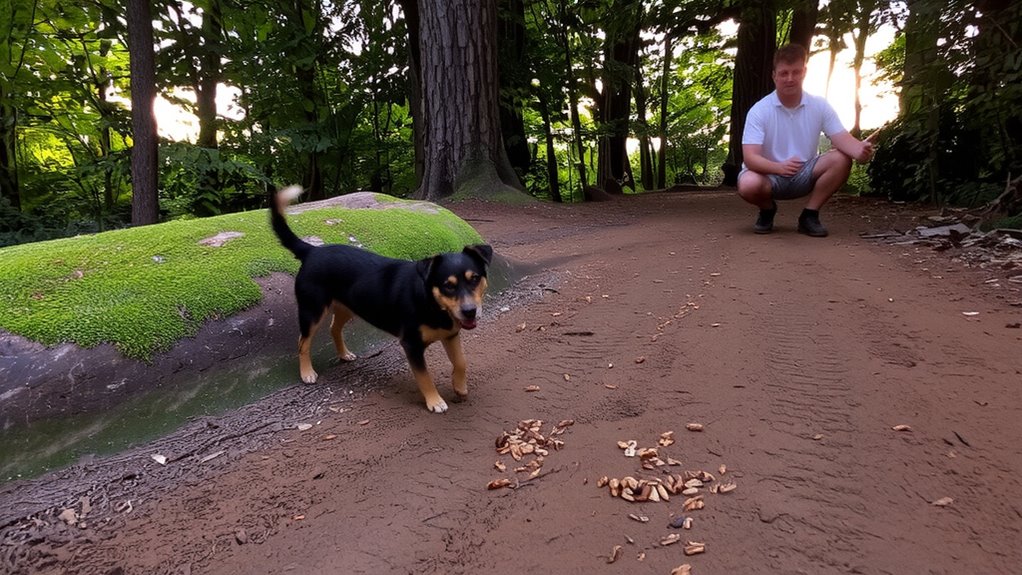
Body language is your dog’s primary means of communicating stress, and recognizing it is non-negotiable before laying down a treat trail. Subtle shifts in posture, ear position, or tail carriage indicate rising anxiety. A lowered head, whale eye, or lip licking are reliable stress markers. Freeze responses or excessive sniffing suggest overwhelm. Conversely, relaxed ears, soft eyes, and loose movement are safety cues signaling comfort. Monitor for blink rate increases or panting unrelated to heat-both are physiological stress indicators. Distance from the stressor matters; more than 10 feet often permits learning. Less than five feet typically inhibits it. Use a stopwatch to time engagement: under 3 seconds of focus suggests poor threshold management. Safety cues must dominate before proceeding. Accurate interpretation prevents reinforcement of fear. Misreading body language risks sensitization, not desensitization. Tracking these subtle cues can be supported by observing baseline behaviors, which modern pet health trackers can help document over time.
Lay a Simple Treat Trail in 5 Steps
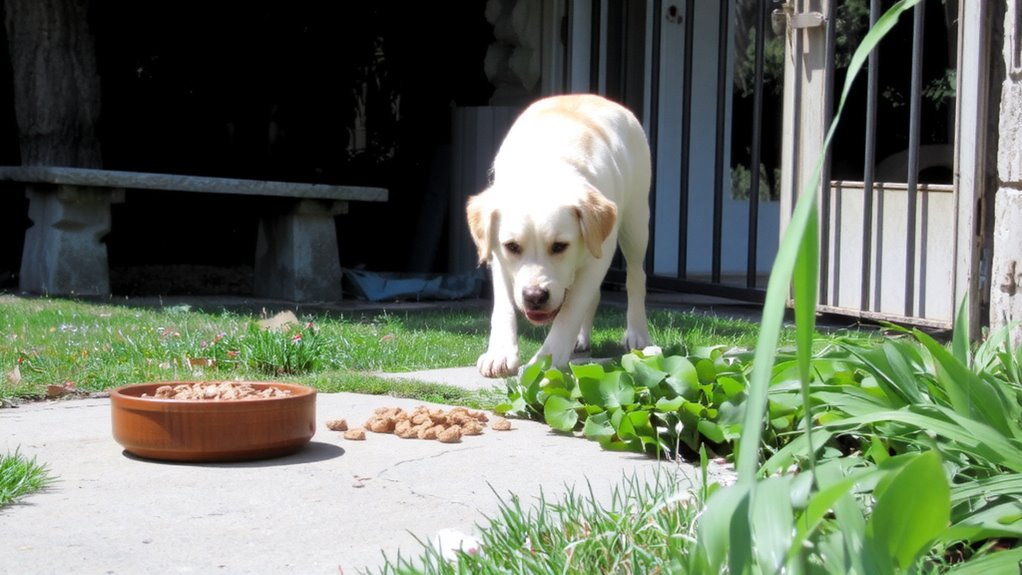
Success starts with setup. Choose a quiet, familiar space to minimize distractions and stress. Begin with a short trail length-around 3 to 5 feet-for initial success. Space treats 6 to 12 inches apart to encourage forward movement without overwhelming your dog. Use consistent treat placement to create a predictable pattern, placing each reward slightly more forward than the last. Start at the dog’s current comfort zone, ending near a slightly novel or avoided area. Keep the trail straight and visible, avoiding sharp turns or obstacles. Conduct the trail on a non-slip surface to support confident movement. Limit sessions to 3–5 minutes to maintain focus. Immediate reinforcement through proper treat placement builds association between progress and reward. Adjust trail length gradually as your dog gains confidence, increasing distance by no more than 2 feet per session.
Use Smelly, High-Value Treats to Build Confidence
Many dogs rely heavily on scent to assess safety, making highly aromatic, high-value treats essential for building confidence during treat trail exercises. Use treats with strong odors, such as freeze-dried liver, canned tripe, or shredded cheese, to engage your dog’s olfactory system. These scents travel farther and diffuse more effectively, increasing detection range and encouraging active sniffing. High-value treats should be soft, small (6–10 mm in size), and easily consumed to maintain focus. In scent games, consistent reward delivery reinforces positive associations with exploration. For ideal confidence building, pair treat placement with neutral or mildly novel environments. Avoid overwhelming stimuli-start indoors or in quiet yards. The predictability of scent-based rewards enhances neural reward pathways, promoting emotional regulation. Use treat trails as structured scent games to incrementally condition exploratory behavior. Over time, this method strengthens your dog’s willingness to investigate new areas, turning anxiety into engagement through targeted reinforcement.
Help Your Dog Explore New Places With Positive Reinforcement
You’ve already used strong-smelling, high-value treats to build your dog’s confidence in familiar settings-now it’s time to apply that foundation outdoors. Positive associations are critical when introducing new environments. Start by scattering treats every three to five feet along a quiet sidewalk or park perimeter. This creates a treat trail that encourages forward motion through predictable rewards. Use chicken, cheese, or commercial treats with odor concentrations above 80 AU (aroma units) to maintain focus. Gradual exposure means limiting initial sessions to five minutes at low-distraction times, like early morning. Increase duration by no more than 20% per session. Maintain a 2:1 reward-to-step ratio to sustain engagement. Keep the leash loose to avoid stress signals. Each outing should end before signs of fatigue-typically after 15 minutes-reinforce success, then retreat. Repeat in similar locations for three to five sessions before advancing. For consistent results, choose best training treats for pets that are small, soft, and highly palatable to maximize reinforcement without overfeeding.
On a final note
You build confidence in fearful dogs through structured treat trails. Each step forward is reinforced with high-value, aromatic rewards placed at precise intervals-typically 12 to 18 inches apart. This predictable pattern encourages forward motion using scent, a primary sensory channel in canines. You maintain low stress by reading subtle body cues. The method leverages classical and operant conditioning to create positive associations with novel environments, effectively reshaping avoidance behaviors over time.