Designing a Weekly Puzzle Toy Rotation Schedule for Intelligent Cats
You should rotate puzzle toys every 24 hours to maintain peak cognitive engagement. Use high-difficulty puzzles on days 1, 3, and 5, with 15–20 minute sessions and 15 ml treat capacity. Moderate-challenge puzzles work for 10-minute intervals on days 2, 4, and 6. Day 7 resets with low-complexity toys to build confidence. All toys must use non-toxic, durable materials like BPA-free recycled plastic, food-grade silicone, or untreated wood. Incorporate hunting triggers: crinkle lining, catnip compartments, motorized ball dispensers with 3–5 cm zigzag motion, or slider mechanisms requiring paw manipulation. Pair dry kibble with low-effort puzzles and freeze-dried treats for advanced challenges. Track completion times and replace toys with under 2 minutes of average daily interaction. Each puzzle should feature 0.5–1.5 cm clearance mechanisms like sliding drawers or flip compartments. Adjust difficulty settings weekly using puzzles with 2–4 locking positions. This system sustains interest through sensory variety, textural contrast, and progressive problem-solving. A monthly update replaces at least 30% of the rotation to prevent habituation. Further optimization of reward timing and material durability is achievable.
Notable Insights
- Rotate puzzle toys every 24 hours to maintain novelty and prevent habituation in intelligent cats.
- Schedule high-difficulty puzzles on days 1, 3, and 5 with 15–20 minute engagement sessions.
- Use moderate-challenge puzzles on days 2, 4, and 6, limiting play to 10 minutes per session.
- Reserve day 7 for low-complexity toys to build confidence and reduce cognitive fatigue.
- Ensure all puzzles hold at least 15 ml of treats and are made from safe, durable materials like BPA-free plastic or food-grade silicone.
Build a 7-Day Puzzle Toy Rotation
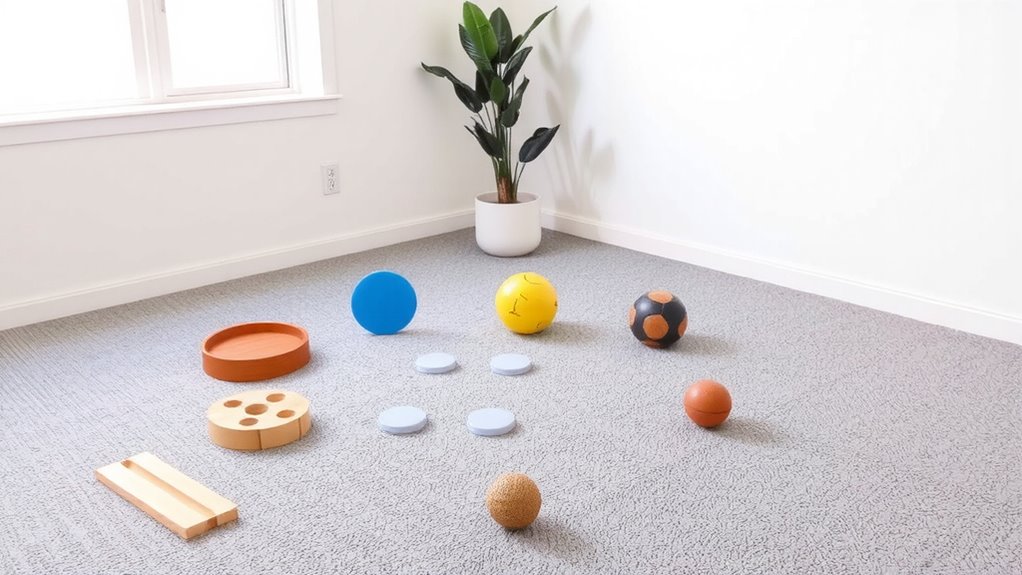
Why risk toy fatigue when you can optimize engagement? Design a 7-day puzzle toy rotation to sustain your cat’s cognitive interest. Rotate toys every 24 hours to maximize play duration and mental stimulation. Use puzzle toys made from varied toy materials-recycled BPA-free plastic, food-grade silicone, and untreated wood-to assess durability and safety. Each material affects interaction: silicone resists chewing, plastic eases cleaning, wood provides textural novelty. Schedule high-difficulty puzzles on days 1, 3, and 5, limiting play duration to 15–20 minutes to prevent overexertion. Days 2, 4, and 6 use moderate-challenge designs with 10-minute sessions. Reserve day 7 for low-complexity toys to reinforce confidence. Guarantee each toy’s cavity volume is at least 15 ml to hold standard treat portions. This systematic rotation reduces habituation, increases task persistence, and aligns with feline problem-solving rhythms observed in behavioral studies.
Choose Puzzles That Trigger Hunting Instincts
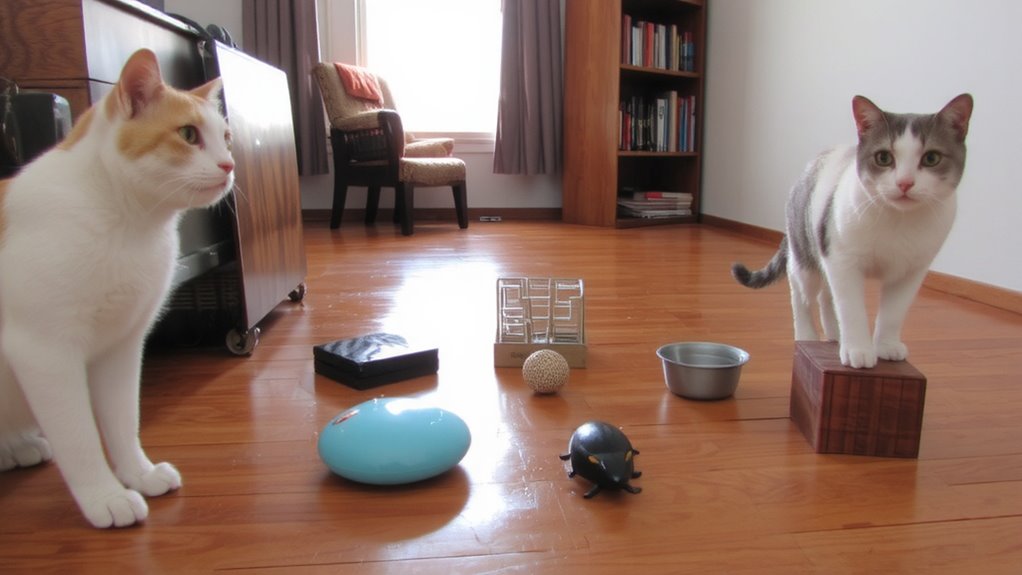
Hunting drive lies at the core of your cat’s natural behavior, and puzzle toys that mimic prey movement or conceal food in dynamic ways tap directly into this instinct. Prey simulation increases motivation by replicating erratic motions and hiding food in concealable compartments. Sensory engagement is maximized when textures, sounds, and scents are incorporated into design. Choose toys with variable difficulty and mechanical triggers to sustain interest.
| Toy Type | Prey Simulation Feature | Sensory Engagement Element |
|---|---|---|
| Moving Ball Dispenser | Motorized zigzag motion (3–5 cm amplitude) | Crinkle lining + catnip compartment |
| Slider Puzzle | Hidden treat compartments under movable panels | Felt surface + food odor retention |
| Flip-for-Food Tray | Lifted flaps requiring paw manipulation | Silicone texture + audible treat release |
Group Toys by Challenge Level & Reward Type
You’ll get the best results by organizing puzzle toys according to challenge level and reward type, guaranteeing each stage matches your cat’s skill progression and motivation. Implement a structured toy categorization system using objective difficulty grading: Level 1 puzzles have open access and visible rewards, ideal for beginners. Level 2 introduces sliding panels or removable covers, requiring motor manipulation. Level 3 involves multi-step actions or memory tasks, suitable for experienced cats. Pair each level with specific reward types-dry kibble for daily use, freeze-dried treats for high effort. Use consistent performance metrics: completion time, error attempts, and engagement duration to assess suitability. Rotate within tiers to maintain novelty without causing frustration. This methodical approach guarantees cognitive stimulation aligns with ability, maximizing learning and minimizing disengagement. Accurate difficulty grading prevents skill plateaus and supports long-term mental enrichment.
Rotate These 5 Boredom-Busting Puzzle Types
Five core puzzle types deliver ideal mental engagement when systematically rotated to align with your cat’s cognitive development and behavioral response patterns. Start with sliding-block puzzles featuring adjustable difficulty tracks, 8–12 inches in width, promoting spatial reasoning. Next, use rotating disc feeders with 3–5 compartments, constructed from BPA-free plastic for reliable puzzle durability. Clear plastic maze puzzles allow visual tracking of treats, stimulating problem-solving through observable cause-and-effect pathways. Weight-activated electronic puzzles introduce timed challenges, though use sparingly due to higher complexity. Finally, treat-dispensing balls, 2.5–3 inches in diameter, encourage pursuit and kinetic manipulation. Rotate these every 3–4 days to prevent habituation. Always align rotations with observed cat preferences, noting which designs elicit sustained interaction. Prioritize sturdier materials to maintain structural integrity across weekly cycles. Document engagement duration and success rates to refine selection. This rotation method optimizes cognitive load while accommodating individual learning curves and material tolerance. Incorporating best cat training toys can further enhance playtime effectiveness and ensure long-term mental stimulation.
Watch for Boredom & Overstimulation Signs
Apathy or agitation-two sides of the same behavioral coin-can signal mismatched puzzle stimulation levels. You must monitor for signs of toy fatigue or mental exhaustion weekly. Extended disinterest in previously engaging puzzles suggests under-stimulation. Conversely, excessive paw swiping, aggressive batting, or avoidance after 10–15 minutes indicates overstimulation. Cognitive load varies by puzzle complexity; multi-step devices require more neural resources than simple treat-release balls. Introducing variety through puppy puzzle toys can help maintain optimal engagement without overwhelming sensitive animals.
| Behavior | Indicates |
|---|---|
| Licking surface | Toy fatigue |
| Rapid disengagement | Mental exhaustion |
| Prolonged staring | Low engagement |
| Hissing at toy | Sensory overload |
Rotate out puzzles showing negative feedback. Limit daily puzzle time to 20 minutes. Use time-limited sessions to prevent habituation. Match puzzle type to observed tolerance. Adjust difficulty based on attention span and physical response. Document reactions to refine scheduling without emotional interpretation.
Update Your Puzzle Toy Rotation Monthly
Monthly updates to your puzzle toy rotation maintain cognitive freshness and prevent habituation. You should implement monthly updates by systematically replacing at least 30% of the current toys to sustain engagement. Rotate in new designs with variable difficulty levels-ideally, puzzles with adjustable challenge settings (e.g., sliding panels with 2–4 locking positions). A diverse toy variety reduces predictability; include options with different reward mechanisms: treat-dispensing rollers, flip compartments, and sliding drawers with 0.5–1.5 cm clearance tolerances. Use toys constructed from non-toxic, BPA-free plastics or untreated hardwoods, measuring between 4–8 cm in height for ideal paw interaction. Monitor usage frequency with timed intervals: over 7 days, track session lengths averaging 3–7 minutes per toy. Replace any puzzle with declining interaction rates below 2 minutes per session. This data-driven approach guarantees consistent mental stimulation and long-term behavioral enrichment.
On a final note
You maintain peak mental engagement by rotating puzzle toys weekly. Each day, introduce a new challenge tied to natural hunting sequences-search, stalk, capture. Use five puzzle types: treat-dispensing balls (2–3 inch diameter), slider trays (3-compartment), flip locks (4-level difficulty), timed feeders (programmable 1–6 meals), and motion-activated toys (infrared sensors). Monitor session length-10 to 15 minutes ideal. Replace or reconfigure monthly to prevent habituation.