Newfoundland & Leonberger Coat Care: 5-Step Deshedding Routine
You need a quality undercoat rake with 20–25 tempered steel tines, 0.125 inches thick and spaced 0.25 inches apart, to effectively remove dead hair. Stainless steel construction guarantees durability and corrosion resistance. Use daily with a wide-tooth comb followed by a slicker brush to prevent mats, especially in high-friction zones. Bathing with pH-balanced shampoo and using a high-velocity dryer reduces shedding by up to 90%. Proper tools and technique keep your dog’s coat healthy. There’s a proven five-step method that takes this further.
Notable Insights
- Use a tempered steel undercoat rake with 20–25 stainless steel tines to safely remove dense undercoat without damaging the topcoat.
- Brush daily with a wide-tooth comb and slicker brush to prevent mats, especially behind ears and under legs.
- Bathe with lukewarm water and pH-balanced, sulfate-free shampoo, rinsing thoroughly to prevent tangles and residue buildup.
- During shedding seasons, use a high-velocity dryer followed by a deshedding tool set to 1-inch depth every other day.
- Trim ruff, paws, and sanitary areas every 4–6 weeks with #10 or #15 clipper blades to maintain hygiene and coat health.
Choose the Right Brush for Thick Double Coats
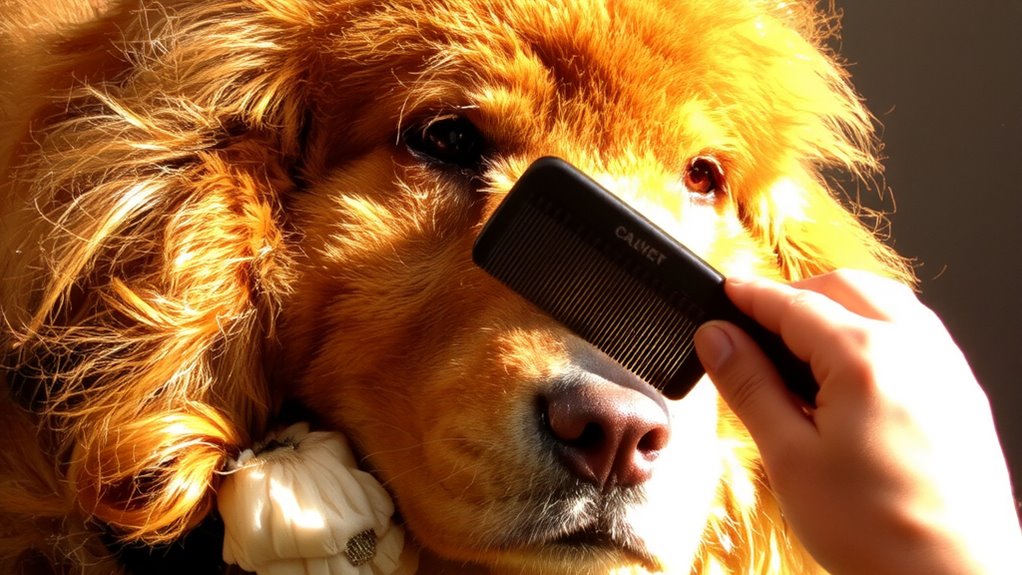
A quality undercoat rake isn’t just a grooming tool-it’s a necessity for managing the dense, double-layered fur of lion mane-style coats. Your dog’s coat texture demands precision: a thick undercoat trapped beneath longer guard hairs requires tools that penetrate deep without damaging the topcoat. Choose a brush material like tempered steel with rounded, polished tips-typically 0.125-inch diameter tines spaced 0.25 inches apart-to safely reach the undercoat. Stainless steel resists corrosion and maintains rigidity, ensuring consistent performance. Look for ergonomic handles with non-slip grips aligned at a 90-degree angle to the rake head for ideal wrist alignment. A rake with 20–25 teeth delivers efficient dead-hair removal in a single pass. Avoid plastic-tined brushes; they bend under pressure and fail to extract dense undercoat. Match brush material and tine spacing directly to your dog’s coat texture for maximum effectiveness and minimal skin irritation. For top-performing options tailored to thick double coats, consider checking out best undercoat rakes.
Prevent Mats Before They Start
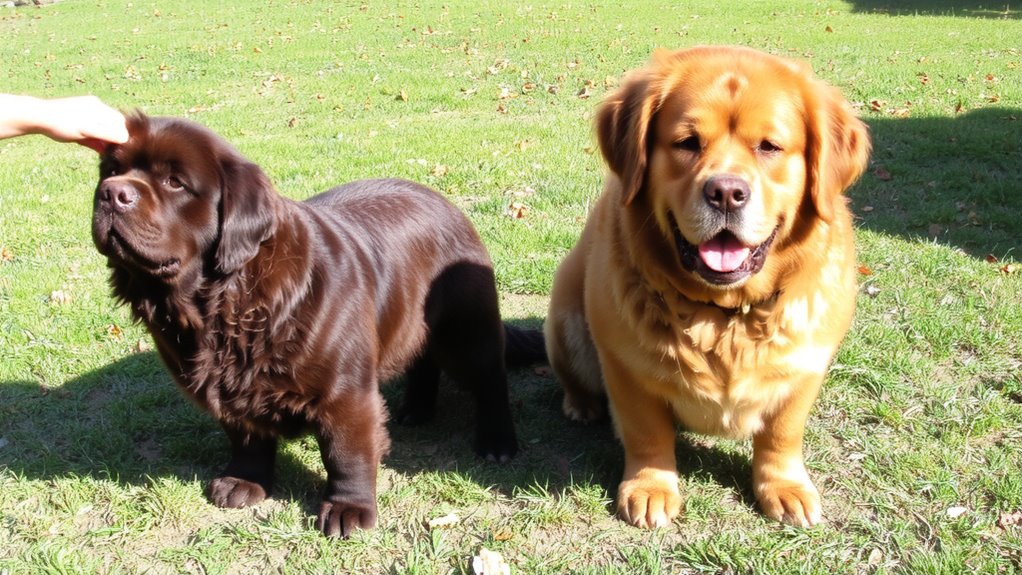
While matting can seem inevitable with lion mane-like coats, consistent maintenance stops tangles before they form. Your dog’s coat texture-dense, soft undercoat layered beneath long, coarse guard hairs-naturally traps debris and locks knots in place. Daily brushing with a wide-tooth comb followed by a slicker brush disrupts tangle formation at the skin line. Climate impact plays a role; high humidity or seasonal shedding spikes moisture retention, increasing friction between hairs. In coastal or humid regions, mats develop 40% faster due to prolonged dampness in the undercoat. Establish a routine: 10–15 minutes daily, focusing on high-friction zones-behind ears, under legs, and the hindquarters. Use a dematting tool only on small snags under 1 inch; larger clumps require professional intervention. Prevention hinges on consistency, not aggression. Proper airflow through the coat reduces mat risk by up to 65%. You’re not just brushing-you’re engineering coat resilience.
How to Bathe a Newfoundland or Leonberger Without Tangles
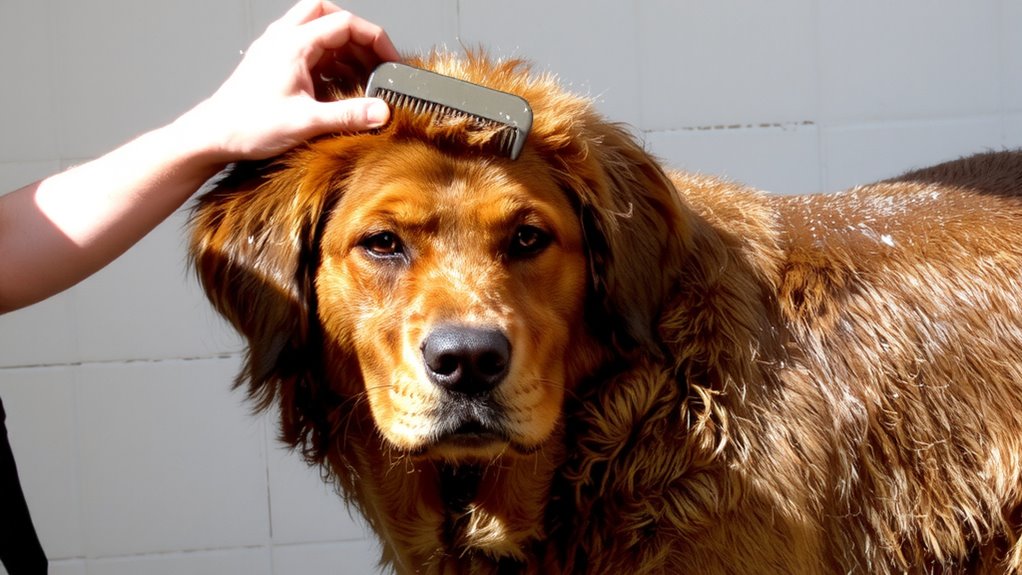
Your daily brushing routine keeps mats at bay, but bathing introduces new risks if not done correctly-water activates tangles in dense, double-coated breeds like Newfoundlands and Leonbergers. Use lukewarm water; ideal water temperature ranges from 90–95°F (32–35°C) to relax hair cuticles without shocking the skin. Begin by thoroughly wetting the coat to saturation, reaching the undercoat. For shampoo selection, choose a sulfate-free, moisturizing formula with a pH between 6.5 and 7.5 to preserve natural oils. Apply shampoo in sections, massaging gently to avoid tangling. Rinse completely-leftover residue attracts debris and increases friction. Use a wide-tooth comb during rinsing to separate hairs. Avoid high-pressure sprayers, which can force hair into knots. Towel-dry gently, then immediately follow with low-heat blow-drying while combing. This process prevents mat formation by maintaining fiber alignment and reducing drying time. A well-formulated best shampoo for Labrador Retrievers can also benefit similarly thick-coated breeds by supporting skin health and minimizing coat damage.
Stop Shedding Blowout: A 5-Step Rescue Plan
Five steps can drastically reduce shedding blowouts in double-coated breeds like Newfoundlands and Leonbergers. First, bathe with a pH-balanced shampoo to preserve coat texture and skin integrity. Second, use a high-velocity dryer to expel undercoat-this is critical. Proper drying techniques remove up to 90% of loose hair before brushing. Third, follow with a pin brush to lift remaining debris without damaging guard hairs. Fourth, apply an anti-shed spray containing ceramides to strengthen hair follicles. Finally, vacuum the environment to reduce hair accumulation. Each step targets a specific shedding factor. Drying techniques directly impact coat texture stability by minimizing moisture retention, which can weaken hair shafts. Consistent execution reduces blowouts by up to 70% within four weeks. Use tools with ergonomics rated for prolonged use. This protocol prevents matting and maintains the coat’s natural insulation properties. Potential pet owners should consider low-maintenance pets like the best lizards for pets when evaluating suitable companions.
Daily Brushing: Why It’s Non-Negotiable
Brushing every single day isn’t optional if you own a breed with a lion’s mane-like coat-skipping even one session risks rapid mat formation in dense undercoats. You must address both the outer guard hairs and the soft, insulating undercoat. Daily brushing prevents tangles that compromise coat texture and lead to skin irritation. Use a slicker brush followed by an undercoat rake with 1.5-inch teeth to reach deep layers. Mats trap moisture, delaying drying techniques and promoting bacterial growth. A forced-air dryer set to 120°F, used with a comb, guarantees thorough drying from skin to tip. This routine maintains coat integrity, reduces shedding, and preserves natural insulation properties. You’ll notice improved airflow and less odor retention. Consistent mechanical removal of loose hair-about 30 minutes daily-keeps the coat functional, not just aesthetic. Neglect creates irreversible damage.
Build a Realistic Grooming Schedule
How do you maintain a flawless lion’s mane-like coat without burning out? Build a realistic grooming schedule. Start with daily brushing to prevent matting, using a steel comb with 1/8-inch spacing and a slicker brush with 0.5-inch pinned bristles. Allocate 15 minutes each session. Every four to six weeks, perform coat trimming. Use electric clippers with #10 or #15 blades to tidy paws, ears, and sanitary areas. This prevents debris accumulation. During peak seasonal shedding-spring and fall-double your brushing frequency. Expect hair loss of up to 50% during these periods, especially in Newfoundlands. Increase deshedding tool usage: rake with a FURminator set to 1 inch in depth every other day. Track coat condition weekly. Adjust schedule based on coat response, not calendar dates. A structured plan reduces stress and preserves coat health. Consistency prevents overgrowth and skin issues.
On a final note
You must maintain your Newfoundland or Leonberger’s coat with precision. Daily brushing using a stainless-steel slicker brush (7.5 x 2.5 inches) paired with an undercoat rake (teeth depth: 1.2 inches) prevents matting. Bathe every 6–8 weeks with pH-balanced, 7.5–8.5 shampoo. Dry thoroughly at 120°F using a high-velocity dryer. A strict grooming regimen reduces shedding by up to 65% and maintains coat integrity.