Veterinary Collaboration Required Before Grooming Heart-Conditioned Old Dogs
You must get your dog’s veterinary clearance before grooming if they have heart disease. Heart conditions reduce stress tolerance, making even mild anxiety dangerous. Your vet will assess NYHA class, arrhythmias, and thoracic radiographs to determine safety. They’ll coordinate with the groomer on sedation risks, essential thresholds, and session length. Safe grooming often means 10–15 minute intervals, warm environments (75–80°F), and non-slip surfaces. Monitoring呼吸 rate, gum color, and fatigue is critical. Further details on how to manage each step follow.
Notable Insights
- Always obtain veterinary clearance before grooming senior dogs with heart disease to ensure safety.
- Veterinarians assess cardiac function using NYHA classification, imaging, and clinical signs to determine grooming eligibility.
- Clinical signs like coughing, fainting, or labored breathing require vet evaluation before any grooming.
- Vets and groomers must collaborate on safe handling, stress limits, and appropriate grooming techniques.
- Monitor heart rate, breathing, and gum color during grooming; stop if signs of distress occur.
Do You Need Vet Approval Before Grooming a Senior Dog With Heart Disease?
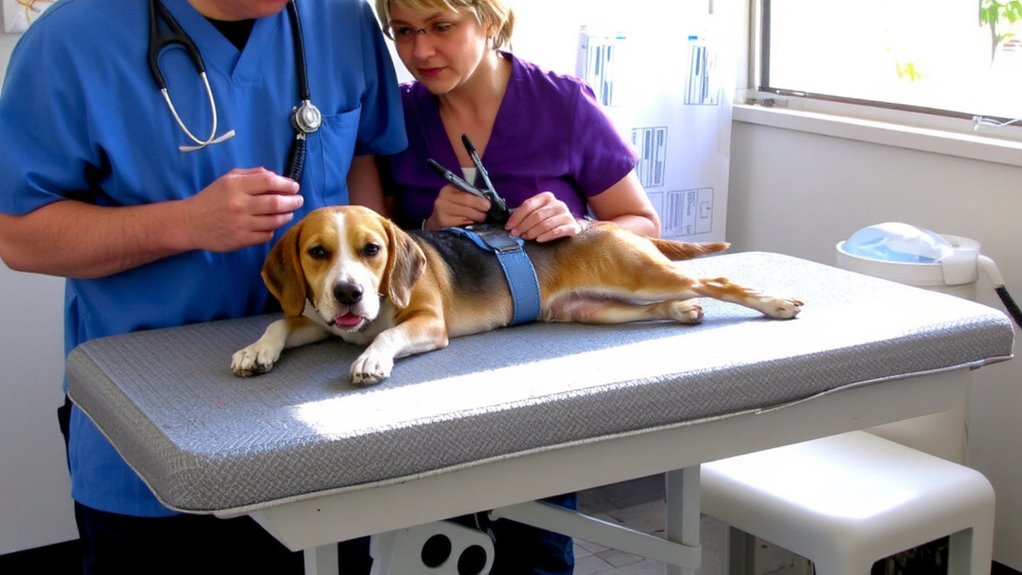
Is it safe to groom your senior dog at home if they have heart disease? No, not without prior veterinary approval. Heart conditions alter cardiovascular stability, increasing vulnerability during stress. Anesthesia risks rise substantially, even with sedatives used in routine grooming. Drugs like acepromazine can depress cardiac output in compromised dogs. You must disclose all current medications, as medication interactions-especially with beta-block secondary or diuretics-can lead to dangerous hypotension or arrhythmias. Your vet will assess New York Heart Association (NYHA) classification, check recent thoracic radiographs, and review echocardiogram data if available. Clearance often requires ECG monitoring during simulated stress. Never assume safety based on outward calm; subclinical decompensation is common. Professional grooming under veterinary guidance reduces risk. Prioritize medical oversight to prevent avoidable cardiac events.
Signs Your Older Dog Needs Medical Clearance for Grooming
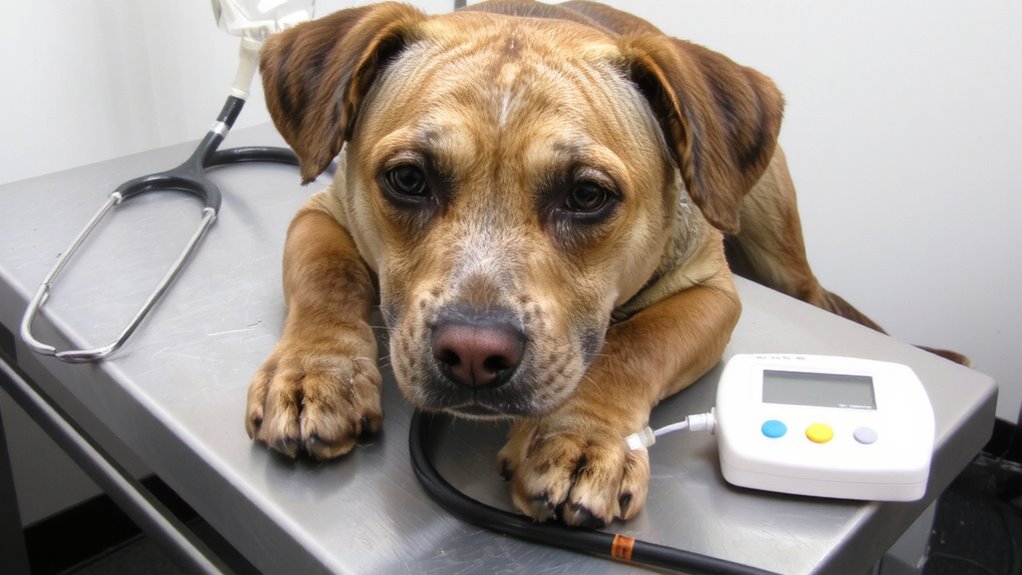
How can you tell when your older dog’s health means they need medical clearance before grooming? Watch for fainting episodes, which indicate cardiac insufficiency and signal high anesthetic or stress risk. Reduced stamina during light activity suggests compromised cardiovascular function. If your dog tires easily during short walks or resists standing for more than 5–10 minutes, their heart may not tolerate grooming stress. Persistent coughing, especially at night, may reflect pulmonary congestion. Labored breathing at rest (respiratory rate >30 breaths/minute) is a clinical red flag. Arrhythmias or known heart murmurs require evaluation. Elevated resting heart rate (>120 bpm in large breeds, >140 bpm in small breeds) further supports medical review. Any history of syncope-even once-necessitates veterinary assessment. These signs correlate with increased peri-procedural risk. Clearance guarantees safety protocols match your dog’s physiological limits. Grooming can wait-evaluation shouldn’t.
How Your Vet and Groomer Can Team Up for Safety
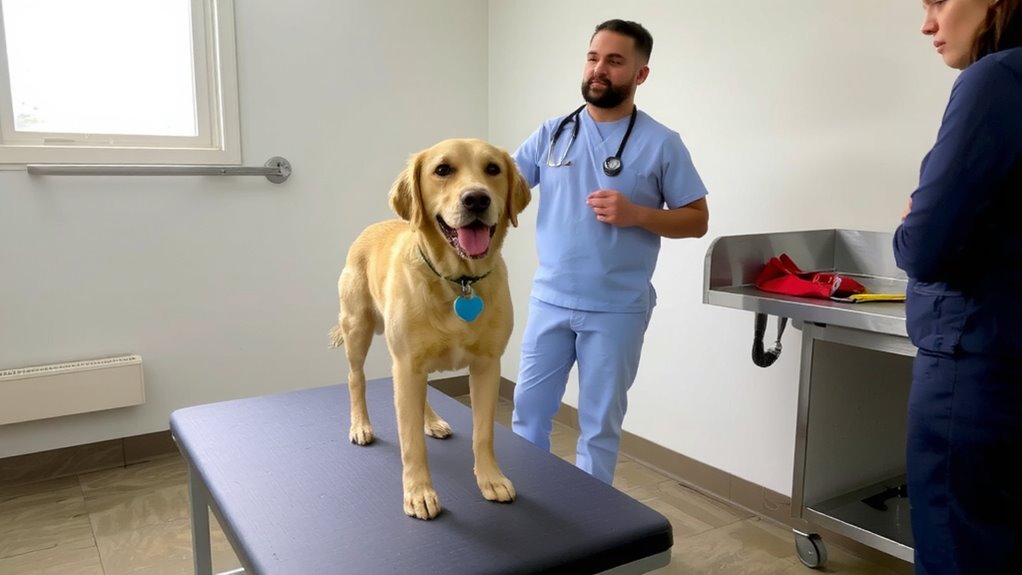
While your older dog’s heart condition adds complexity to grooming, coordinating between your veterinarian and groomer reduces risks substantially. Your vet provides medical clearance and specifies safe stress thresholds, which your groomer uses to customize the session. A joint behavioral assessment identifies anxiety triggers, allowing both professionals to implement calming protocols. Equipment coordination guarantees tools like low-noise dryers and non-slip tables are available and properly calibrated. The groomer adjusts restraints and handling techniques based on your dog’s cardiac limitations. Communication includes real-time updates if symptoms arise. This collaboration mirrors a clinical handoff, guaranteeing continuity of care. Pre-grooming vitals from the vet guide acceptable activity duration-typically no more than 15-minute intervals. Both parties document observations, creating a feedback loop. Safety depends on precise information sharing, standardized protocols, and role clarity. Together, they create a low-stress, medically informed grooming plan tailored to your dog’s physiological needs.
Gentle Techniques for Grooming Dogs With Heart Conditions
Because reduced cardiac output limits your dog’s ability to tolerate stress and exertion, grooming must prioritize physiological stability over cosmetic results. Use low-stress brushing techniques with soft-bristle or rubber curry brushes to minimize anxiety and avoid triggering tachycardia. Work in short sessions, no longer than 5–7 minutes, focusing on one body region per day to reduce physical strain. Avoid deep pressure or vigorous strokes, especially along the chest and abdomen, to prevent respiratory or cardiac compromise. For bathing methods, use no-rinse, veterinarian-approved foams or sprays at body temperature (100–102°F) to eliminate immersion risks. Limit full baths to every 6–8 weeks, using elevated, non-slip tub surfaces to reduce musculoskeletal effort. Maintain ambient room temperatures of 75–80°F to support thermoregulation. Always keep your dog in a standing or sternal position-never restrain laterally. These modifications preserve cardiovascular function while ensuring hygiene.
What to Watch for During Grooming a Senior Dog With Heart Issues
Keep a close eye on your dog’s physical responses throughout the grooming process, as subtle changes can signal cardiovascular stress. Watch for signs of respiratory distress, such as labored breathing, rapid breaths exceeding 30 breaths per minute, or open-mouth panting at rest. These indicate inadequate oxygen delivery and possible heart decompensation. Monitor fatigue levels closely-excessive lying down, reluctance to stand, or muscle weakness suggest reduced cardiac output. Discontinue grooming if you observe gum discoloration (pale, blue-tinged), a resting heart rate over 120 bpm, or unsteady gait. Use a soft-bristled brush and avoid prolonged sessions; limit grooming to 10–15 minutes to minimize exertion. Perform tasks in a quiet, warm room (ideally 70–75°F) to reduce environmental stress. Always have water accessible. Report abnormalities to your veterinarian promptly-early intervention improves outcomes in senior dogs with compromised cardiovascular function.
On a final note
You must obtain veterinary approval before grooming a senior dog with heart disease. Heart conditions impair oxygen delivery, increasing stress-related risks. Your vet assesses cardiac function using tests like echocardiograms and blood pressure measurements. They determine safe sedation levels, if needed. Groomers use non-slip mats, low-stimulation techniques, and monitor respiration rates (normal: 10–30 breaths/min). Collaboration guarantees safety, minimizes exertion, and prevents complications during care.