Establishing House Training Routines for New Puppies
Start house training within the first 48 hours by taking your puppy outside every 1–2 hours, especially after meals, naps, and play sessions. They’ll typically eliminate within 15–30 minutes post-feeding. Watch for signs like sniffing, circling, or whining-respond within 10–45 seconds. Use a 10 x 10-foot grassy spot with 2% slope drainage and at least 20 lumens/sq ft lighting. Reward elimination immediately with treats or praise. Clean indoor accidents with enzymatic cleaner-never punish. Adjust intervals every two weeks as bladder capacity grows. By 6 months, most puppies can hold it for 6–8 hours. Consistency in timing, location, and reinforcement builds reliable habits. You’ll find more specifics on optimizing each phase just ahead.
Notable Insights
- Take your puppy outside every 1–2 hours, especially after meals, naps, and play to align with their natural elimination timing.
- Watch for immediate potty signs like sniffing, circling, or whining and respond within seconds to prevent indoor accidents.
- Designate a consistent outdoor potty area with grass or gravel to strengthen scent-based associative learning.
- Reinforce outdoor elimination immediately with treats and praise to boost long-term training success.
- Adjust potty frequency every two weeks as your puppy grows, gradually extending intervals based on age and bladder control.
Set a Consistent Puppy Potty Schedule
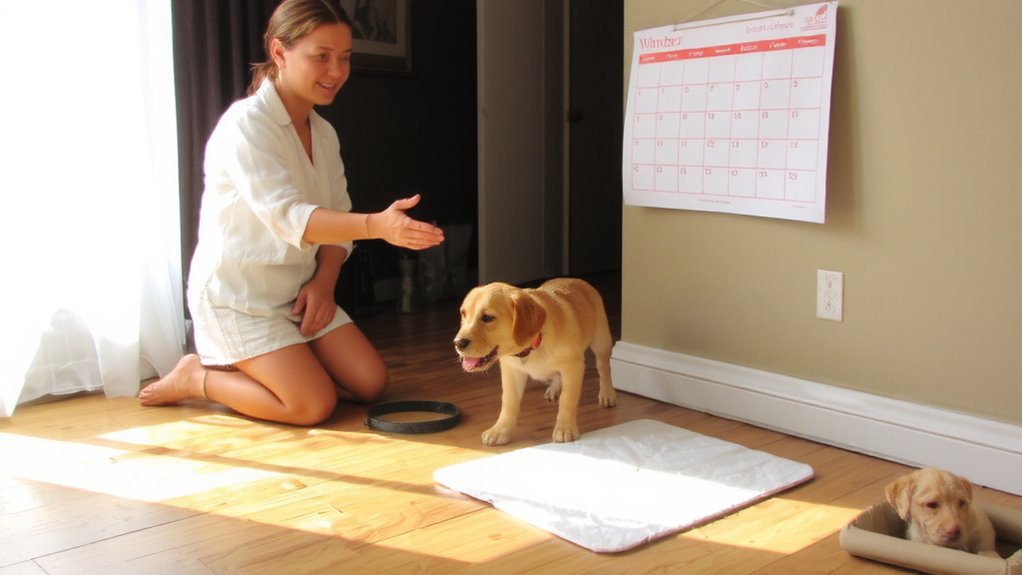
While consistency is the foundation of successful house training, starting with a precise potty schedule dramatically increases your chances of success. You should take your puppy outside every 1–2 hours, especially after feeding times, naps, and play sessions. Puppies typically need to eliminate within 15–30 minutes after eating, so align post-meal bathroom breaks accordingly. Feed your puppy at fixed intervals-usually three to four times daily-to regulate digestion and predict elimination timing. Each play session increases both hydration and metabolic activity, raising the urgency to urinate or defecate. After 20–30 minutes of physical activity, promptly escort your puppy outdoors. Use a designated elimination area no larger than 10 x 10 feet for reliable scent reinforcement. Adherence to this routine establishes neural associations between location and function, accelerating learning. Strict scheduling reduces indoor accidents by up to 70% within two weeks.
Spot the Signs Your Puppy Needs to Go
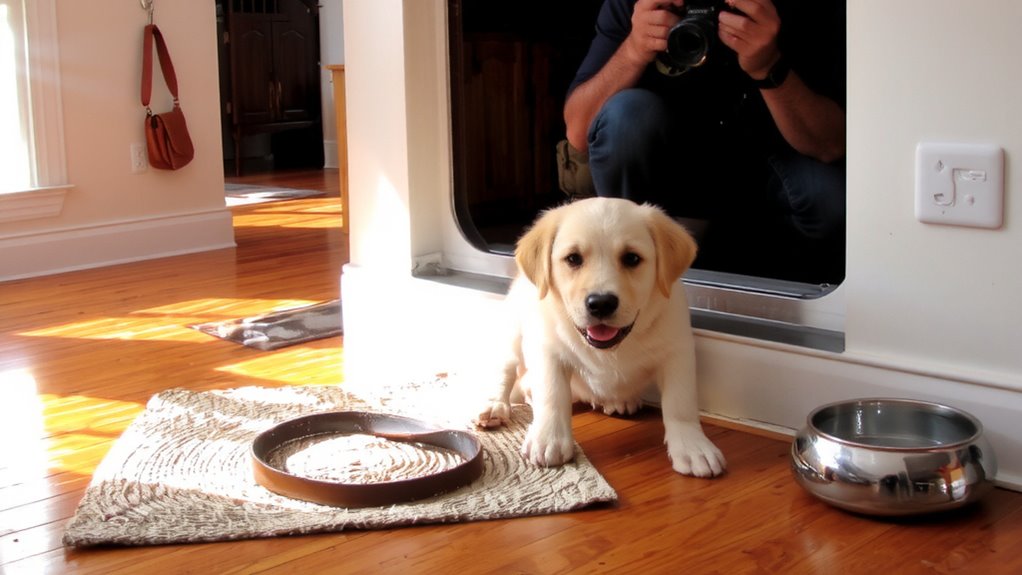
| Sign | Description | Response Timing (seconds) |
|---|---|---|
| Sniff游戏副本 floor | Focused, repetitive ground scan | 30–45 |
| Circling | Tight, purposeful turns | 20–30 |
| Whining at door | Persistent vocalization | 10–15 |
These responses must be immediate. Delay reduces learning efficacy. Puppies under 16 weeks hold bladders for approximately one hour per month of age. Accurate interpretation of sniffing behavior and body language guarantees timely outdoor access, reinforcing proper house training. Consistency strengthens association between cue, action, and outcome.
Pick a Go-To Puppy Potty Spot
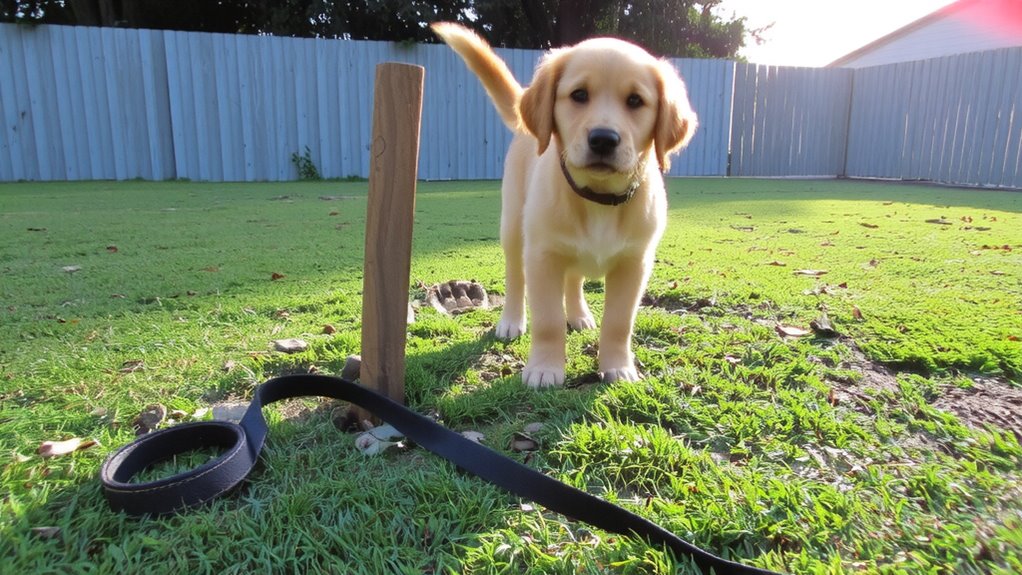
Why does your puppy need a fixed potty spot? A consistent location strengthens associative learning. Puppies rely on scent cues to identify acceptable elimination zones. Choosing one potty surface-such as grass, gravel, or artificial turf-creates sensory predictability. Grass is ideal; its permeable structure wicks moisture and retains odor markers. Position the spot along a routine exit path, within 20 feet of the door. Install outdoor lighting with at least 20 lumens per square foot to guarantee visibility during early morning or night trips. Consistent illumination reduces hesitation and supports circadian rhythm alignment. Avoid high-traffic zones or areas near feeding stations. The potty spot must be accessible in all weather, with drainage graded at a 2% slope. Surface uniformity minimizes confusion. Puppies process texture and smell simultaneously-repeating the same surface reinforces correct behavior. This specificity accelerates conditioning.
Celebrate Potty Wins, Don’t Shame Accidents
When your puppy eliminates in the designated spot, immediate positive reinforcement strengthens the neural association between location and behavior. Use treats, verbal praise, or play within five seconds of elimination to solidify correct actions. Positive reinforcement increases dopamine release in the brain’s reward pathways, enhancing learning retention by up to 70%. Each successful potty break builds reliable repetition. Never punish indoor accidents-this creates an accident mindset, heightening anxiety and impairing bladder control. Stress elevates cortisol, which interferes with memory consolidation in the hippocampus. Instead, quietly clean soiled areas with enzymatic cleaners to eliminate odor markers. Focus on observation and timing, intervening before mistakes occur. Consistent rewards for correct behavior yield a trained puppy in 4–8 weeks. Shaming delays progress. Success depends on your emotional control and timely responses. Celebrate wins precisely-they shape long-term habits. High-absorbency dog pee pads can help manage accidents while reinforcing proper elimination zones.
Adapt the Schedule as Your Puppy Grows
Typically, you’ll need to adjust your puppy’s house training schedule every two weeks as they grow. Adjusting intervals between bathroom breaks is essential as bladder capacity increases with age. A puppy under 12 weeks needs a break every 30–45 minutes; by 16 weeks, this extends to 2–4 hours. This progression supports increasing independence and reduces reliance on constant supervision. By 6 months, most puppies can wait 6–8 hours, aligning with adult dog routines. Plan outings after meals, play, and naps-key triggers for elimination. Consistency in timing and location strengthens neural associations. Use a log to track successes and setbacks, ensuring data-driven adjustments. Never reduce access to potty breaks prematurely. Gradual extension of intervals prevents setbacks. Your puppy’s physical development dictates pace-honor it. Proper scheduling minimizes accidents and builds long-term reliability.
On a final note
You establish control by enforcing a predictable potty schedule. Puppies under 12 weeks need relief every 30–60 minutes; at 4–6 months, every 2–4 hours. Choose one outdoor spot within 10 feet of the door to reinforce scent-based association. Use a 1–2 word cue like “go potty” during elimination. Reward with a 3-second treat session immediately after completion. Never punish accidents; they result from timing errors, not defiance.