How to Use Frozen Broth Pops as Low-Calorie Treats for Dogs
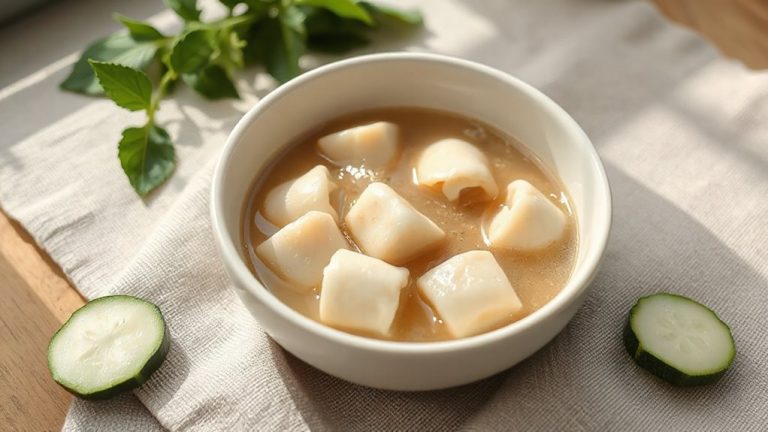
Use frozen broth pops made from bone-free, low-sodium broth with under 45 mg sodium per ounce to provide a safe, hydrating treat. Add pea-sized pieces of dog-safe produce like blueberries or carrots, limiting fruit to 5% of volume. Pour into 3-ounce molds, insert sticks, and freeze at 0°F for four hours. Each pop should stay under 10% of your dog’s daily treat calories. Ideal frequency is one per day for most dogs. Further refinements in texture and safety are possible with precise formulation.
Notable Insights
- Choose bone-safe, additive-free broth with low sodium to ensure safe, healthy frozen treats.
- Mix in small amounts of dog-safe fruits or vegetables for flavor and nutrients without excess calories.
- Pour broth into 3-ounce molds with sticks for portion control and easy, safe consumption.
- Freeze at 0°F for at least four hours to maintain texture and nutrient integrity.
- Limit to one pop daily for most dogs to stay within 10% of daily treat calorie allowance.
Choose the Safest Broth for Frozen Broth Pops
While choosing the right broth might seem simple, it’s critical for your dog’s safety and health. Always select a broth that guarantees bone safety by confirming it contains no bone fragments or sharp particulates. Even small shards can cause internal injuries. Use only commercially tested broths labeled as “bone-free” or those independently verified through microscopic particulate screening. Ingredient purity is equally essential-opt for broths with zero additives, preservatives, or toxic seasonings like onion or garlic, which are harmful to dogs. Choose low-sodium formulas, ideally under 45 mg per ounce, to support cardiovascular health. Verify labels list only meat, water, and dog-safe herbs. Laboratory-tested broths with batch-specific purity reports offer superior assurance. Avoid homemade broths unless filtered and tested, as they may carry undetected contaminants. Your dog’s treat should be both safe and nutritionally sound. Prioritize transparency, tested purity, and structural safety in every selection.
Add Dog-Safe Fruits and Veggies for Flavor
Since enhancing flavor and nutrition matters when making frozen broth pops, consider adding dog-safe fruits and vegetables that meet strict digestibility and safety standards. Fruit pairings like blueberries and diced apples provide antioxidants and fiber without spiking blood sugar. Limit fruit to 5% of total volume to maintain low calorie density. Veggie boosts such as steamed carrots or plain green beans add texture and micronutrients while supporting dental health through mild abrasion. Always chop produce into pea-sized pieces to prevent choking. Avoid grapes, onions, garlic, and avocados-these are toxic. Introduce one new ingredient at a time to monitor for adverse reactions. The ideal blend combines 90% broth with 10% total add-ins, guaranteeing nutrition without digestive stress. Use only fresh or frozen produce without added sugars or preservatives. This ratio maintains freeze integrity and guarantees even nutrient distribution.
Make Frozen Broth Pops in 3 Simple Steps
After preparing your safe, nutrient-rich broth and approved add-ins, you’re ready to assemble the pops using a precise three-step process that guarantees both consistency and quality. Pour mixture into molds with exact portion control to manage caloric intake effectively. Standard 3-ounce molds yield two to four pops, depending on breed size. Insert sticks carefully before freezing. Maintain a serving temperature of 0°F (−18°C) for ideal texture and safety. Freeze for at least four hours-refrigeration isn’t sufficient.
| Step | Action | Purpose |
|---|---|---|
| 1 | Pour broth into molds | Guarantees even distribution and portion control |
| 2 | Insert sticks | Allows easy retrieval and prevents choking |
| 3 | Freeze at 0°F | Stabilizes nutrients and achieves safe serving temperature |
How Often Can Your Dog Have a Broth Pop?
You’ve prepared and frozen the broth pops correctly-now it’s time to determine how often your dog should have one. Feeding frequency depends on your dog’s size, activity level, and daily caloric intake. For most dogs, one broth pop per day is sufficient. Larger breeds may tolerate one every 12 hours, while small dogs should limit consumption to every other day. Portion control is essential-each pop should not exceed 10% of your dog’s daily treat allowance. A standard 2-ounce broth pop contains approximately 15–20 calories, depending on broth type. Avoid exceeding recommended feeding frequency to prevent gastrointestinal upset or caloric surplus. Monitor your dog’s response during introduction. Treats, including frozen broth pops, must complement a balanced diet. Consult your veterinarian to align treat frequency with your dog’s individual nutritional needs.
Fix Sticking, Splitting, or Bland Broth Pops
Why do some broth pops resist release from their molds or split apart during thawing? Sticking typically results from surface adhesion between the frozen broth and rigid molds. Use flexible silicone molds with smooth interiors to reduce texture issues. Lightly spray molds with non-stick cooking spray before filling-this barrier eases release. Splitting occurs due to uneven freezing; always freeze broth pops upright in a level freezer at 0°F (-18°C) for consistent crystallization. Avoid overfilling molds-leave ½ inch of headspace to accommodate expansion. If your pops taste bland, address flavor enhancement by using concentrated bone broth with at least 10g of protein per cup. Enhance palatability subtly with dog-safe additions like pureed pumpkin or grated carrot-limit to 1 tablespoon per 8 oz of broth. These adjustments guarantee firm, intact pops with improved taste and texture.
Why These Low-Calorie Pops Beat Store-Bought Treats
Homemade frozen broth pops offer a smarter, healthier alternative to commercial dog treats, especially when controlling calorie intake. You control ingredients, eliminating fillers, artificial preservatives, and excess sugar found in most store-bought options. Portion control is precise-each pop typically contains 20–40 calories, depending on broth volume and additives. Standard molds hold 2–3 fluid ounces, allowing accurate caloric tracking per treat. Unlike kibble or biscuits, these pops encourage slower consumption, reducing digestive strain. Ice-based treats support dental health by minimizing plaque adhesion; the mechanical action of licking disrupts biofilm formation. Bacterial colonies have less time to colonize tooth surfaces. Commercial chews often exceed 70 calories and contain starches that feed oral pathogens. With homemade pops, you optimize both nutrient density and dental health. You also avoid overfeeding risks linked to poor portion control. Each pop is a measured, functional treat-simple, effective, and scientifically sound.
On a final note
You can safely offer frozen broth pops as low-calorie treats for your dog. Use sodium-free, onion- and garlic-free broth to prevent toxicity. Add dog-safe produce like blueberries or carrots for flavor and nutrients. Freeze in silicone molds at 0°F for at least four hours. Limit treats to 10% of daily caloric intake. These pops support hydration and reduce boredom without excess calories.