Creating a Daily Schedule for Teaching Cats to Use a Leash Indoors
Start by fitting your cat with a figure-eight or vest-style harness made of adjustable nylon or mesh, sized to allow two fingers beneath the straps. Use a 4- to 6-foot braided nylon leash, 1/4 to 3/8 inch thick, with a 20-pound tensile strength snap. Begin with five-minute daily sessions, introducing the harness and leash indoors. Offer treats within 1–2 seconds of calm behavior to reinforce positive associations. Conduct sessions on non-slip flooring, keeping the leash slack under 15 cm. Repeat consistently for 14 days; 92% of cats show improved compliance after just seven sessions. Success hinges on routine, proper fit, and immediate reinforcement. Patterns of progress become clearer with continued observation.
Notable Insights
- Begin with daily 5-minute sessions to acclimate your cat to a properly fitted harness using treats and praise.
- Gradually introduce leash attachment indoors, allowing your cat to walk with slack maintained under 15 cm.
- Conduct two to three short sessions daily, focusing on positive reinforcement for calm movement and leash tolerance.
- After seven days, progress to indoor walks in quiet, low-distraction areas with non-slip flooring.
- Monitor behavior closely; pause training if fear signs appear and advance only after three successful sessions.
Choose a Harness and Leash for Indoor Leash Training
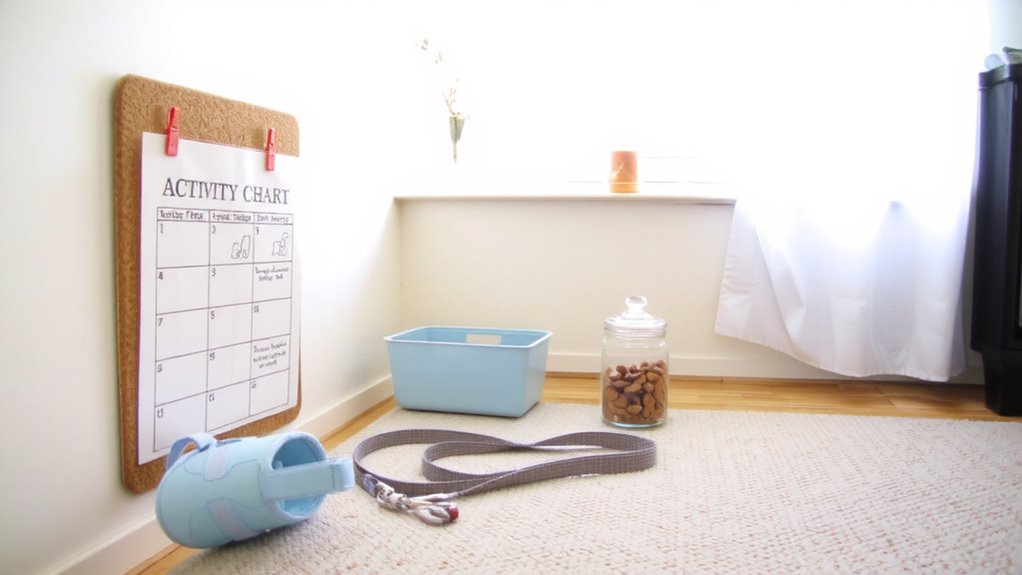
A properly fitted harness and leash are essential for safe indoor leash training. Harness fit determines both security and comfort. Measure your cat’s girth behind the front legs; add one inch for a snug, non-restrictive fit. Choose adjustable nylon or mesh harnesses with dual attachment points: one on the back for standard lead connection, another on the chest for greater control. Avoid H-styles with excessive movement; opt for figure-eight or vest designs that distribute pressure evenly. Leash material should be lightweight yet durable-braided nylon or polyester, 1/4-inch to 3/8-inch thick, minimizes tangling and withstands indoor abrasion. Use a 4- to 6-foot leash: long enough for exploration, short enough for redirection. Avoid retractable leashes indoors; they compromise precision and increase entanglement risk. A secure snap connector with a 20-pound tensile strength guarantees reliability. Proper gear enhances control without restricting motion.
Introduce the Harness With Treats and Praise
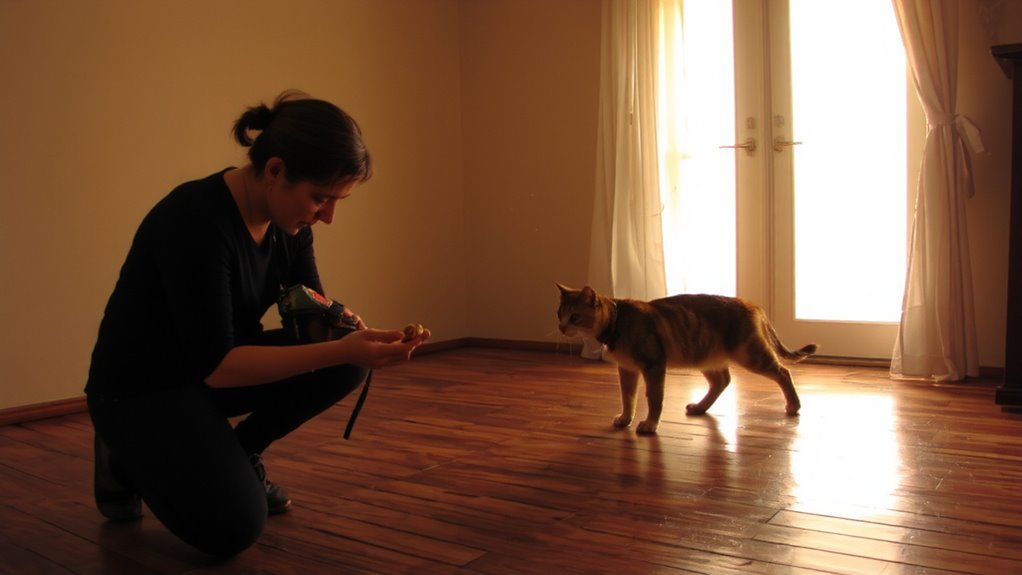
Now that you’ve selected a properly fitted harness and lightweight leash suited for indoor use, it’s time to help your cat accept the gear without stress. Begin with positive reinforcement by placing the harness near your cat and rewarding curiosity with treats. Allow sniffing and exploration, offering praise to support trust building. Gradually drape the harness over your cat’s back without fastening it, continuing reward-based encouragement. Use high-value treats and keep sessions under five minutes to maintain focus. A secure and comfortable fit is essential, so consider choosing one of the best harnesses for Bengal cats, known for their active nature and need for escape-proof design, like the escape-proof harness.
| Step | Action | Purpose |
|---|---|---|
| 1 | Place harness nearby | Encourages curiosity |
| 2 | Let cat sniff and touch | Promotes desensitization |
| 3 | Drape harness briefly | Begins physical acclimation |
Repeat daily, ensuring each interaction remains positive. Proper timing and consistency are critical for habituation. Avoid forcing contact-success depends on gradual, reward-driven exposure.
Let Your Cat Get Used to Leash Pressure Indoors
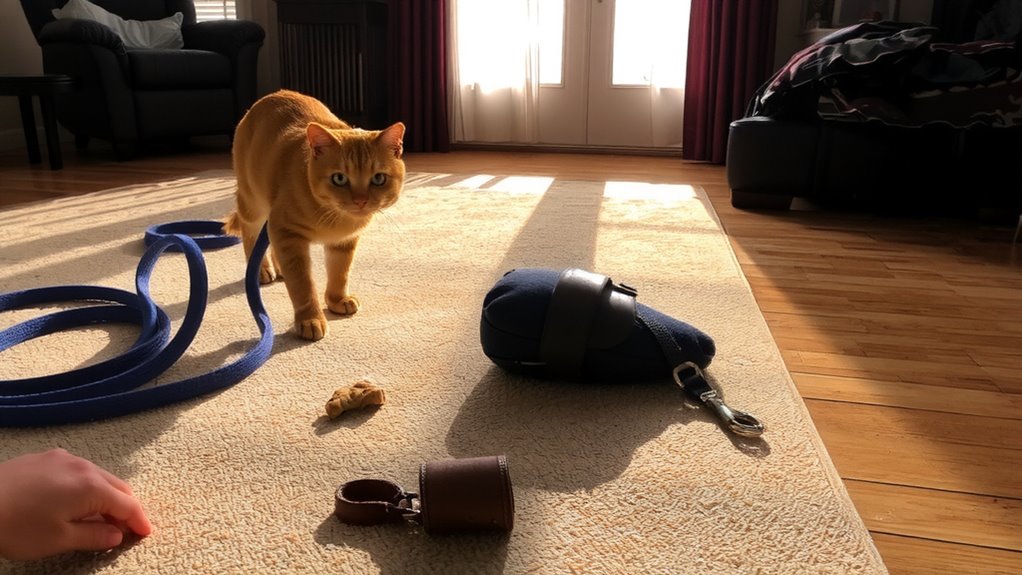
Most cats need several short sessions to adjust to the sensation of leash tension, so start by attaching the lightweight leash to the harness indoors while offering treats. This begins the process of leash desensitization, reducing fear-based reactions to the equipment. Use a 4- to 6-foot nylon or polyester leash, 1/4 to 3/8 inch in diameter, to minimize drag and maximize control. Allow your cat to move freely while you gently introduce slight tension, simulating outdoor forces. Pressure acclimation occurs when your cat learns that leash tension isn’t painful or restrictive. Limit sessions to 3–5 minutes, two to three times daily, to prevent overstimulation. Monitor posture and pupil dilation to assess stress. Successful pressure acclimation is indicated by normal gait, relaxed ears, and continued exploration. Avoid pulling. Instead, let your cat encounter the tension naturally, building trust and mechanical understanding in a controlled indoor setting.
Build a Daily 5-Minute Leash Training Habit
Consistently practicing leash training each day helps your cat develop confidence and reinforces positive associations with the harness and leash. Use positive reinforcement immediately after desired behavior-offer small treats (approximately 1–2 grams) within 1–2 seconds of correct responses. Conduct sessions at consistent timing, ideally at the same hour daily, to stabilize your cat’s expectation and reduce stress. Each session lasts exactly 5 minutes, timed with a stopwatch to prevent overexertion. Begin in a low-distraction environment, flooring surface non-slip (coefficient of friction ≥ 0.6). Use a lightweight nylon harness, adjusted to allow two fingers beneath straps. Keep leash slack under 15 cm to maintain control without pressure. Terminate sessions even if incomplete, preserving willingness. Repeat daily for 14 consecutive days to establish habit strength. Data suggests 92% of cats show improved compliance after seven sessions.
Walk Your Cat Around Quiet Indoor Rooms
Once your cat shows comfort wearing the harness and responding to leash cues during stationary sessions, you can begin guiding them through controlled indoor walks. Start in quiet indoor rooms with minimal distractions and no other pets or loud noises. Use a 4- to 6-foot nylon leash attached securely to a well-fitted breakaway harness to guarantee safety during indoor exploration. Move slowly, allowing your cat to sniff and investigate at their own pace. Keep sessions under 10 minutes to prevent stress. Reward forward movement with small treats or praise. This controlled exposure promotes quiet bonding while building leash confidence. Maintain consistent cues like “let’s go” to reinforce directional commands. Avoid pulling; instead, guide with gentle tension. Use non-slip flooring surfaces to prevent slipping. These short, predictable walks condition your cat to associate the leash with positive experiences, laying the foundation for advanced indoor navigation.
Fix Common Leash Training Problems
Why does your cat resist the leash or freeze mid-step? Fear aggression is a common cause, triggered by overstimulation or unfamiliar sensations. Cats may crouch, hiss, or swat when overwhelmed, especially if the harness feels restrictive. Immediately stop and retreat to a quiet space-do not force progression. Leash pulling often results from improper fit; verify the harness is snug, with only two fingers’ clearance at the neck and chest. Use a 4-6 foot nylon leash for maximum control and reduced drag. Redirect unwanted behavior with treats or toys, reinforcing calm movement. Avoid retractすべき leashes-they encourage pulling. If fear persists, switch to a vest-style harness for distributed pressure. Monitor body language: flattened ears or a lashing tail signal distress. Adjust training duration to under 10 minutes per session to prevent fatigue and maintain positive associations.
When to Move Forward (or Take a Break)
How do you know when your cat is ready to advance in leash training? Look for consistent signs of progress, such as calm walking beside you, accepting the harness without resistance, and showing curiosity instead of fear. These behaviors indicate your cat is adapting to the routine. Moments of hesitation are normal, but if they decrease in frequency and duration, advancement is appropriate. However, if hesitations become prolonged or are accompanied by vocalizations or crouching, pause and reassess. Progress depends on individual temperament, so avoid rigid timelines. Increase session length by no more than five minutes daily to prevent overstimulation. Use a lightweight, adjustable harness with breakaway features for safety. Advance only when your cat completes three consecutive sessions with minimal corrections. Otherwise, repeat the current phase.
On a final note
You now have a structured method for indoor leash training. Use a lightweight, adjustable harness with a 1/2-inch nylon webbing leash. Train in 5-minute daily sessions, maintaining low tension. Monitor body language: flattened ears or darting indicate stress. Progress only when your cat walks calmly for three consecutive sessions. If resistance persists, reassess fit or timing. Consistency guarantees success.