Medicated Bath Protocols for Canines With Age-Related Seborrhea Oleosa
You should use medicated baths to manage age-related seborrhea oleosa in your dog. Start with a benzoyl peroxide (2–4%) or salicylic acid (1–2%) shampoo to break down excess oil and loosen keratin plugs. Bathe every 3–5 days initially, using lukewarm water (98°F–102°F) and a 10–15 minute contact time for full efficacy. Rinse thoroughly and follow with a ceramide-based moisturizer to support barrier function. Treating secondary infections may require chlorhexidine or antifungal shampoos. Proper protocol improves skin turnover and reduces sebum buildup over time-there’s more to take into account for long-term control.
Notable Insights
- Use medicated shampoos containing benzoyl peroxide (2–4%), sulfur (3–5%), or salicylic acid (1–2%) to manage excess sebum in aging dogs.
- Bathe every 3–5 days initially, then taper to weekly as seborrhea improves with consistent treatment.
- Apply shampoo after thoroughly wetting the coat with lukewarm water (98°F–102°F) for optimal follicular penetration.
- Allow shampoo to remain on the skin for 10–15 minutes before rinsing completely to ensure active ingredient efficacy.
- Treat secondary infections with chlorhexidine or antifungal shampoos and confirm with cytology-guided systemic therapy when needed.
Why Older Dogs Develop Oily Skin
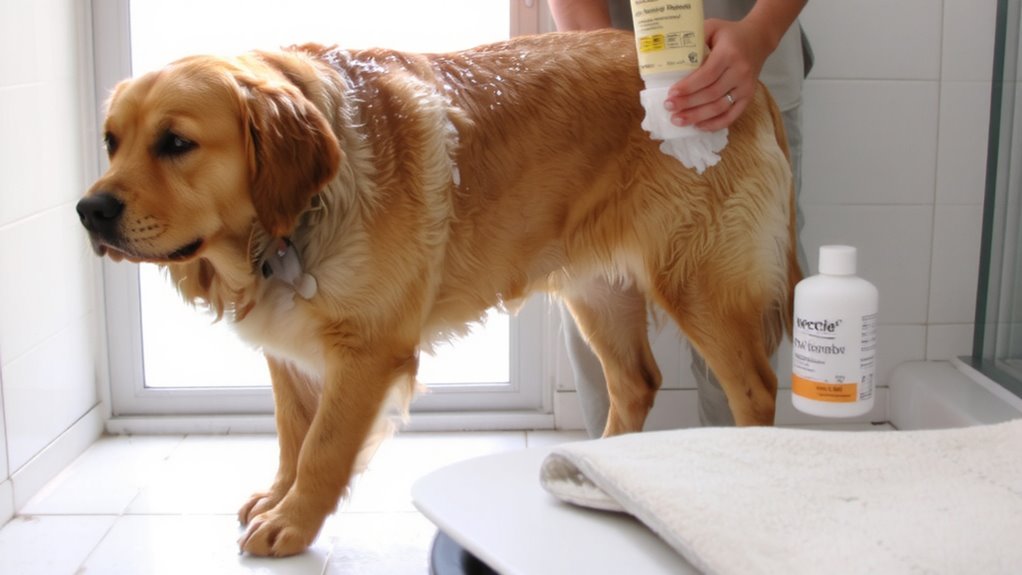
While aging doesn’t directly cause seborrhea in dogs, it does reduce skin cell turnover and sebaceous gland regulation, leading to excess oil buildup. As your dog ages, hormonal imbalances disrupt sebum production, causing oily, flaky skin. Thyroid dysfunction and reduced adrenal activity are common contributors. These endocrine changes impair lipid metabolism, increasing sebaceous output by up to 40% in geriatric canines. Dietary deficiencies-especially in omega-3 fatty acids, zinc, and B-complex vitamins-exacerbate the condition. Without sufficient linoleic acid, the skin barrier weakens, promoting lipid leakage and inflammation. Older dogs often absorb nutrients poorly, diminishing dermal resilience. Cellular desquamation slows from a normal cycle of 21 days to over 30, trapping oil and debris. You’ll notice greasy coat texture, especially along the back and tail base. These physiological shifts create an environment ripe for secondary infections. Addressing root causes like nutrition and endocrine health is essential before topical intervention.
Use Medicated Baths to Soothe Seborrhea
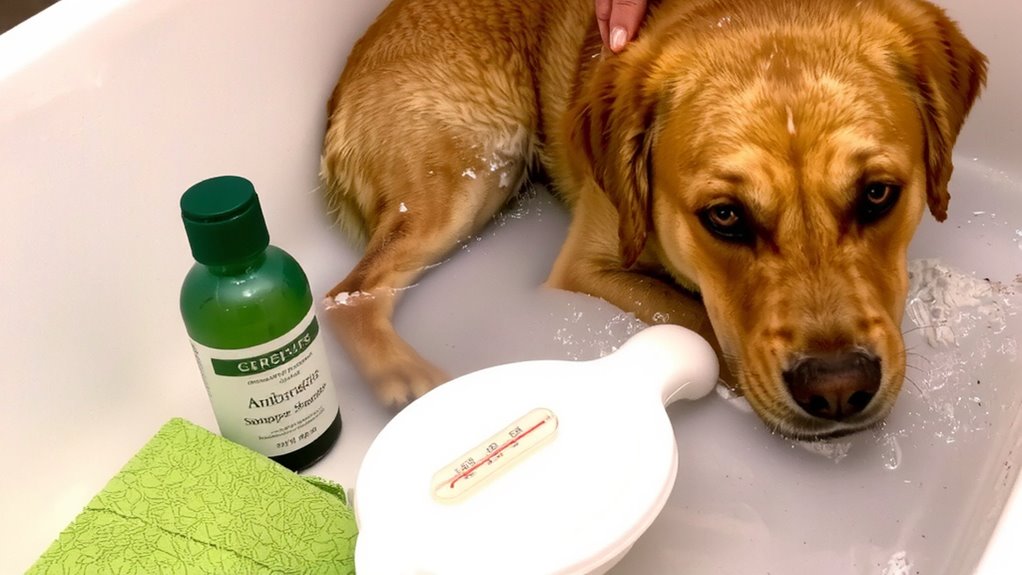
A medicated bath is a cornerstone of effective seborrhea management, helping to normalize skin turnover and reduce excess oil. You should bathe your dog every 3–5 days initially, then taper to weekly as symptoms improve. Medicated baths loosen keratin plugs and dissolve sebum accumulations, directly targeting the scale and grease typical of seborrhea oleosa. Active ingredients like benzoyl peroxide (2–4%) or chlorhexidine (2–4%) provide antimicrobial and follicular flushing effects. Use lukewarm water-too hot and you’ll strip lipids; too cool and shampoo efficacy drops. Coat conditioning agents in some formulations improve manageability and reduce breakage. Post-bath skin hydration is critical; apply moisturizing rinses or emollient sprays containing ceramides or phytosphingosine. These maintain barrier integrity and prevent transepidermal water loss. Consistent bathing restores the stratum corneum’s architecture, reducing odor and scaling.
Pick the Right Shampoo for Seborrhea Oleosa
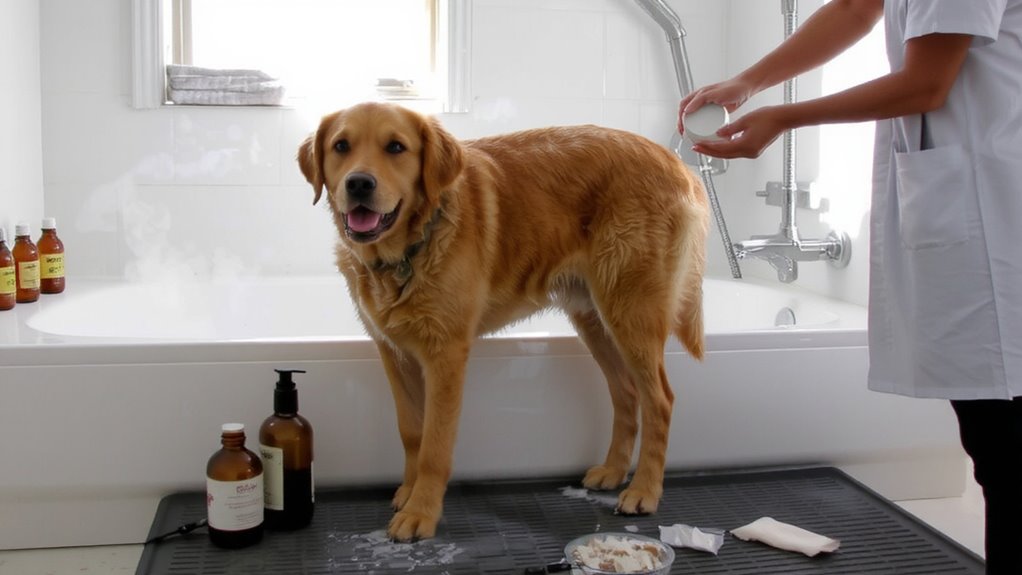
Choose a medicated shampoo formulated specifically for seborrhea oleosa to effectively manage excessive oil and scaling. Your shampoo selection directly impacts treatment success. Look for product ingredients like benzoyl peroxide (2–4%), sulfur (3–5%), and salicylic acid (1–2%), which exfoliate and reduce sebum. Benzoyl peroxide has potent keratolytic and follicular flushing properties, lowering bacterial overgrowth. Sulfur acts as a keratoplastic agent, normalizing epidermal turnover. Salicylic acid enhances desquamation through lipid dissolution in stratum corneum. Hypoallergenic bases with a neutral to slightly acidic pH (5.5–7.0) preserve skin barrier function. Avoid shampoos with heavy oils or occlusive agents-they can worsen sebum retention. Medicated shampoos should remain in contact with skin for 10–15 minutes before rinsing. Always confirm compatibility with any concurrent topical or systemic therapies. Proper formulation guarantees targeted action without irritation. For dogs with concurrent allergic dermatitis, consider best shampoos for dogs with allergies that support barrier repair and minimize pruritus.
Follow This Step-by-Step Bathing Routine
Start by thoroughly wetting your dog’s coat with lukewarm water, maintaining the temperature stays between 98°F and 102°F to prevent skin irritation and optimize follicular opening. Apply a medicated shampoo formulated for seborrhea oleosa, massaging it deeply into the coat for 10–15 minutes to allow active ingredients like chlorhexidine, miconazole, or benzoyl peroxide to penetrate. This duration maintains effective scale removal and microbial reduction. Rinse completely with clean water to prevent residue buildup. Follow with a moisturizing rinse or conditioner if recommended, enhancing skin hydration and maintaining barrier integrity. Towel-dry gently, avoiding vigorous rubbing that could traumatize the skin. Consistent bathing frequency, typically two to three times weekly during flare-ups, improves outcomes. Over time, adjust based on clinical response. Proper technique supports epidermal lipid balance, minimizing transepidermal water loss. You’re managing seborrhea, not curing it-maintenance is key.
How Often to Bathe a Dog With Seborrhea?
How often should you bathe a dog with seborrhea? The ideal bathing frequency depends on severity but typically ranges from twice weekly to every two weeks. Frequent bathing helps remove excess sebum and scales, yet over-bathing can compromise skin hydration. Medicated shampoos containing sulfur, salicylic acid, or benzoyl peroxide effectively break down greasy accumulations but may be drying if used too often. For mild cases, start with weekly baths and adjust based on clinical response. In severe seborrhea oleosa, twice-weekly bathing for two to four weeks is often necessary before tapering. Always rinse thoroughly-residual shampoo can irritate or dry the skin. Follow labeling instructions precisely; most products require a 10-minute contact time. Monitor skin hydration closely-an emollient rinse or leave-on conditioner may be needed between baths to maintain barrier function and prevent excessive dryness. Choosing the right product is crucial, and a veterinarian-recommended best dog shampoo for sebaceous cysts can support both cleansing and skin health during treatment.
Prevent and Treat Secondary Infections
While managing seborrhea, you’re also fighting invisible threats-secondary bacterial and yeast infections often take hold in compromised skin. You’ll need to integrate antibiotic therapy when signs of pyoderma appear, such as papules or pustules. Oral antibiotics like cephalexin (15–30 mg/kg every 12 hours) are commonly prescribed for 3–4 weeks. Topical chlorhexidine (2–4%) shampoos used twice weekly reduce surface bacteria and support systemic treatment. For fungal control, target Malassezia with ketoconazole or miconazole-based shampoos. These should remain in contact with the skin for 10–15 minutes before rinsing. Use antifungal therapy 2–3 times weekly for at least four weeks. Cytology from skin scrapings confirms infection type and guides treatment. Consistent monitoring and follow-up guarantee infections resolve fully. Neglecting fungal control or antibiotic therapy prolongs healing and worsens seborrhea symptoms.
On a final note
You must manage seborrhea oleosa with consistent medicated bathing. Use shampoos containing 2–4% chlorhexidine or 3% benzoyl peroxide to reduce microbial load and normalize keratinization. Bathe every 3–7 days, allowing 10 minutes of contact time for active ingredients to work. Rinse thoroughly to prevent residue irritation. Monitor skin response and adjust frequency. Pair treatment with veterinary-prescribed systemic therapy when needed. This protocol reduces odor, scaling, and secondary infections effectively.