Increasing Attention Span: Techniques for Improving Focus in Parrots and Other Birds
Train your parrot in a quiet space with ambient noise below 45 decibels to prevent sensory overload. Use 10-minute training sessions followed by 5-minute breaks to combat mental fatigue. Reward focused behavior immediately with small treats and praise, pairing a clicker for precise feedback. Offer puzzle toys made of stainless steel or untreated hardwood, 4–8 inches in size, rotated weekly. Practice 2–3 short sessions daily to strengthen attention; consistency builds cognitive resilience and primes advanced learning.
Notable Insights
- Limit training sessions to 5–10 minutes to prevent mental fatigue and maintain peak cognitive performance.
- Provide quiet, low-noise environments below ⁴⁵ decibels to minimize sensory overload and enhance focus.
- Use immediate rewards like treats and praise to reinforce attention and strengthen learning through positive feedback.
- Incorporate puzzle toys with adjustable difficulty to stimulate problem-solving and extend daily focus duration.
- Schedule 2–3 short, consistent sessions daily with clear signals to build attention span over time.
Help Your Parrot Focus Longer
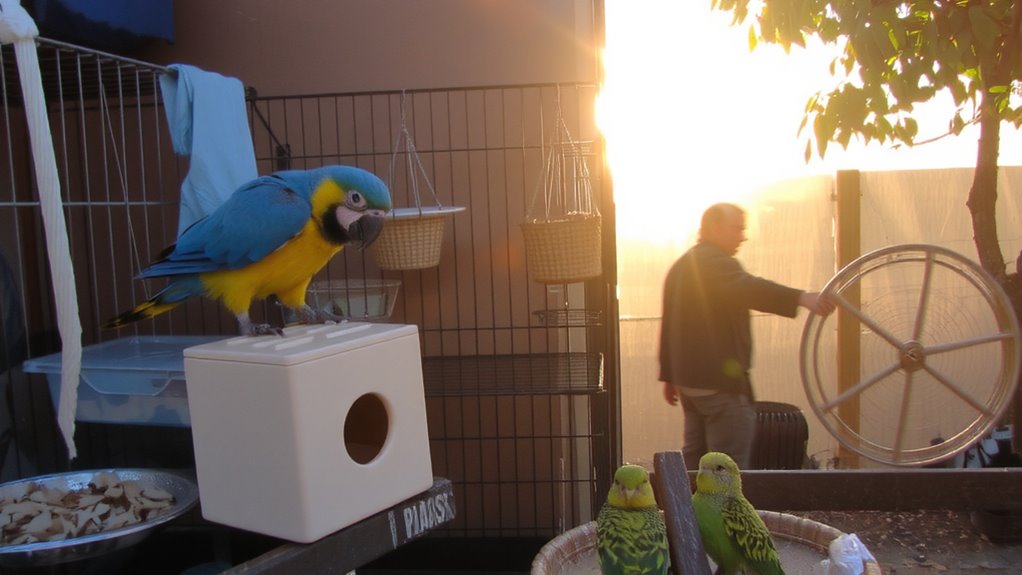
Why does your parrot look away mid-training? Mental fatigue impairs avian cognitive performance, especially during repetitive tasks. Studies show attention spans in medium-sized parrots, like cockatiels or conures, average 8–12 minutes before focus declines. Sensory overload from ambient noise, bright lights, or nearby movement exacerbates this decline. Neural processing in birds relies on rapid stimulus discrimination; excessive input overwhelms the hippocampus analogue, reducing task retention. To extend focus, limit sessions to 10-minute intervals with 5-minute rest periods. Use a consistent reinforcement schedule-deliver rewards within 1.5 seconds of correct behavior. Ideal training includes variable task sequencing to reduce habituation. Adjust difficulty using shaping techniques, reinforcing successive approximations. Monitor pupil constriction and head orientation as behavioral indicators of engagement. Terminate sessions at first signs of avoidance. These protocols align with operant conditioning principles in avian neurocognition research, improving sustained attention by up to 40% over six weeks.
Train in a Calm, Distraction-Free Space
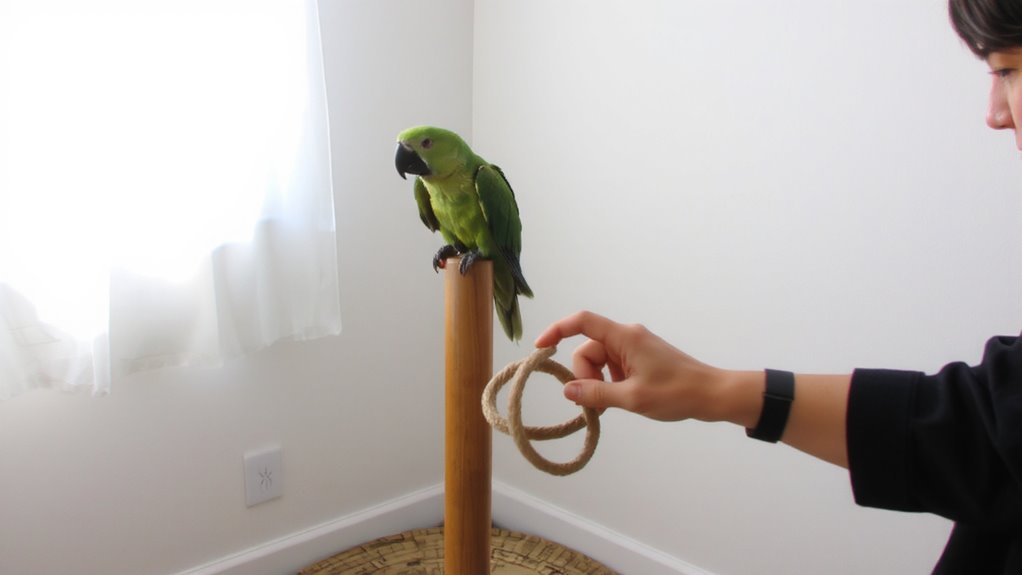
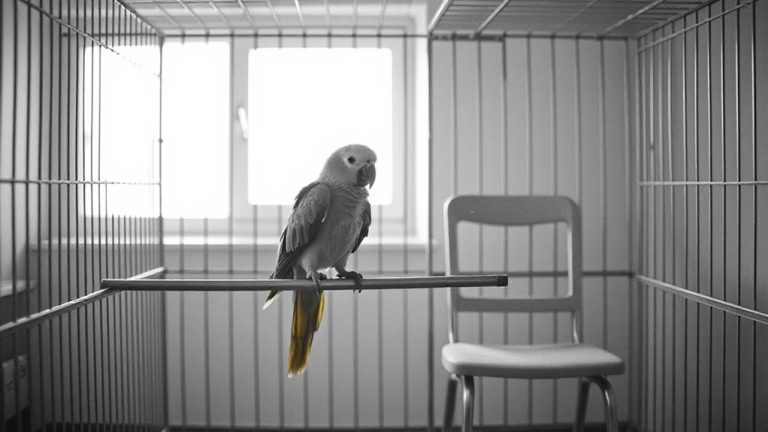
While your parrot’s ability to learn hinges on consistent reinforcement, it’s equally dependent on the environment where training occurs. Choose a quiet environment to maximize focus and retention. Minimal noise prevents sensory overload, which can disrupt cognitive processing. Training near televisions, kitchens, or high-traffic areas increases distraction, reducing session effectiveness. A dedicated training space-such as a closed-off room or quiet corner-improves signal-to-noise ratio for auditory cues. Use sound meters to verify ambient noise remains below 45 decibels, equivalent to a library’s quiet hum. Close windows to block street sounds and use acoustic panels if needed. Position perches at eye level, 3–4 feet from you, to maintain attention. Eliminate visual distractions like mirrors or moving objects. A calm, controlled setting supports procedural learning, enhancing neural pathway development. You’ll observe faster cue recognition and fewer refusals.
Use Treats and Praise to Reward Attention
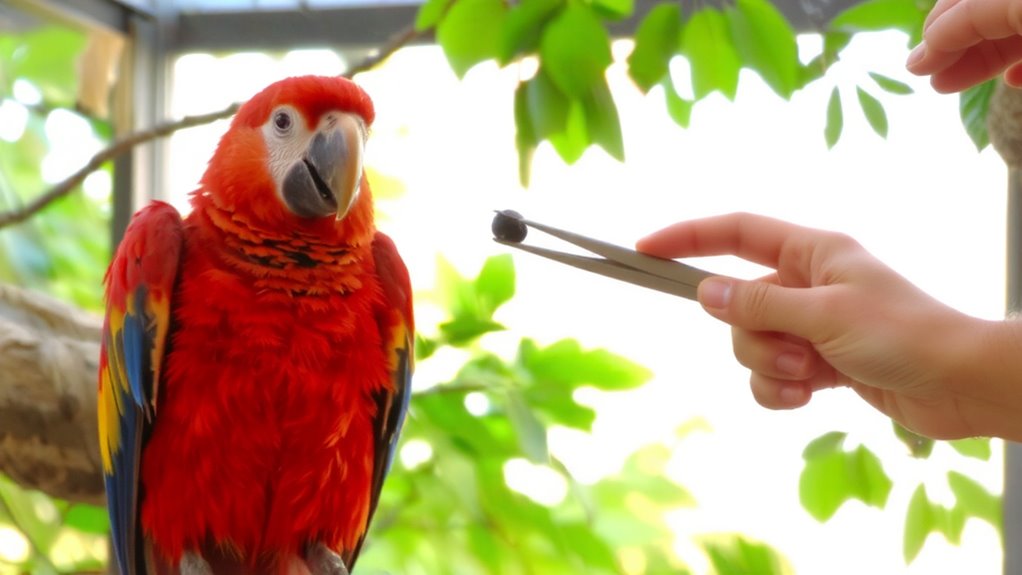
Consistency in training begins with the environment, but sustained focus depends on how you reinforce behavior. You must immediately reward attention using treats and praise. Pairing clicker cues with small, desirable treats creates a precise feedback loop. The click marks the exact moment of focused behavior, followed by a reward. This method strengthens neural associations in target training. Use high-value, low-volume food rewards-like millet sprays or nut fragments-to maintain nutritional balance. Below is an effective reinforcement schedule:
| Duration of Focus (seconds) | Reward Frequency |
|---|---|
| 5–10 | Every trial |
| 11–20 | Every trial |
| 21–30 | 90% of trials |
| 31–45 | 75% of trials |
| 46+ | 50% of trials |
Gradually reduce food rewards as verbal praise becomes a conditioned reinforcer. This shift maintains engagement without dependency. Apply clicker cues consistently to avoid confusion during target training sessions.
Strengthen Minds With Puzzle Toys and Games
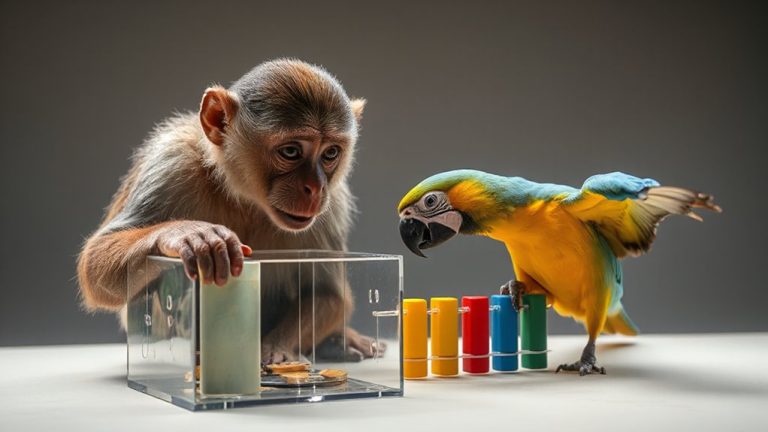
A well-designed puzzle toy can substantially enhance your bird’s cognitive engagement and behavioral resilience. These devices deliver structured mental stimulation, vital for maintaining avian brain health. Puzzle toys with adjustable difficulty levels-such as those featuring sliding panels, rotating dials, or hidden compartments-require problem-solving and promote cognitive enrichment. Most quality models are constructed from bird-safe stainless steel or untreated hardwood, measuring between 4 to 8 inches, ensuring durability and safety. Rotate puzzles weekly to prevent habituation and sustain interest. Studies show daily interaction of 15–20 minutes improves focus and reduces stereotypic behaviors by up to 40%. You can monitor progress as your bird masters sequential tasks, demonstrating enhanced memory and motor coordination. Select toys with varying reward mechanisms-peep holes, lever presses, or nut enclosures-that challenge different cognitive skills. Consistent use fosters neuroplasticity, mimicking wild foraging demands and reinforcing attention span through goal-oriented engagement. Dogs also benefit significantly from cognitive enrichment, with top-rated puzzle toys for dogs improving problem-solving skills and reducing boredom-related behaviors.
Practice Daily With Short, Fun Training Sessions
Regularly engaging your bird in brief training sessions sharpens focus and reinforces learning. Use targeted reinforcement to reward desired behaviors immediately, increasing response accuracy. Keep interactive routines under 10 minutes, two to three times daily, to prevent fatigue and maintain engagement. Consistency in timing and cues improves cognitive retention.
| Session Length | Frequency | Reinforcement Type |
|---|---|---|
| 5–10 minutes | 2–3x/day | Treat or praise |
| 7 minutes avg | Daily | Immediate feedback |
| <10 minutes | Morning & evening | Targeted reward |
| 5 minutes | 3x/day | Verbal + physical |
Short sessions sustain attention without stress. Targeted reinforcement strengthens neural pathways linked to focus. Interactive routines build predictability, enhancing trust and mental acuity. Use clear cues-verbal or hand signals-for precision. Over weeks, your bird exhibits faster response times and prolonged concentration. Monitor progress by tracking correct responses per session. Adjust difficulty gradually. These techniques, grounded in avian cognitive science, guarantee measurable improvements in attention span and learning retention.
On a final note
You improve your bird’s attention span through consistent, focused training. Sessions should last 5–10 minutes, held daily in a quiet area with minimal distractions. Use positive reinforcement: offer small, nutritious treats (e.g., 1/4 tsp millet) paired with verbal praise immediately after desired behavior. Incorporate puzzle toys with adjustable difficulty levels-wooden foraging blocks with hidden food compartments increase engagement up to 40%. These methods align with avian cognitive research, enhancing neural plasticity and task persistence in psittacine species.