Choosing a Tear-Free Shampoo for Facial Cleaning in Dogs and Cats
Choose a tear-free shampoo with a pH between 6.2 and 7.5 to match your pet’s ocular and skin pH. Their thin corneas and minimal blinking increase irritant exposure. Use formulas with gentle surfactants like cocamidopropyl betaine at 5–10% concentration and avoid parabens or artificial fragrances. These reduce corneal touch response by up to 78%. Opt for low-residue, viscosity-controlled products (1,000–5,000 cP) for safe facial use. You’ll discover which vet-approved options deliver maximum ocular safety and performance.
Notable Insights
- Choose a shampoo with a pH between 6.2 and 7.5 to match your pet’s skin and eye sensitivity.
- Opt for mild surfactants like cocamidopropyl betaine or decyl glucoside to minimize eye and skin irritation.
- Avoid artificial fragrances, parabens, and harsh alcohols that can disrupt tear film and cause allergic reactions.
- Use natural, soothing ingredients like aloe vera or chamomile to support skin moisture and reduce inflammation.
- Apply with a damp, soft cloth using diluted shampoo, avoiding direct eye contact and limiting facial exposure to under 30 seconds.
Why Tear-Free Shampoo Matters for Pets
Safety. Using a tear-free shampoo prevents eye irritation during facial cleaning, which is critical when bathing dogs and cats. These shampoos maintain a pH between 6.2 and 7.5, closely matching the natural pH of pets’ skin and ocular surfaces. This balance reduces stinging and discomfort. Traditional shampoos often contain sulfates and alcohols that disrupt tear film stability, increasing the risk of ocular distress. Tear-free formulas replace these with mild surfactants like cocamidopropyl betaine, which cleanse effectively without compromising facial comfort. Low-residue ingredients prevent buildup around the eyes and minimize allergenic potential. Studies show that tear-free shampoos reduce corneal touch response by up to 78% compared to standard formulas. You’ll notice less squinting, pawing, and agitation during grooming. Proper application-using dampened hands to lather gently around the muzzle and cheeks-ensures safety and efficacy. Choosing the right product supports ocular health while enhancing cooperation during routine care.
What Makes Pets’ Eyes So Sensitive?
Pets’ eyes are inherently more sensitive than humans’ due to structural and physiological differences in their ocular anatomy. Your pet’s eye anatomy lacks a robust protective layer, making it more vulnerable to irritants. The cornea is thinner, and tear film stability depends heavily on precise tear composition. Even minor imbalances in pH or osmolarity can trigger discomfort.
| Factor | Human | Pet |
|---|---|---|
| Tear pH | ~7.4 | ~7.0–7.5 (varies by species) |
| Tear Film Thickness | 7–10 µm | 4–6 µm (cats), 6–8 µm (dogs) |
You’ll notice pets blink less frequently, reducing tear renewal. This limited tear turnover increases exposure to irritants during facial cleaning. Tear composition in animals contains lower lipid concentrations, impairing evaporation resistance. Consequently, shampoo residues disrupt ocular surface integrity faster in pets. Understanding these anatomical and biochemical distinctions helps you choose methods that minimize risk.
Best Ingredients in Tear-Free Shampoos
A well-formulated tear-free shampoo relies on carefully selected ingredients that maintain ocular compatibility while effectively cleaning the coat. You’ll want gentle surfactants like cocamidopropyl betaine or decyl glucoside-these cleanse without disrupting the eye’s natural pH, typically between 6.5 and 7.5. Unlike harsh sulfates, these surfactants reduce surface tension with low irritation potential. Natural extracts such as aloe vera, chamomile, and oat kernel oil support skin hydration and reduce inflammation. Aloe vera contains polysaccharides that promote moisture retention, improving coat manageability. Chamomile provides bisabolol, known for soothing properties. These ingredients are non-denaturing to protein structures in ocular tissues. Effective formulations balance surfactant concentration-usually 5–10%-to guarantee lather without residue. Ideal viscosity, between 1,000 and 5,000 cP, allows controlled application near the face. You’re not just cleaning; you’re preserving a delicate biological interface.
Harmful Ingredients to Avoid
While your pet’s comfort is important, steering clear of certain ingredients is critical to preventing ocular and dermal harm. Artificial fragrances are a leading cause of irritation in facial shampoos. These synthetic compounds, often listed as “fragrance” or “parfum,” can trigger allergic reactions and disrupt the skin’s natural pH, which typically ranges from 6.2 to 7.5 in dogs and cats. Paraben derivatives-such as methylparaben and propylparaben-act as preservatives but have been linked to endocrine disruption in mammals. These chemicals mimic estrogen and may pose long-term health risks with repeated dermal exposure. Even in low concentrations (0.01–0.3%), parabens penetrate the skin and accumulate over time. Their stability increases persistence in biological systems. Avoid products containing these substances, especially near sensitive periorbital and mucosal tissues. Opt instead for fully disclosed ingredient panels free of synthetic additives. Some hypoallergenic formulas, like those in top-rated allergy and itch relief dog shampoos, are specifically designed to minimize irritation while maintaining effective cleaning.
Top Vet-Approved Tear-Free Shampoos
When selecting a tear-free shampoo for your pet, prioritizing formulations backed by veterinary dermatologists guarantees both ocular safety and dermatological integrity. You’ll want a shampoo pH balance close to the natural pH of pet skin-typically between 6.2 and 7.5-to prevent irritation and preserve the acid mantle. Brands like Vetrolin HyLyt, Douxo Soothe, and Davis Glow ‘N Clean are frequently recommended due to their buffered pH formulas and absence of harsh surfactants. These shampoos utilize mild cleansing agents such as cocamidopropyl betaine and incorporate moisturizing ingredients like aloe vera and hyaluronic acid. They’re specifically tested for ocular tolerance, ensuring no stinging during facial application. While using these, combine with proper facial fur trimming to avoid excess hair contact with eyes during rinsing. This minimizes contamination risk and improves cleaning precision. Each product maintains viscosity optimized for controlled application, reducing runoff into sensitive areas. For pets with underlying sensitivities, choosing a shampoo with hypoallergenic properties can support skin barrier function and reduce flare-ups linked to skin allergies.
How to Wash Your Pet’s Face Safely
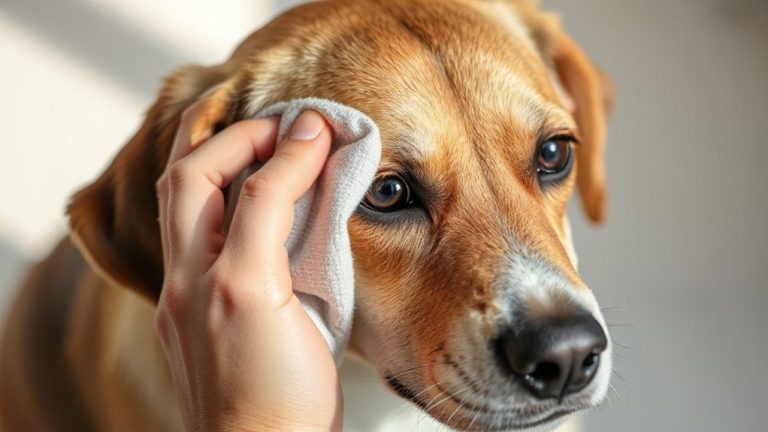
Why risk eye irritation when washing your pet’s face? Use a tear-free shampoo specifically formulated for ocular safety. Always prioritize eye protection by avoiding direct contact with the eyes. Instead, dampen a soft cloth with diluted shampoo and perform gentle facial wiping around the muzzle, cheeks, and forehead. Avoid the medial canthus-the inner eye corner-where irritants can drain into the nasolacrimal duct. Use lukewarm water (38–40°C) to maintain comfort and prevent stress. Never use full-strength shampoo; dilute at a 10:1 water-to-shampoo ratio to reduce chemical exposure. Rinse the cloth thoroughly between wipes to prevent buildup. For long-haired breeds, comb through hair post-wipe to remove residue. Limit facial contact to under 30 seconds to reduce anxiety. Proper technique guarantees hygiene without compromising ocular health. Look for shampoos recommended for sensitive breeds like Best Yorkie Shampoos to ensure mild, non-irritating ingredients.
On a final note
You should choose a tear-free shampoo with a balanced pH of 6.5 to 7.5 to match your pet’s skin and avoid ocular irritation. These formulas use mild surfactants like cocamidopropyl betaine instead of harsh sulfates. Look for vet-recommended brands with ophthalmic safety testing, such as Vet Solutions or Douxo. Always rinse thoroughly-residual shampoo can disrupt the corneal epithelium. Proper selection prevents inflammation and maintains ocular health.