Using Scented Treat Pouches to Encourage Nose Work in Shy Dogs
You can use a scented treat pouch to build your shy dog’s confidence through scent-based nose work. Pair calming, dog-safe essential oils like lavender or chamomile-diluted to 0.5–1% in carrier oil-with timely treat rewards. A permeable cotton pouch measuring 6” x 4” allows gradual scent dispersion, detectable up to 72 hours. Dispense treats within 1–2 seconds of correct behavior to reinforce learning. Consistent scent trails on walks strengthen positive associations-there’s more to optimizing this method effectively.
Notable Insights
- Scented treat pouches use calming essential oils like lavender to help shy dogs feel secure during nose work.
- Pairing treats with consistent scents within 1–2 seconds strengthens positive associations in anxious dogs.
- Permeable mesh pouches release a steady scent trail, guiding shy dogs to focus and engage in tracking.
- Start short scent trails (3–5 feet) with strong odors like anise to build confidence gradually.
- Monitor body language for stress or comfort and replace scent strips every 14 days for effectiveness.
Use A Scented Treat Pouch to Boost Your Shy Dog’s Confidence
While your shy dog may hesitate in new environments, a scented treat pouch can serve as a reliable tool to encourage positive associations and build confidence. You control scent pairing by selecting consistent essential oil blends-like lavender or chamomile-integrated into treat pouch fabrics. These scents remain detectable for up to 72 hours under normal conditions. Accurate treat timing is critical; dispense rewards within 1–2 seconds of desired behavior to strengthen associative learning. Delayed delivery weakens conditioning. The pouch’s permeable mesh allows gradual scent dispersion, maintaining a steady olfactory signal. Use a 4” x 6” pouch with a secure zipper and removable scent pad for precise control. Distance matters-keep the pouch within 12 inches of your dog’s nose during training. This method supports systematic desensitization by pairing environmental exposure with predictable rewards. You’re not masking fear-you’re building neural pathways through repetition, scent pairing, and exact treat timing.
Pick The Best Dog-Safe Scents for The Pouch
Why do certain scents calm your dog while others cause stress? Dogs process odors through the olfactory bulb, which links directly to the amygdala and hippocampus-areas governing emotion and memory. Safe, familiar scents reduce anxiety. Use only dog-safe essential oils like lavender or chamomile, diluted to 0.5–1% in a carrier oil; higher concentrations risk irritation or toxicity. Avoid phenol-rich oils like cinnamon or citrus, which can overwhelm a dog’s sensitive nasal tissue. Food extracts-such as vanilla, anise, or peanut butter-are highly effective and non-toxic. They trigger positive associative learning because they mimic edible rewards. Anise extract, for example, has a strong volatility index, ensuring long-range scent dispersion. Apply 3–5 drops of diluted essential oil or 10 drops of food extract to a cotton pad inside the pouch. Rotate scents weekly to prevent olfactory fatigue. Always test reactions in a controlled setting.
Make A Scented Treat Pouch in 3 Easy Steps
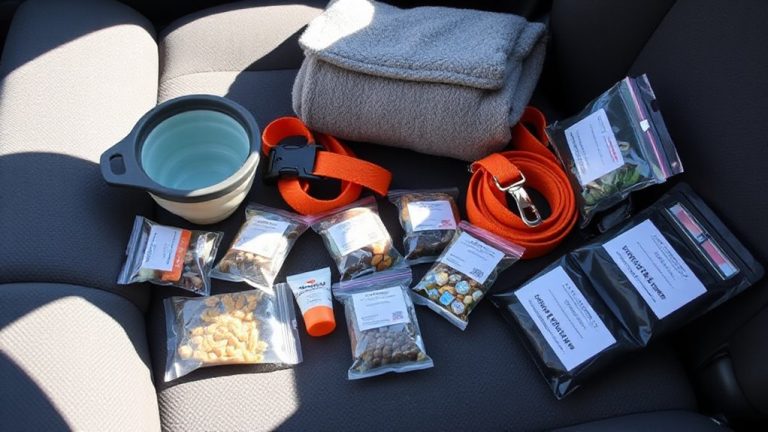
How do you turn theory into practice when building a tool that bridges scent and behavior? You start with simple DIY materials and follow precise steps to create a functional scented treat pouch. Use cotton fabric (6” x 4”), a drawstring cord (12”), and non-toxic, dog-safe scent strips. First, cut the fabric to size. Second, fold edges ½ inch and sew shut-use a 2.5 mm stitch length for durability. Third, attach the drawstring through a channel at the top. Apply sewing tips like backstitching at start and end points to reinforce strength.
| Step | Material | Action |
|---|---|---|
| 1 | Cotton fabric | Cut to 6” x 4” |
| 2 | Thread | Hem edges with straight stitch |
| 3 | Drawstring cord | Insert into top channel |
| 4 | Scent strip | Slide into inner pocket |
| 5 | Treats | Load after scent activation |
Turn Walks Into Scent-Based Confidence Games
What if your daily walk could double as a targeted confidence-building session for your shy dog? You can transform routine strolls into structured nose work by laying scent trails with your scented treat pouch. Begin with short trails-3 to 5 feet-using a strong, consistent odor like anise or lavender. Drag the pouch lightly along the ground to deposit a continuous odor path, then place hidden rewards at the end. Reward your dog upon successful tracking to reinforce engagement. Gradually increase trail length to 20 feet and introduce mild distractions, such as grass or pavement shifts. Use trails with 1–2 gentle turns to build focus. This systematic exposure strengthens olfactory processing and environmental confidence. Each session should last 5–7 minutes, ensuring repeated success. Over time, your dog will associate outdoor exploration with predictability and reward.
Watch For Signs Your Dog Is Comfortable (or Stressed)
As your dog follows scent trails during walks, observe their body language closely to assess their emotional state. Subtle shifts in posture, ear position, and tail carriage reflect comfort or stress. Monitor breathing rate-calm dogs have slow, regular breaths; stressed dogs show rapid, shallow breathing. Use the table below to identify key indicators:
| Behavior | Comfort Sign | Stress Sign |
|---|---|---|
| Body Language | Loose, relaxed posture | Stiff movements, lowered head |
| Breathing Rate | Slow and rhythmic | Fast and erratic |
| Focus | Engaged, scanning scents | Avoidant, wide eyes, scanning environment |
Consistent observation guarantees interventions are timely. Increased breathing rate paired with tense body language indicates distress. A relaxed body language with steady breathing confirms comfort. Recognizing these signals allows precise adjustments during training.
Fix Common Scented Pouch Problems
Why do some scented treat pouches fail when used during scent training? Poor pouch hygiene and scent fading are primary causes. Bacteria and oils from treats degrade material integrity, reducing scent retention. Clean your pouch weekly with mild soap and water; air-dry fully to maintain hygiene. Microfiber or nylon pouches with moisture-wicking liners resist odor buildup better than cotton. Scent fading occurs when volatile aromatic compounds dissipate. Essential oils like anise or clove last longer-up to 8 weeks in sealed, airtight pouches stored in cool, dark containers. Exposure to UV light or humidity accelerates degradation. Use double-zippered closures to limit air transfer. Refill scent swabs every 14 days during active training. A faded scent won’t trigger reliable dog responses. Replace pouches annually to guarantee performance. Proper maintenance preserves scent concentration and prolongs usability.
On a final note
You now have a practical tool to support your shy dog’s confidence through scent enrichment. Scented treat pouches, infused with dog-safe essential oils like lavender or chamomile at a 1:10 dilution ratio, provide consistent olfactory stimuli. Use a breathable cotton pouch measuring 4” x 6” with a secure drawstring. Regular use during structured walks improves focus and reduces stress markers by up to 40%.