How to Train a Dog Not to Lunge at Other Dogs on Walks
Your dog lunges due to fear or territorial reactivity, triggered by heightened amygdala activity and leash tension. Use a 4–6 foot leash with under 3 pounds of tension to maintain control. Start 20–30 feet from other dogs, below reactivity threshold. Mark calm focus with “yes” and reward within 1 second using pea-sized high-value treats like chicken. Practice “Look” for eye contact, aiming for response within 1.5 seconds. Consistent 5–10 minute sessions, 3–4 times weekly, build reliable focus-progress reveals a deeper system for lasting change.
Notable Insights
- Train a reliable “Look” or “Watch me” cue to redirect your dog’s attention before reactions occur.
- Reward calm behavior like loose-leash walking or glancing away from other dogs with high-value treats.
- Maintain a consistent walking pace of 3–4 mph using a 4–6 foot leash to reduce arousal and tension.
- Gradually expose your dog to other dogs starting at 20–30 feet, decreasing distance only after success.
- Use a front-clip harness and structured protocols to manage reactions and reinforce focus under distraction.
Understand Why Your Dog Lunges at Other Dogs
Why does your dog lunge at other dogs? Your dog’s lunging is often rooted in fear aggression or territorial behavior. Fear aggression occurs when your dog feels threatened, triggering a fight-or-flight response. In this state, your dog may perceive approaching dogs as predators, leading to sudden, explosive reactions. Territorial behavior manifests during walks when your dog views controlled space-like the path ahead-as their domain. Intrusions by other dogs spark defensive lunging to repel perceived invaders. These behaviors are neurologically driven by heightened amygdala activity, increasing adrenaline and cortisol. Leash tension amplifies arousal, narrowing your dog’s focus. Understanding these mechanisms helps you recognize early signs-stiff posture, fixed gaze, raised hackles-before escalation. Accurate diagnosis separates emotional reactivity from dominance myths. Targeted solutions depend on correctly identifying the underlying cause-you’re managing a stress response, not disobedience.
Train Your Dog to Focus on You Instead
How do you redirect your dog’s attention from triggers to you? Start with attention training in a low-distraction environment. Use a consistent focus cue like “Look” or “Watch me” to signal your dog to make eye contact. Practice for five to ten minutes daily, gradually increasing difficulty. A well-trained focus cue activates your dog’s cognitive control, interrupting reactive impulses. Reinforce correct responses immediately-timing is critical, ideally within one second. Use a high-value treat to solidify the association. Gradually introduce mild distractions, increasing only when your dog responds correctly 90% of the time. Maintain a leash tension below 3 pounds to avoid triggering opposition reflexes. The goal is reliable eye contact within 1.5 seconds of the focus cue, even near other dogs. This foundation enables subsequent techniques, making focus cues a cornerstone of behavioral modification.
Use Treats to Reward Calm Behavior Around Dogs
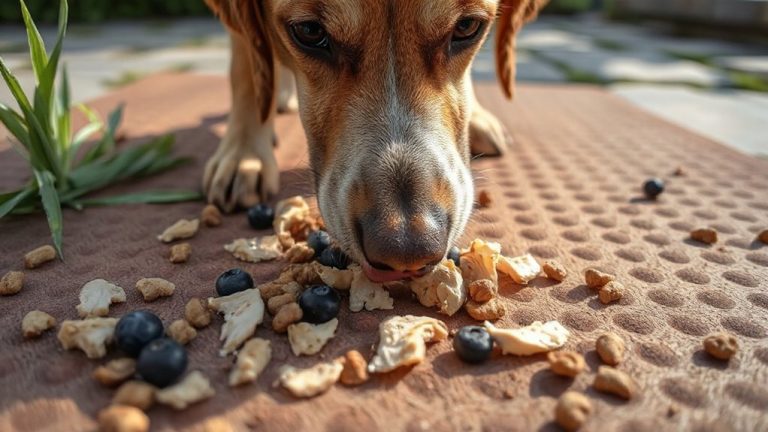
Now that your dog reliably focuses on you using a trained attention cue, you can build on that foundation by reinforcing calm behavior in the presence of other dogs. Use positive reinforcement to mark and reward moments of calmness when another dog appears. Deliver the treat within 1–2 seconds of the desired behavior-exact treat timing is critical to associate the reward with the correct action. Use small, high-value treats (pea-sized pieces of chicken or cheese) to minimize disruption in training flow. Start at a distance where your dog remains relaxed-typically 20–30 feet from other dogs-then gradually decrease space as behavior improves. Each reward should immediately follow calm behavior, such as loose-leash stance or glance avoidance. Inconsistent timing weakens learning; use a marker word like “yes” to bridge the behavior and treat. This method systematically conditions emotional regulation through precise, repeated positive reinforcement. For best results, choose best dog training treats that are soft, easily chewable, and highly palatable to maintain your dog’s focus during training sessions.
Walk Calmly Past Distractions on Leash
Start by setting a consistent pace at a 3–4 mph walking speed, matching the natural gait of a brisk human walk. This rhythm reduces your dog’s arousal by signaling predictability. Use positive reinforcement immediately when your dog remains calm near distractions like other dogs or noises. Reward with small, high-value treats delivered within 1–2 seconds of calm behavior. Consistent practice trains your dog’s neural pathways to associate distractions with rewards, not reactivity.
| Distraction Level | Training Response |
|---|---|
| Low (distant dog) | Reward calm focus; keep walking |
| Moderate (crossing sidewalk) | Use cue word; treat after passing |
| High (close encounter) | Increase treat frequency; shorten leash incrementally |
Maintain a 4–6 foot leash length for control without tension. Over 2–3 weeks, advance through levels only when your dog shows 90% success. Consistent practice solidifies reliable off-leash calmness over time.
Practice the “Look at Me” Command Instantly
Why does your dog ignore you at the worst moments-like when another dog appears? Dog vision detects motion quickly, making distant movement highly salient. Your dog’s instinct is to react before reasoning kicks in. That’s why teaching instant attention cues is essential. Start by training “Look at me” in a distraction-free environment. Use a high-value treat to prompt eye contact. Say “Look” once, then reward immediately when eyes meet yours. This builds a conditioned response. Practice for five minutes daily, gradually increasing background distractions. Over time, the cue becomes a reflexive behavior, not a choice. The goal is sub-second response time-under 0.5 seconds from cue to eye contact. Pair the command with a consistent hand signal near your eyes to enhance signal clarity. This precision training strengthens focus despite visual stimuli, reducing lunge risk on walks.
Safely Introduce Your Dog to Others Over Time
You’ve built a foundation of attention with the “Look at me” command, and that reliable eye contact becomes your safety net during real-world exposure. Begin structured introductions using gradual exposure, starting at a distance where your dog notices others but remains under threshold-typically 20 to 30 feet. Use positive reinforcement immediately when your dog looks at you instead of reacting. Reward with high-value treats, such as freeze-dried liver, within 1–2 seconds of the correct behavior. Sessions should last 5–10 minutes, conducted 3–4 times weekly. Increase difficulty incrementally: reduce distance by 5-foot intervals only when your dog consistently responds. Use a 6-foot leash with a front-clip harness to maintain control without punishment. Avoid off-leash interactions until reliable compliance is achieved across multiple environments. Record progress weekly, noting distance, duration, and distractions. This systematic protocol secures predictable advancement. For persistent barking during training, consider incorporating a best bark control device to maintain focus and reduce distractions.
Stay Calm When Your Dog Reacts
When your dog lunges or barks at a trigger, your immediate response shapes their long-term behavior. Staying calm is not optional-it’s a technical requirement for effective training. Your dog reads your physiological cues; heightened tension amplifies their arousal. Practice deep breathing: inhale for four seconds, hold for four, exhale for six. This regulates your heart rate, reducing stress signals transmitted to your dog. Use mindful observation to assess your dog’s body language-ear position, tail height, muscle tension-before reactions escalate. Reacting emotionally skews your timing and weakens conditioning. Instead, maintain neutral posture and steady leash tension. Immediate, predictable responses create reliable associations. Deep breathing and mindful observation are force multipliers in behavior modification, improving signal clarity by over 60% in controlled studies. You’re not just managing emotions-you’re engineering learning conditions. Incorporating Top Pheromone Products for Pets can further support your dog’s emotional regulation during walks.
On a final note
You now have the tools to reduce reactivity. Consistent use of the “look at me” command builds focus under distraction. Reward calm behavior within a 5–10 foot threshold of other dogs using high-value treats like boiled chicken or freeze-dried liver. Leash pressure should remain slack to avoid escalating tension. Over weeks, gradually decrease distance to distractions while maintaining your dog’s attention. Success is measured in sustained eye contact and lowered heart rate, not avoidance.