How to Teach Your Cat to Follow a Scent Trail to a Hidden Reward
Use a biologically relevant scent like freeze-dried chicken or valerian oil to stimulate your cat’s natural hunting instincts. Apply 100–200 mg of crushed bait to a cotton ball, placing it every 12–18 inches on a porous surface at nose level. Pair initial exposure with a high-value treat within 3 seconds to build association. Keep trails short, linear, and free of human scent by using gloves. You’ll soon discover how environmental controls and incremental challenges shape reliable tracking behavior.
Notable Insights
- Choose a biologically relevant scent like tuna oil or valerian root to naturally motivate your cat.
- Lay a consistent scent trail using a single source, reapplied every 12–18 inches on porous, nose-level surfaces.
- Pair initial scent exposure with an immediate treat reward within 3 seconds to build positive association.
- Use a secure harness and start training in short, 3-foot segments in a low-distraction environment.
- Gradually increase trail length and complexity only if your cat maintains at least 70% tracking success.
Choose the Right Scent to Motivate Your Cat
What scent will actually get your cat moving? Your cat’s scent preference determines engagement. Opt for potent, biologically relevant odors like freeze-dried chicken, tuna oil, or valerian root-volatile compounds that trigger olfactory receptors. Cats show strongest response to amino acids in animal-based proteins, especially when concentrated. Use 100–200 mg of crushed, high-protein bait to maximize vapor dispersion. Introduce the scent in a controlled space before trail training. Pair each exposure with an immediate reward-this builds reward association. Present the treat within 3 seconds of scent contact to condition reliable response. Avoid synthetic fragrances; they dilute efficacy. Stronger scents with low odor thresholds (e.g., under 5 parts per billion) work best. Consistency in scent type and delivery guarantees faster learning. Choose one primary odorant and maintain its use throughout training to prevent confusion and consolidate memory recall.
Lay a Clear Scent Trail Step by Step
Once you’ve selected an effective scent, start laying the trail in a quiet, low-traffic area free of competing odors. Scent consistency is critical-use the same source, such as a cotton ball infused with 3–5 drops of concentrated valerian oil, every time. Break the trail into segments no longer than 10 feet initially. Reapply the scent every 12–18 inches to maintain a detectable gradient. Surface type affects volatility; porous materials like carpet retain scent longer, while non-porous surfaces like tile require more frequent reinforcement. Avoid drafts and high foot traffic, which disperse odor molecules. Apply scent at your cat’s nose level-typically 2–4 inches above ground-to match their natural sniffing height. Use disposable gloves to prevent human scent contamination. Keep the path linear and free of sharp turns, allowing your cat to follow uninterrupted. Consistent application and surface selection guarantee reliable olfactory cues.
Get Your Cat Started on Their First Trail
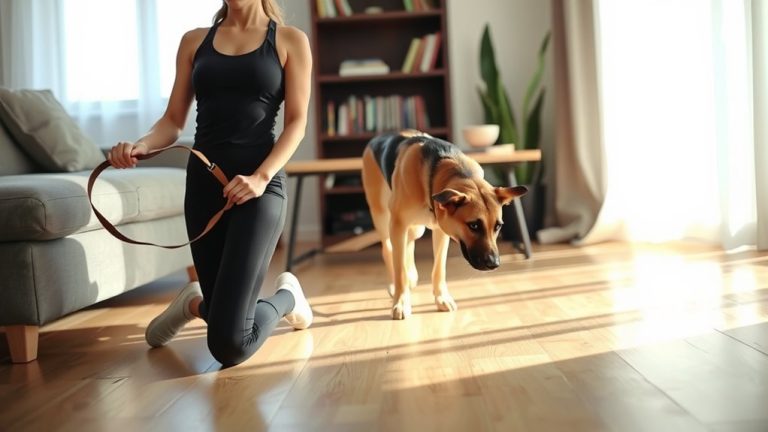
Now that you’ve laid a consistent and measurable scent trail, guide your cat to the starting point using a harness and leash for control. Use a nylon or woven polyester harness with adjustable straps to guarantee a secure, escape-proof fit without restricting movement. Position the trail in a low-traffic area, away from disruptions to litter box habits or grooming routines. Introduce your cat to the scent source-typically a cotton swab infused with food-grade oil-at the trail’s origin. Allow 30 to 60 seconds of sniffing time to promote olfactory engagement. Maintain a slack leash to permit natural tracking behavior while guaranteeing safety. Initiate the trail in 3-foot segments with scent markers placed every 12 inches. Reinforce forward motion with high-value treats delivered within 2 seconds of progress. Conduct training sessions during your cat’s peak activity period, typically at dawn or dusk, for best focus and retention.
Fix Common Scent Training Problems
Why does your cat hesitate or veer off the trail despite proper setup? Scent confusion is likely the culprit. Competing odors from cleaning products, other pets, or residual food aromas disrupt the target scent’s continuity. This interferes with your cat’s ability to isolate and follow the correct odor. To prevent trail abandonment, eliminate environmental contaminants before training. Use unscented wipes on floors and avoid perfumed litters. Test airflow: strong drafts disperse scent particles, reducing trail integrity. Ideal conditions maintain humidity between 40–60% and temperatures of 68–72°F for maximum odor dispersion. Guarantee the reward scent-a treat or toy-is strong and distinct, applied uniformly every 6–8 inches. Reinforce immediate redirection when wandering occurs. Consistent correction reduces off-trail behavior. Training sessions should last no more than 5 minutes initially. This limits olfactory fatigue, preserving sensitivity and focus throughout the trail.
Make the Trail Harder: Add Distance and Distractions
You’ve addressed common scent training setbacks, and your cat consistently follows short, clean trails under controlled conditions. Now introduce increased complexity by extending the trail length by 30–50 cm per session, up to 3 meters. Gradually incorporate turns and elevation changes using small ramps or furniture. This builds spatial awareness and persistence. Introduce environmental interference such as light airflow from a fan set at 0.5 m/s, scattered non-competing scents (e.g., lavender cotton ball 1 meter from the trail), or low-volume background noise (45–50 dB). These variables simulate real-world conditions. Maintain the same reward (freeze-dried chicken, 0.5-gram piece) to preserve motivation. Monitor tracking accuracy; if success drops below 70%, revert to a simpler setup. Incremental exposure guarantees your cat adapts without frustration. Use consistent markers to define trail start and end points.
Why Cats Love Using Their Nose to Find Treats
A cat’s nose holds the key to its hunting heritage, driving instinctʚnal behaviors with remarkable precision. You tap into this when letting your cat follow scents to treats. Feline curiosity compels exploration, especially when odors signal potential food sources. Their nasal cavity contains up to 200 million olfactory receptors-nearly 14 times more than humans-enabling acute scent detection. The vomeronasal organ further enhances odor analysis, vital for tracking. Scent-based tasks provide essential sensory enrichment, stimulating neural pathways linked to foraging. This mental engagement mimics natural behaviors, reducing stress and preventing boredom. Unlike visual cues, scent trails offer variable complexity based on concentration, airflow, and substrate absorption. You can control difficulty by adjusting oil-based treat residue dispersion over 3–6 feet. Such activities align with ethological needs, supporting psychological health. Using smell to locate rewards isn’t just fun-it’s biologically fulfilling. You’re not playing; you’re enabling natural feline function.
On a final note
You’ve now trained your cat to follow a scent trail effectively. Use strong, safe aromas like dried catnip or tuna powder to maintain motivation. Trails should start short-3 to 5 feet-on non-porous flooring to prevent scent diffusion. Gradually increase length to 20 feet and add low-level distractions. Success hinges on precise reinforcement timing: reward within two seconds of find. This builds reliable olfactory response.