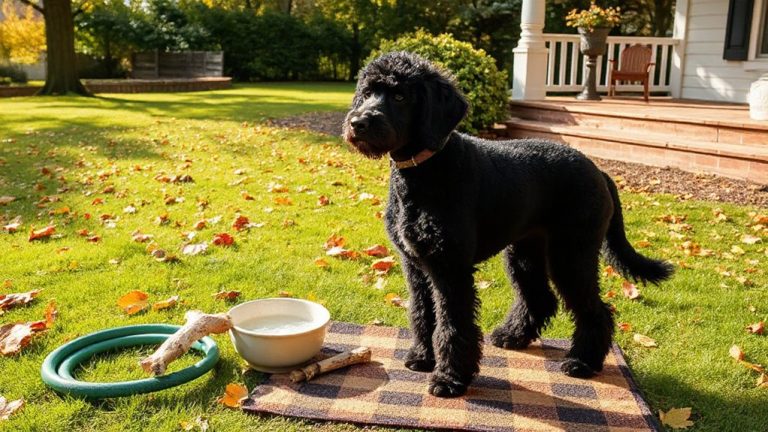
Seasonal Shedding Patterns Explained: Understanding Why Pets May Shed More
Your pet sheds more in spring and fall due to changing daylight, not temperature. Photoperiod shifts trigger hormonal changes, releasing melatonin and thyroid hormones that regulate coat cycling. Up to 90% of guard hairs shed synchronously, while double-coated breeds lose up to 70% of their insulating undercoat. This natural molting guarantees proper thermoregulation. Artificial light and indoor heating disrupt these cycles, causing year-round shedding. Understanding breed-specific patterns and follicle activity helps differentiate normal shedding from potential health concerns. Further insights into management and anomalies follow.
Notable Insights
- Seasonal shedding is triggered by changes in daylight, not temperature, regulating hair growth cycles in pets.
- Spring shedding removes winter coats as increasing light and warmth prompt hormonal shifts in melatonin and thyroid levels.
- Fall shedding allows dense undercoat development for insulation, driven by shorter days and cooler temperatures.
- Indoor pets may shed year-round due to artificial lighting and stable temperatures disrupting natural photoperiod cues.
- Excessive shedding or bald patches may indicate health issues like parasites, allergies, or hormonal disorders, not seasonal cycles.
Why Pets Shed: The Science of Seasonal Coats
Why does your pet shed more in spring and fall? Seasonal shedding is driven by natural cycles in hair growth regulated by changes in daylight, not temperature. As photoperiods shift, your pet’s body responds by altering coat texture and initiating synchronized hair loss. This process, called molting, guarantees adequate insulation year-round. Hair growth occurs in three phases: anagen (growth), catagen (transition), and telogen (resting), with most shedding happening as hairs exit telogen. In response to increasing or decreasing daylight, up to 90% of guard hairs may shed simultaneously. This regulated cycle maintains thermal efficiency. You’ll notice looser undercoat and visible clumps because double-coated breeds produce dense, insulating fur with distinct coat texture changes between seasons. Proper brushing supports this natural process, but the timing and intensity are biologically programmed-no grooming tool alters the core hormonal triggers behind seasonal hair growth shifts.
Spring Shedding: Ditching the Winter Coat
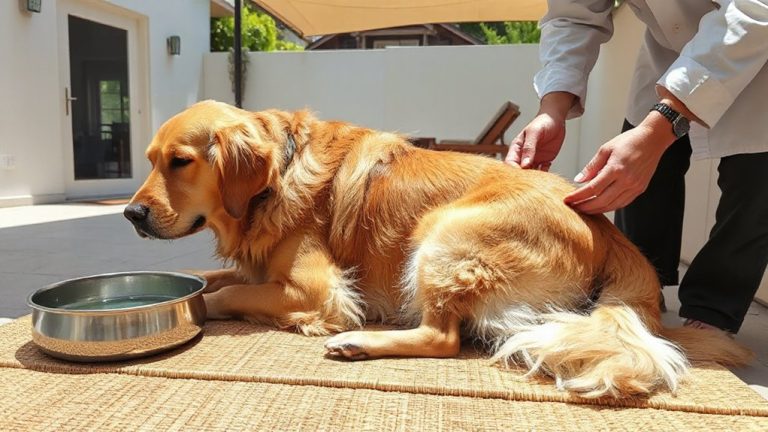
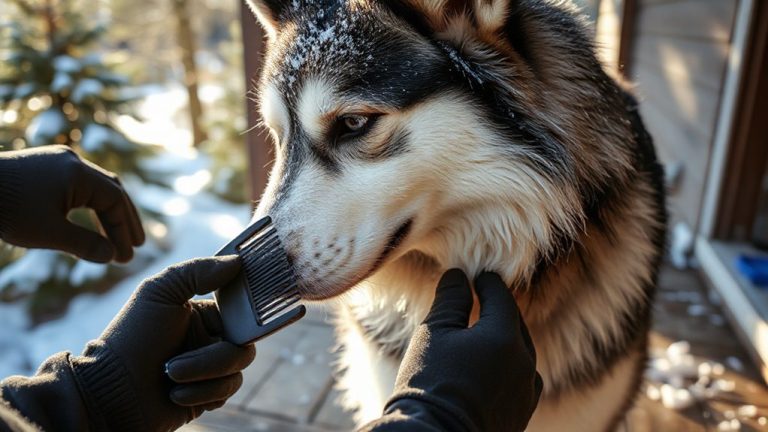
You notice clumps of dense undercoat collecting on your clothes and floors as daylight hours stretch longer-spring shedding has begun. This seasonal process, known as spring molting, is triggered by increasing photoperiod and rising temperatures. Your pet’s body responds by initiating a systematic Winter coat release to shed insulating fur no longer needed. Hormonal shifts, particularly in melatonin and thyroid hormones, regulate this cycle. The undercoat loosens first, followed by guard hair shedding. Breeds with double coats-like Huskies or Golden Retrievers-experience the most noticeable changes, losing up to 70% of their undercoat. Daily brushing with an undercoat rake removes dead hair efficiently, reducing shedding by 80% when performed consistently. Proper hydration and diet support follicle health during this shift. Spring molting typically lasts 4–6 weeks, depending on climate and breed.
Fall Shedding: Building a Warmer Winter Undercoat
As daylight shortens and temperatures drop, your pet’s natural cycle shifts into gear for fall shedding, a key shift for cold-weather adaptation. You’ll notice increased shedding as old summer fur exits to make room for dense undercoat growth. This undercoat consists of soft, insulating hairs that trap body heat, essential for winter preparation. Dogs like Huskies or Golden Retrievers develop up to 40% more undercoat in fall, measured by follicle density per square centimeter. The process is photoperiod-driven-fewer daylight hours trigger melatonin release, signaling follicles to enter the anagen (growth) phase. Shedding typically lasts six to eight weeks. While you brush, expect to remove several ounces of loose hair weekly, depending on breed and coat length. Consistent grooming supports healthy coat turnover and minimizes matting. Undercoat growth follows a predictable biological timeline, not influenced by indoor climate. Proper fall care helps maintain peak insulation throughout winter months.
How Indoor Lights and Heat Affect Pet Shedding
While natural light and temperature regulate your pet’s shedding cycle, artificial indoor lighting and heating can disrupt this rhythm. Constant light exposure from lamps or overhead fixtures confuses your pet’s internal clock, leading to year-round shedding. Similarly, indoor temperature regulation prevents the seasonal cues needed for proper coat turnover. Your pet perceives a perpetually mild environment, halting natural adaptation.
| Factor | Effect on Shedding |
|---|---|
| Extended light exposure | Triggers continuous shedding cycle |
| Consistent indoor heat | Suppresses winter coat development |
| Dim artificial light | Mimics short days, causes false molt |
| Stable room temperature | Disrupts temperature regulation signals |
| 24-hour lighting | Eliminates seasonal shedding patterns |
Controlled light cycles and natural temperature fluctuations support healthier shedding patterns. Mimicking outdoor conditions indoors helps restore normal coat growth and reduces excessive shedding. Adjusting your home environment can markedly improve your pet’s seasonal coat health.
High-Shedding vs. Low-Shedding Pet Breeds
Shedding intensity varies considerably across pet breeds, largely due to genetic coat type and follicular cycling patterns. You’ll notice high-shedding breeds like German Shepherds and Maine Coons lose dense undercoats seasonally, driven by breed genetics and daylight sensitivity. These breeds have thick, double-layered coats with coarse hair texture that traps dead follicles until seasonal shedding removes them. Low-shedding breeds such as Poodles and Bichon Frises possess curly, single-layer coats with tightly curled hair texture that retains loose fur longer. Their follicular cycling is more protracted, reducing visible shedding. Breed genetics determine keratin structure and growth phase duration-typical cycles in heavy shedders last 6–8 months, while low-shedding breeds cycle over 12–18 months. Hair texture impacts dander dispersion and allergenic potential. Knowing your pet’s breed-specific shedding pattern allows for accurate grooming planning, even if their environment remains constant.
When Shedding Signals a Health Problem
Could excessive shedding be more than just a seasonal nuisance? Yes-when paired with excessive scratching or bald patches, it may indicate an underlying health issue. Normal shedding rarely causes skin lesions or intense itching. If your pet scratches more than 15 times per hour or develops symmetrical bald patches, consult a veterinarian. These symptoms often point to parasitic infestations, like fleas or mites, or hormonal disorders such as hypothyroidism. Allergic dermatitis, triggered by food or environmental allergens, also increases hair loss. Fungal infections like ringworm produce circular bald patches with red, inflamed borders. Blood tests, skin scrapings, and allergy panels help diagnose the cause. Early intervention prevents secondary infections. Monitoring your pet’s scratching frequency and coat condition provides critical diagnostic data. Persistent or worsening shedding isn’t normal-it’s a warning sign requiring professional evaluation. Address health-related shedding promptly to maintain your pet’s well-being.
How to Reduce Pet Shedding Year-Round
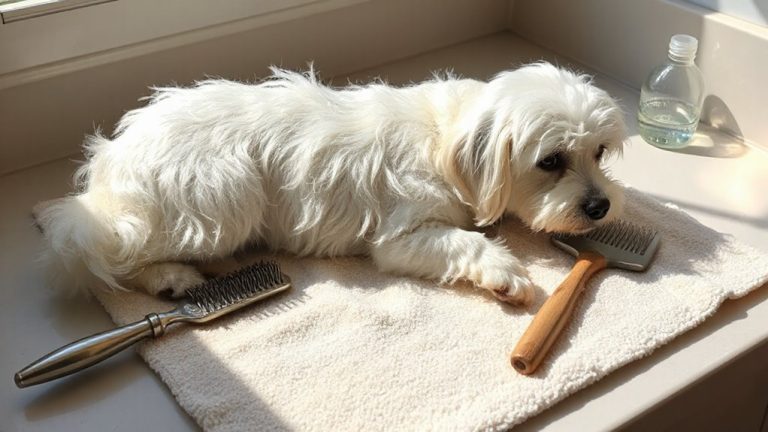
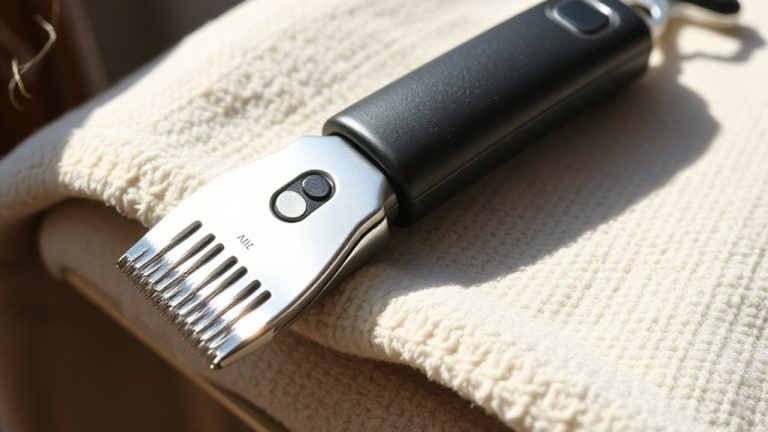
You can manage your pet’s shedding effectively with consistent care and the right tools. Regular brushing techniques are essential-use a slicker brush weekly for short-haired pets; double-coated breeds need an undercoat rake every 3–4 days, removing 60–80% of loose fur. Daily brushing during peak shedding can reduce household hair by up to 90%. A high-quality diet improves coat health markedly. Choose foods with at least 22% protein for dogs and 30% for cats, plus omega-3 and omega-6 fatty acids in a 5:1 ratio. These nutrients strengthen hair follicles, reducing excessive shedding by 30% over eight weeks. Hydration supports skin elasticity-ensure pets consume 50–70 ml of water per kg of body weight daily. Shedding tools with stainless steel pins spaced 2–3 mm apart remove dead hair efficiently without irritating skin. Consistent grooming and best diet quality work synergistically to minimize year-round shedding. For optimal results, consider using a top deshedding tool designed to target undercoat fur and reduce shedding more effectively than standard brushes.
On a final note
You experience seasonal shedding because pets naturally regulate coat density in response to changing daylight and temperature. Longer days in spring trigger melatonin reduction, prompting undercoat loss-up to 60% in double-coated breeds like Huskies. In fall, shorter days stimulate new undercoat growth for insulation. Indoor lighting and heating disrupt this cycle, causing year-round shedding. Regular brushing with deshedding tools removes loose fur and reduces shedding by up to 90%. Excessive shedding may signal thyroid issues, allergies, or parasite infestations.