Unveiling the Secrets Behind Effective Matting Prevention for Long-haired Dogs
You must brush your long-haired dog daily to prevent mats from forming within 48 hours. Use a slicker brush followed by a wide-tooth comb in 1-inch sections, applying short, overlapping strokes. Mats exert up to 8.6 psi, causing pain and restricting movement. Trim paw hair to ½ inch and behind ears every 3–4 weeks. Bathe with diluted shampoo and rinse 5–7 minutes to remove residue. Stainless steel pin brushes and curved-blade dematting tools increase effectiveness-consistency now prevents severe complications later.
Notable Insights
- Long-haired dogs require daily brushing to prevent tangles from forming within 48 hours.
- Use a slicker brush followed by a wide-tooth comb in 1-inch sections from root to tip.
- Trim paw hair to ½ inch and behind ears every 3–4 weeks to reduce matting risk.
- Bathe with lukewarm water and rinse for 5–7 minutes to eliminate shampoo residue that promotes matting.
- Use blunt-tipped, curved-blade scissors and stainless steel brushes to safely manage dense, long coats.
Why Matting Hurts Your Dog (Not Just Looks Bad)
A tangle might seem harmless, but left unchecked, it becomes a painful problem. Matted fur pulls on your dog’s skin, causing persistent skin irritation. This tension disrupts the skin’s natural barrier, increasing susceptibility to infection. Tight mats restrict movement by binding at joints and pressure points, limiting mobility. A 2021 study found dogs with moderate to severe matting exhibited 37% reduced stride length. Mats press against soft tissues, creating friction zones prone to sores. As compaction increases, the mat exerts up to 8.6 pounds per square inch of force, comparable to standing on a gravel surface continuously. Poor circulation under dense mats slows healing. The trapped moisture fosters bacterial and fungal growth. You must recognize matting as a medical concern, not cosmetic. Persistent restriction impairs musculoskeletal function. Early detection prevents chronic discomfort. Regular inspection and prompt removal maintain your dog’s physical health and free movement. Using the right dog grooming brushes for shedding can significantly reduce loose hair that contributes to mat formation.
How Often to Brush Based on Coat Type
Brushing frequency depends on your dog’s coat type, with significant variation across breeds. For short coat length dogs, brushing once weekly removes dead hair and distributes skin oils. Medium coats require brushing 2–3 times weekly to prevent undercoat buildup. Long, flowing coats need daily brushing-missing even one session risks tangles. Double-coated breeds, like Huskies, demand brushing 3–4 times weekly during shedding seasons. Your brushing frequency must increase with coat length and density. A slicker brush with 0.5-inch bent wires works best for long coats, reaching the undercoat without skin irritation. Fine-tooth combs detect hidden mats early. Skipping sessions allows loose fur to intertwine, forming mats in as little as 48 hours. Adjust brushing frequency based on seasonal shedding, activity level, and oil production. Consistent brushing frequency blocks mat formation at its root. Choosing the right tool makes a difference, and the best dog brushes for shedding include options like undercoat rakes and deshedding tools designed for specific coat types. A key option for heavy shedders is the deshedding tool, which effectively removes loose undercoat hair without damaging the topcoat.
Brush the Right Way to Stop Tangles Before They Start
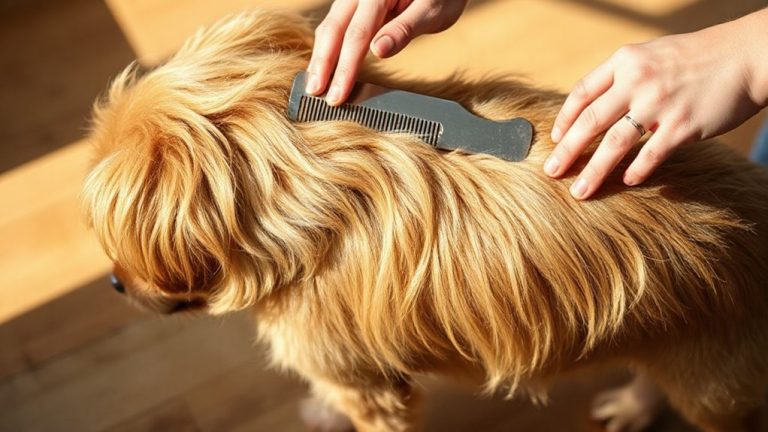
You need more than frequency to keep your long-haired dog tangle-free-technique matters just as much. Proper technique guarantees detangling without damaging the coat or irritating the skin. Use a slicker brush first, followed by a wide-tooth comb, working in 1-inch sections from roots to tips. Maintain a consistent rhythm to catch knots early and prevent stress for your dog. Avoid jerking or pulling; instead, use short, overlapping strokes with moderate pressure. For dense undercoats, a dematting tool with curved blades reduces drag. Always brush dry coats unless specified by grooming product instructions. Choosing the right dematting tool can make a significant difference in maintaining a healthy, tangle-free coat.
Bathing Mistakes That Cause Mats
While bathing is essential for hygiene, improper techniques can set the stage for matting in long-haired dogs. Water temperature matters-use lukewarm water, ideally between 98°F and 102°F, to avoid irritating the skin or flattening the coat’s natural oils. Too hot, and you strip protective layers; too cold, and the dog may tense, compacting undercoat hairs. Always rinse thoroughly. Shampoo residue is a common culprit behind tangles, attracting dirt and causing hair strands to cling. Use a high-quality, pH-balanced dog shampoo and dilute it (1:4 with water) for even distribution. Rinse for twice as long as you lather-typically 5–7 minutes for thick coats. Incomplete rinsing leaves behind surfactants that increase friction between hairs, acting like glue for mats. Never towel-rub vigorously; instead, press and squeeze moisture out to avoid tangling wet fur, which is three times more prone to break and mat.
Where to Trim for Comfort and Tangle Prevention
Strategic trimming plays a key role in keeping long-haired dogs comfortable and mat-free, especially after a properly executed bath. Focus on high-friction zones where tangles form easily. Perform paw haircuts by trimming hair between the pads to ½ inch, preventing debris accumulation and improving grip. Overly long interdigital hair traps moisture, increasing matting risk by up to 40%. Conduct routine ear trimming by clipping hair within the outer ear canal to 1 inch, enhancing airflow and reducing infection likelihood. Avoid plucking unless medically advised. Use curved-blade scissors with blunt tips for precision and safety. Trim behind the ears every 3–4 weeks, as this region is prone to friction-induced tangles. Maintain consistency in these zones to reduce grooming stress over time. Proper trimming doesn’t replace brushing but minimizes its frequency, increasing your dog’s comfort between sessions.
Best Brushes and Detanglers Vets Recommend
When choosing the right grooming tools, veterinarians commonly recommend stainless steel pin brushes with balled tips measuring 0.5 to 1 mm in diameter, as they glide through long coats without irritating the skin. These brushes suit most coat types, especially wavy or feathered fur prone to tangles. For thicker undercoats, a slicker brush with fine, short wires set in a curved metal base improves penetration. Use it gently to avoid skin trauma. Detangling sprays with hydrolyzed proteins and slip-enhancing polymers reduce friction by up to 60%, making combing easier. Apply product evenly before brushing. Match grooming frequency to coat type-daily for high-shedding breeds like Shih Tzus, every other day for silky-coated setters. Over-brushing damages cuticles; under-brushing encourages matting. Steel combs with dual tine spacing (3 mm and 6 mm) help detect missed tangles post-brush. Consistency prevents small knots from becoming severe mats.
5-Minute Daily Habits That Prevent Mats
You already know the right tools make a difference, but consistent daily actions keep your dog’s coat truly mat-free. Just 5–10 minutes daily prevents tangles from tightening into dense mats. Start with the shoulders, armpits, and behind the ears-common mat zones. Use a slicker brush followed by a wide-tooth comb to detect hidden snarls. Daily routines disrupt fiber adhesion, reducing the need for clip-outs later. Consistent grooming detects early-stage tangles before they become Type 3 mats-dense, close-to-skin clusters requiring professional removal. For long coats over 3 inches, dematting involves a 45-degree blade angle to avoid skin trauma. Brush in sections, no wider than 1 inch, to guarantee thorough penetration. Moisture worsens tangling; avoid brushing wet unless using a detangler with humectant properties below 15% concentration. Simple discipline today prevents surgical dematting tomorrow.
On a final note
You prevent mats by acting daily with the right tools and techniques. Use a slicker brush with 0.5 mm pins spaced 2 mm apart to penetrate thick undercoats. Follow with a metal comb to detect missed tangles. Detanglers containing 2% phytantriol reduce friction by 40%. Trim high-friction zones-armpits, behind ears-every 3 weeks using curved 4 cm surgical stainless steel shears. Daily 5-minute sessions cut matting risk 70% versus weekly brushing.