Safe Material Composition in Bird Cages: Ensuring Health and Well-being
Choose cages made of powder-coated stainless steel or wrought iron with non-toxic, lead- and zinc-free coatings to prevent poisoning. Use ½-inch bar spacing for small birds; ¾ to 1 inch for larger species. Mesh should be welded, not crimped, using 14- to 18-gauge wire. Opt for oven-cured epoxy or polymer coatings up to 75 microns thick for durability. Avoid PTFE and galvanized metals. Solid, untreated hardwood perches improve foot health. The right build keeps your bird safe and thriving-details on ideal configurations follow.
Notable Insights
- Choose powder-coated stainless steel or wrought iron free of lead, zinc, and PTFE to prevent toxic exposure.
- Ensure cage coatings are oven-cured and third-party tested for ASTM F963 compliance to guarantee safety.
- Use welded wire mesh with appropriate spacing: ½ inch for small birds, up to 1 inch for larger species.
- Select untreated hardwood perches like ash or maple to avoid chemical ingestion during chewing.
- Opt for solid-bottom cages with removable trays to minimize bacterial growth and ease cleaning.
What Makes Bird Cage Materials Dangerous?
A poorly chosen cage material can pose serious health risks to your bird. Sharp edges on cheaply cut metal or plastic can cause lacerations, especially during movement or flight attempts. These injuries may lead to infection or stress-induced illness. Loose wires in welded mesh indicate poor craftsmanship and structural weakness. Over time, they can shift or bend, creating gaps large enough for a bird’s head or limbs to become trapped. Most manufacturers use 14- to 18-gauge wire for durability; cages below this standard increase failure risks. Mesh spacing should range from ½ inch for small birds to 1 inch for larger species to prevent escapes or entanglement. Poorly secured joints allow parts to detach, worsening hazards. A rigid frame with smooth, deburred edges guarantees safety. Always inspect seams and corners-you’re responsible for maintaining a secure environment. Prioritize build quality over aesthetics.
Toxic Metals and Chemicals to Avoid
While durability and design matter, avoiding toxic metals and chemicals is critical when selecting a bird cage. Birds ingest particles while grooming, making exposure to harmful substances potentially fatal. Lead paint and zinc plating are two common hazards you must avoid. Lead paint, often found on older or imported cages, causes neurological damage even in trace amounts. Zinc plating, also known as galvanization, can release toxic dust if corroded or chewed. Instead, opt for powder-coated or stainless steel. Below are key toxins and their effects:
| Toxic Substance | Common Source | Health Impact |
|---|---|---|
| Lead paint | Old cage bars, decorative parts | Anemia, seizures, death |
| Zinc plating | Galvanized wire, cheap mesh | Respiratory distress, organ failure |
| Cadmium | Low-grade metal alloys | Kidney damage, weakness |
| PTFE fumes | Non-stick coatings, heaters | Acute respiratory failure |
Best Non-Toxic Cage Materials: Steel, Wood & More
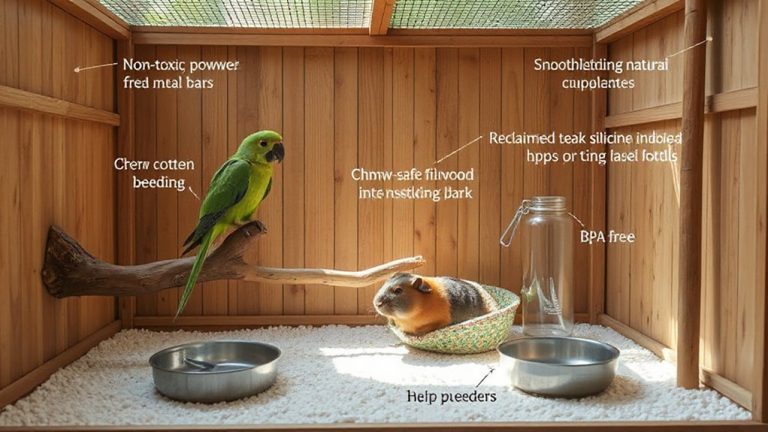
Durability meets safety when you choose the right materials for your bird’s cage. Powder-coated stainless steel is a top choice-resistant to corrosion and chipping, with a lifespan exceeding 10 years under normal use. The coating must be free of zinc and lead, ensuring non-toxic exposure. Welded wire mesh, 1/2 inch spacing for small birds and 3/4 inch for larger species, supports secure containment and maximum ventilation design. Untreated hardwoods like ash or maple work well for perches and accessories, offering natural finishes without chemical sealants. Avoid pressed wood or particleboard, which emit formaldehyde. Solid bottom cages with removable trays simplify cleaning and reduce bacterial buildup. Proper airflow is maintained through side and top grilles, preventing stagnant air. These materials, when combined, create a safe, long-lasting habitat that supports your bird’s physical health and behavioral needs without introducing toxins into their environment.
Spotting Safe vs. Toxic Cage Coatings
Safety begins at the surface-your bird’s cage coating can make the difference between a healthy environment and a hazardous one. You need coatings free of zinc, lead, and PTFE, which release toxic fumes when scratched or heated. Opt for powder-coated finishes cured at high temperatures, as they provide superior coating durability and resist chipping. These coatings bond tightly to steel, maintaining integrity under frequent cleaning and UV exposure. Corrosion resistance is critical, especially in humid environments; look for cages with electrostatic application and oven-cured polymer layers up to 75 microns thick. Avoid painted surfaces that flake-birds ingest loose particles. Epoxy-based coatings offer strong adhesion and chemical resistance, with hardness ratings above 2H on the pencil scale. Always verify third-party lab testing for ASTM F963 compliance. Safe coatings last years without degrading, protecting both your bird and the cage frame. When selecting from the best parrot cages, prioritize models with oven-cured finishes for maximum safety and longevity.
Matching Cage Materials to Your Bird’s Size and Behavior
Your bird’s size and behavior directly determine the appropriate cage materials, so choosing wisely guarantees long-term safety and functionality. Small birds like budgies need bars spaced no more than ½ inch apart; larger parrots require ¾ to 1 inch to prevent escapes. Heavy chewers demand stainless steel or powder-coated wrought iron-avoid soft metals like zinc or brass, which degrade quickly. Perch stability is critical: use natural hardwood or synthetic perches ¾ to 1¼ inches in diameter, securely anchored to prevent wobbling. Improper support increases foot fatigue and injury risk. Toy compatibility depends on material strength-thick acrylic or stainless-steel toys withstand aggressive chewing, while lightweight plastics fracture easily, creating ingestion hazards. Cages under 24 inches wide restrict flight, reducing physical health. Guarantee door openings are at least 6 inches wide for easy access without disrupting internal layouts. Match construction to your bird’s force output-testing shows large parrots exert up to 300 PSI on bars-and select accordingly.
On a final note
You must prioritize non-toxic materials to safeguard your bird’s health. Galvanized steel with at least 0.032-inch wire thickness offers durability and resistance to corrosion. Avoid zinc, lead, and cadmium-common in cheap alloys and coatings. Powder-coated finishes are safe if free of volatile organic compounds. For wood, use only untreated hardwoods like ash or maple. Guarantee bar spacing matches species-specific requirements-1/2 inch for small birds, up to 1 inch for large parrots-to prevent injury.