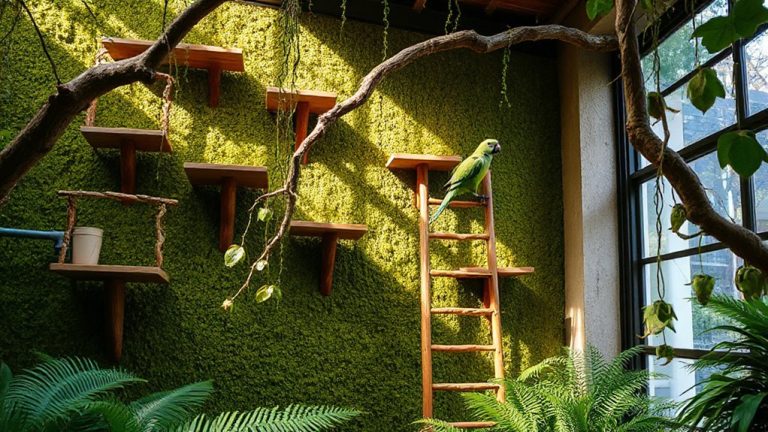
Vertical Space Design for Small Mammals: Encouraging Healthy Exercise Habits
Choose a cage with at least 36 inches of vertical height and ½-inch wire spacing on a powder-coated steel frame for safety and durability. Guarantee 80% wire coverage for airflow while preventing drafts. Install climbing rungs spaced 2–6 inches apart, depending on species, and secure non-slip platforms every 8–12 inches. Use rigid, 3–4 inch diameter tunnels and untreated hardwood or food-grade plastic toys rated for 1-pound dynamic loads. Hang sisal ropes and chewable swings 6–12 inches apart, 4–6 inches above bedding. Maintain floor space of 2–4 sq ft, temperature between 65°F and 75°F, and rotate toys weekly to sustain engagement-further optimizations in design await.
Notable Insights
- Use cages with a minimum height of 36 inches to support climbing and jumping behaviors in small mammals.
- Install multi-level platforms spaced 8–12 inches apart with non-slip surfaces for safe, continuous movement.
- Ensure horizontal rung spacing matches species needs: 2–3 inches for hamsters, 4–6 inches for rats.
- Hang chewable, securely anchored toys 6–12 inches apart to encourage physical activity and mental stimulation.
- Construct tunnels and platforms from non-toxic, durable materials with 1-inch clearance for unrestricted navigation.
Choose a Cage That Supports Vertical Space
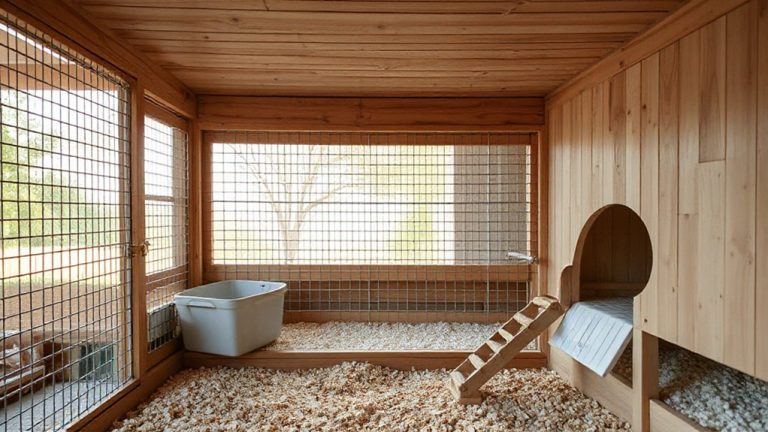
One well-chosen cage can make all the difference for small mammals that thrive in vertical environments. You need height-minimum 36 inches-to support climbing and jumping behaviors. Wire spacing should be ½ inch or less to prevent escapes or injury. Opt for powder-coated steel; it offers superior material durability and resists chewing and rust. Tube connectors and modular shelves attach securely to support long-term use. Ventilation is maximized with 80% wire coverage, ensuring airflow without drafts. Cage aesthetics matter-they influence placement in living spaces-but never at the expense of function. A sleek, vertical design with neutral tones blends into homes while prioritizing animal needs. Mesh trays at the base contain bedding and simplify cleanup. Load capacity reaches 50 lbs, accommodating multiple platforms and accessories. Choose a model that balances visual appeal with structural integrity-your small mammal depends on both form and function to thrive. Look for options labeled as stackable small animal habitats to maximize vertical space efficiently.
Build Safe Climbing Paths for Small Mammals
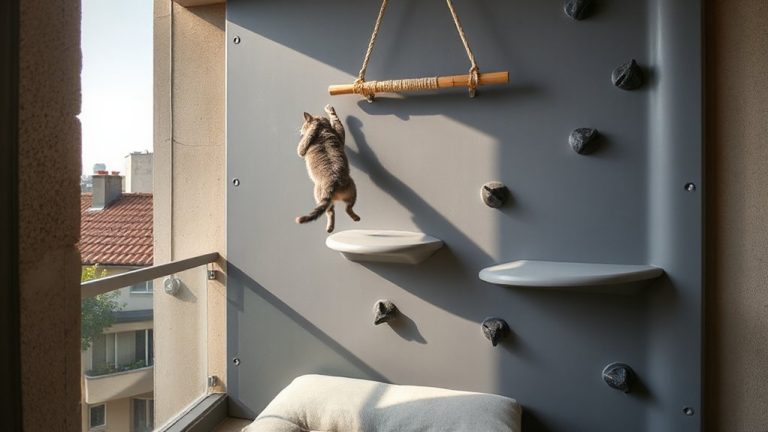
A secure climbing path begins with thoughtful material selection and proper spacing. Use non-toxic, chew-resistant materials like stainless steel or hardwood. Avoid soft plastics or wire mesh that can trap paws. Climbing textures should vary to stimulate paw pad sensitivity and improve balance-include rope, textured wood, and ceramic elements. Guarantee horizontal rungs are spaced 2–3 inches apart for hamsters and 4–6 inches for rats. Vertical supports must have secure grips, such as knotted rope or grooved wood, preventing slips. Overhangs should not exceed 45 degrees to reduce fall risk. Fasten all components with rust-resistant brackets rated for at least 10 lbs. Test stability by applying firm hand pressure. Paths must link essential zones: nesting, feeding, and exploration areas. Each connection supports natural vertical movement while minimizing injury. Maintain at least 1 inch of clearance from cage walls to prevent limb entrapment. Regular inspection ensures ongoing safety. For added enrichment, consider incorporating best small animal tunnels into the design to promote burrowing instincts and safe exploration.
Add Hanging Toys That Encourage Activity
While vertical climbing paths establish essential infrastructure, hanging toys add dynamic enrichment that promotes physical activity and mental engagement. You should install hanging ropes at varying heights between 6–12 inches apart to encourage reach and攀爬. These ropes should be made of natural cotton or sisal, with a diameter of ¼ to ½ inch, to support small paws and prevent slipping. Attach chewable swings made from untreated wood and food-grade plastics; these withstand gnawing and promote dental health. Position each swing 4–6 inches above a stable platform or bedding to prevent falls. Swings should measure 3–5 inches in length and support up to 1 pound of dynamic weight. Rotate toys weekly to maintain novelty. This rotation sustains engagement without overstimulation. Hanging ropes and chewable swings together enhance motor coordination, balance, and natural foraging behaviors critical to small mammal wellness. For ferrets, consider including best ferret toys that are safe, durable, and designed to stimulate natural play behaviors.
Balance Height, Floor Space, and Safety
Though vertical space maximizes activity opportunities, you can’t sacrifice floor area or safety for height. You need at least 2 square feet of floor space for small mammals like dwarf hamsters, and 4 square feet for larger species like guinea pigs. Tall enclosures must maintain structural integrity-wire spacing should be no more than 0.5 inches apart to prevent escapes or injuries. Cage ventilation is critical; mesh sides or a wire-top design allow airflow, reducing humidity buildup and respiratory risks. Poor ventilation can compromise temperature control, especially in glass tanks. Ideal ambient temperature ranges between 65°F and 75°F. Overly tall cages may create thermal gradients, with colder zones at the base. Place enclosures away from drafts and direct sunlight to stabilize temperature control. Always anchor platforms securely and include escape routes in multilevel designs to guarantee safety.
Use Platforms and Tunnels to Maximize Space
You’ve secured enough floor area and guaranteed structural safety-now it’s time to make every inch count. Use platforms and tunnels to create effective vertical enrichment. These elements expand usable space without increasing footprint. Install multi-level platforms at 8–12 inch intervals to accommodate natural climbing behavior. Platforms should be at least 6 x 6 inches with non-slip surfaces to prevent injury. Connect them with rigid tunnels 3–4 inches in diameter, ensuring passage for your animal’s full body width plus 1 inch clearance. Secure all climbing structures to walls or supports to prevent collapse. Use durable, non-toxic materials like powder-coated metal or untreated hardwood. Proper spacing prevents joint strain while encouraging full limb extension. This design mimics arboreal habitats, promoting agility and coordination. Strategic placement of climbing structures increases movement intensity, helping maintain muscle tone. Avoid overcrowding-leave at least 2 inches between elements for safe navigation.
Rotate Toys Weekly for Mental Stimulation
Regularly rotating toys helps prevent habituation and keeps your small mammal mentally engaged. Implementing a structured toy rotation schedule enhances mental enrichment by introducing novel stimuli weekly. Remove 70% of current toys every seven days; replace with new or previously stored items to maintain curiosity. Effective toy rotation includes chewing toys made of untreated pine (2.5 cm diameter), tunnel connectors (15 cm length), and foraging puzzles with adjustable difficulty. Use rotation logs to track usage and preference-this data optimizes long-term engagement. Rotate at least three distinct toy types: manipulative, edible, and interactive. Each must meet ASTM F963 safety standards. Avoid metal parts and sharp edges. Consistent toy rotation prevents cognitive stagnation, much like software updates keep systems running efficiently. This method guarantees continuous stimulation, supporting behavioral health in vertically oriented habitats where space is constrained but opportunities for mental enrichment remain expansive.
On a final note
You optimize small mammal health by prioritizing vertical cage design. A minimum height of 24 inches allows safe climbing with rung spacing no wider than 1 inch. Platforms at varying levels increase usable space by up to 60%. Use chew-safe metal or untreated wood. Hang toys from secure clips every 6–8 inches. Rotate activities weekly to maintain engagement. Properly structured vertical space supports natural behaviors and improves musculoskeletal health.