Using a Pin Brush to Fluff a Poodle’s Dried Coat After a Bath
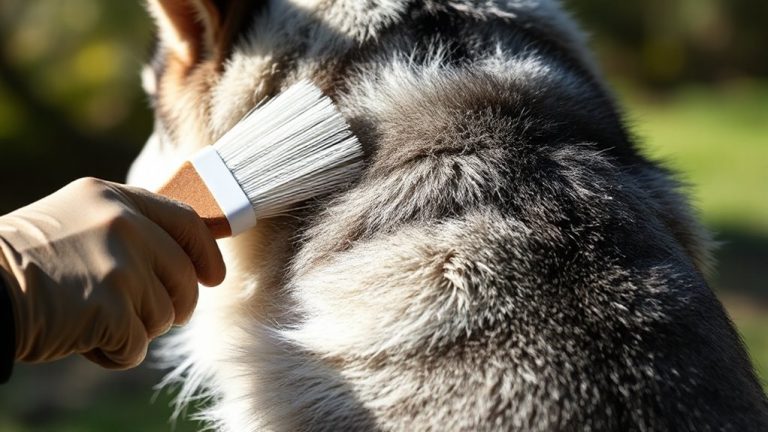
Dry your poodle’s coat fully before brushing-towel dry with microfiber to remove 70% moisture, then air dry 30–60 minutes at 70–75°F. Use a pin brush with nylon-tipped pins spaced 3–5 mm apart, holding it at a 45-degree angle. Apply light, overlapping strokes in 2 x 2 inch sections to lift undercoat and preserve curl definition. Never brush a damp coat. Daily brushing maintains fluff and distributes oils. Best results depend on proper technique and timing.
Notable Insights
- Towel dry the poodle thoroughly to remove up to 70% of surface water before fluffing with a pin brush.
- Allow the coat to air dry completely in a warm, well-ventilated area before brushing.
- Hold the pin brush at a 45-degree angle and use smooth, overlapping strokes to lift the undercoat.
- Work in 2 x 2 inch sections, lifting curls gently to maintain texture and prevent matting.
- Brush daily with a pin brush to distribute oils, remove debris, and preserve the coat’s natural volume.
Dry Your Poodle Completely Before Brushing
After bathing your poodle, always make certain the coat is fully dry before using a pin brush. Moisture trapped in the undercoat can lead to matting and skin irritation. Begin with thorough towel drying-use absorbent microfiber towels to wick moisture efficiently, applying gentle pressure without rubbing. Towel drying removes up to 70% of surface water, markedly reducing drying time. Then proceed to air drying, making sure the environment is warm and well-ventilated. Ideal conditions are 70–75°F with low humidity. Allow at least 30–60 minutes for complete air drying, depending on coat density. Never skip this step; a damp coat compromises the pin brush’s ability to detangle and distribute natural oils. Proper drying guarantees effective, hygienic grooming and maintains coat integrity. Your poodle’s health and appearance depend on this foundational step. Incorporating the right dog training supplies can also support a well-rounded grooming routine by keeping your poodle calm and cooperative during sessions.
How to Fluff Your Poodle’s Coat With a Pin Brush
You’re ready to fluff your poodle’s coat once it’s fully dry and free of moisture. Start at the neck, using smooth, even strokes with the pin brush. Hold the brush at a 45-degree angle to avoid skin irritation. Lift and loosen the undercoat first, then work on the top layer. Proper brush technique guarantees even lift without pulling. Use light pressure-excessive force damages hair shafts. Overlap each stroke by half to cover all areas. Focus on one section at a time, about 2 x 2 inches, to maintain control. The coat texture should appear full and springy, not matted. Rotate the brush slightly at the end of each stroke to define curl structure. Work systematically from front to back, then sides to tail. Pay extra attention to friction zones like behind ears and under legs. Finish with a final pass in the direction of hair growth. This enhances volume and reveals the full, fluffy texture. Guarantee no tangles remain.
Why a Pin Brush Is Perfect for Poodles
A pin brush isn’t just a grooming tool-it’s the ideal match for your poodle’s unique coat structure. Its fine, widely spaced wire pins penetrate dense, curly fur without snagging. Each pin is tipped with smooth nylon, reducing friction against sensitive skin. This design enhances detangling efficiency by gliding through knots rather than tearing them. The spacing-typically 3 to 5 mm between pins-allows air and motion to loosen trapped undercoat debris. Your poodle’s coat texture, which is tightly coiled and prone to matting, responds best to this precise engineering. The slight flexibility of the pins provides give, preventing scalp discomfort during use. With consistent strokes, the brush lifts and separates individual curls, restoring volume and alignment. It’s light enough for control, yet weighted for momentum. Compared to slicker brushes, it delivers superior lift without flattening curls. You’ll see fewer broken hairs and improved coat resilience over time. For homes battling fleas, consider using a best flea spray for houses to maintain a clean environment for your pet between grooming sessions.
Common Pin Brush Mistakes to Avoid
The right pin brush improves your poodle’s coat health, but improper use can undo its benefits. Using too much pressure damages delicate hair shafts and irritates the skin, leading to breakage and discomfort. Apply light, consistent strokes-excessive force doesn’t improve detangling but increases friction and matting risk. Always begin with a slicker brush or comb to address tangles before switching to the pin brush. Skipping detangling steps forces the pin brush to work on matted areas, reducing effectiveness and increasing hair pull. Pin brushes feature evenly spaced, finely tipped pins-typically 0.5–1 mm in diameter-ideal for smoothing topcoat layers, not breaking up knots. Use them only on fully dried coats, section by section, to maintain lift and texture without compaction. Maintain a 45-degree angle for ideal glide. For safer grooming overall, consider using the best cat nail clippers when trimming your pet’s nails to avoid injury during routine care.
How Often to Brush for a Fluffy Coat
Ideally, brushing your poodle every day guarantees excellent coat condition and prevents matting. Daily brushing frequency promotes ideal coat texture by distributing natural oils and removing debris. A pin brush with rounded tips and 1/2-inch spacing works best for reaching the dense undercoat. For show dogs or poodles with woolly coat textures, twice-daily brushing may be necessary during peak growth phases. Skipping even one session risks tangles, especially behind ears and under legs. Most owners find 10–15 minutes per session sufficient. Consistent brushing frequency prevents mats from forming, reducing stress during grooming. If daily brushing isn’t possible, a minimum of every other day maintains acceptable coat texture. Use short, overlapping strokes, angling the brush to lift the coat from the skin. Never rush; incomplete brushing leaves compacted layers unseen beneath the surface. Over time, regular use enhances volume and softness.
On a final note
Always dry your poodle’s coat fully before brushing. A pin brush with bent wire bristles spaced 3–5 mm apart penetrates the dense, curly undercoat without damaging the outer guard hairs. Apply light, even strokes to lift and separate hair, enhancing volume. Avoid excessive pressure to prevent skin irritation. Brush every 2–3 days to maintain coat health, reduce matting, and preserve fluffiness.