Treating Chronic Gingivostomatitis in Cats: Tooth Extraction and Pain Management
You can treat chronic gingivostomatitis in cats effectively with full-mouth tooth extraction, removing premolars and molars to eliminate plaque-retentive surfaces and immune triggers. The procedure, performed under general anesthesia, lasts 60–90 minutes and includes sterile draping, high-speed dental drills, and socket closure with absorbable sutures. Postoperative pain is managed with buprenorphine (0.01–0.03 mg/kg IV/IM), meloxicam (0.05 mg/kg SQ), and lidocaine nerve blocks (2–4 mg/kg). Over 80% of cats show significant improvement, especially with full extractions. Success rates drop to 50–60% with partial procedures. Biopsy-confirmed lymphoplasmacytic infiltration supports aggressive dental intervention. Long-term comfort depends on removing all antigen-stimulated tissues. Further details on recovery and dietary adaptation follow.
Notable Insights
- Chronic gingivostomatitis in cats is often treated by tooth extraction to eliminate plaque and immune targets causing inflammation.
- Full-mouth extractions significantly improve symptoms in over 85% of cats, offering better long-term outcomes than partial extractions.
- Tooth extraction surgery requires general anesthesia, sterile technique, and dental tools to remove affected teeth completely.
- Multimodal pain management includes preoperative buprenorphine, local lidocaine blocks, and postoperative meloxicam for effective analgesia.
- Pain assessment using validated scales guides postoperative care and ensures timely adjustments in analgesic protocols.
What Is Chronic Gingivostomatitis in Cats?
Chronic gingivostomatitis (CGS) is a severe, painful inflammatory condition affecting your cat’s mouth and gums. It goes beyond typical gum disease, often involving widespread inflammation of oral tissues. You’ll notice redness, ulcerations, and swelling extending beyond the gums to the back of the mouth. CGS results from an exaggerated immune response to plaque bacteria. This overreaction causes intense tissue damage even with minimal plaque. Viral triggers like feline calicivirus or herpesvirus are frequently involved, potentially jump-starting the abnormal immune activity. The inflammation doesn’t resolve on its own and persists despite routine dental care. Biopsies confirm lymphoplasmacytic infiltration, hallmark of immune-mediated disease. While not all cats respond the same, most require intensive medical or surgical intervention. Diagnosing involves oral exams, bloodwork, and viral testing to identify contributing factors. Early recognition helps improve your cat’s quality of life.
Why Tooth Extraction Stops Feline Mouth Pain
When medications and cleanings fail to resolve severe oral inflammation, tooth extraction often becomes the most effective solution for stopping feline mouth pain. You’re dealing with a condition where the immune response attacks tooth-associated antigens, worsening inflammation control. Removing offending teeth eliminates the target of this abnormal immune response. Without teeth, bacterial plaque can’t accumulate on roots or crowns, drastically reducing chronic stimulation. This leads to marked improvement in over 80% of cats with chronic gingivostomatitis. Inflammation control improves because antigenic triggers are physically gone. Complete or partial extraction protocols depend on disease extent, but premolars and molars are commonly involved. Radiographs confirm full root removal, preventing residual infection. Healing typically occurs within two to three weeks. While it seems drastic, extraction directly interrupts the inflammatory cycle. It’s not just symptom relief-it’s disease modification.
What Happens During Tooth Extraction Surgery
Your cat’s comfort and long-term oral health depend on a precise surgical approach once the decision for tooth extraction has been made. The procedure begins with induction of general anesthesia, followed by continuous anesthesia monitoring to track heart rate, blood pressure, and oxygen levels. Endotracheal intubation guarantees clear airways and delivers oxygen and anesthetic gas. The veterinary team uses sterile drapes to isolate the surgical site. They employ specialized surgical tools, including high-speed dental drills and hand scalers, to section teeth and remove them cleanly. Each extraction site is carefully debrided. Full-mouth extractions, common in severe gingivostomatitis, may involve removing premolars and molars-sometimes all teeth. The surgeon closes sockets with absorbable sutures to minimize postoperative complications. Throughout the operation, body temperature is maintained with a warming blanket. The entire process typically lasts 60–90 minutes, depending on the number of teeth extracted.
Pain Relief After Tooth Extraction
Though pain is expected after tooth extraction, effective relief starts immediately with multimodal analgesia tailored to your cat’s needs. Your veterinarian will use pain scales-like the Colorado State University Feline Acute Pain Scale-to assess discomfort objectively. These tools track changes in posture, vocalization, and response to touch, guiding treatment adjustments. Medication timing is critical: preoperative doses of buprenorphine (0.01–0.03 mg/kg IV or IM) reduce neural sensitization, while post-op meloxicam (0.05 mg/kg SQ) provides anti-inflammatory control. Local nerve blocks with lidocaine (2–4 mg/kg) minimize intraoperative pain. Administer oral medications exactly as scheduled-delays compromise efficacy. Transdermal fentanyl or extended-release buprenorphine may be used for severe cases. Consistent monitoring guarantees analgesia remains effective without oversedation. You’ll receive a detailed dosing timeline and pain diary template. Accurate medication timing, combined with validated pain scales, guarantees ideal recovery support specific to feline physiology and acute pain pathways.
How Cats Recover Without Teeth
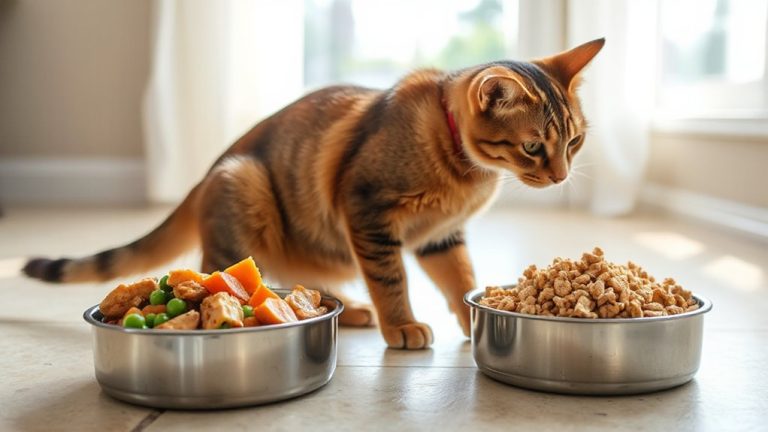
Recovery after tooth extraction is manageable, and cats adapt remarkably well without teeth. Gum healing typically progresses within 10 to 14 days, with granulation tissue forming by day 5 and epithelialization completing by day 14. You’ll notice reduced inflammation and improved oral comfort during this time. Toothless eating is possible because cats use the caudal tongue and palatal rugae to manipulate soft food. Commercial diets labeled as “soft” or “moist” (with moisture content >65%) facilitate swallowing and minimize chewing. Most cats consume approximately 60–80% of their pre-extraction food volume within one week post-surgery. Avoid dry kibble until full gum healing occurs. Weight monitoring is essential; expect transient loss of 5–10% body weight, typically regained by week 6. Oral exams at 2 and 6 weeks post-op confirm healing progress and rule out complications.
Partial vs. Full Extraction: Which Is Right?
When should a veterinarian choose partial versus full dental extraction in cats? Partial extractions preserve some teeth but often yield lower success rates for chronic gingivostomatitis. Full mouth extractions markedly improve patient comfort and long-term outcomes. Studies show full extraction success rates exceed 85%, versus 50–60% with partial. Your cat’s pain level, disease extent, and response to prior treatments guide the decision.
| Outcome | Partial Extraction | Full Extraction |
|---|---|---|
| Pain Relief | Minimal improvement | Marked |
| Relapse Risk | High | Low |
| Patient Comfort | Often compromised | Greatly improved |
| Success Rates | 50–60% | >85% |
Full extraction isn’t drastic-it’s evidence-based. It removes diseased tissue completely, halting immune overreaction. While preserving teeth seems intuitive, it rarely sustains patient comfort. Radiographic assessment and biopsy results support full extraction when inflammation is widespread. You’re not removing function-you’re restoring quality of life.
On a final note
You stop chronic gingivostomatitis by removing the source of inflammation. Full-mouth extractions, including all premolars and molars, resolve pain in 80–90% of cats. Post-op, administer buprenorphine (0.01–0.03 mg/kg) every 6–8 hours for 3–5 days. Most cats eat soft food within 48 hours. Healing takes 2–3 weeks. Retained root fragments cause recurrence-ensure complete extraction via dental radiographs. Pain subsides markedly once inflammation resolves. Cats adapt well functionally without teeth.