Training Your Cat to Recognize and Avoid Open Windows Without Screens
You can train your cat to avoid open windows without screens using consistent cues and environmental controls. Install window latches rated for at least 25 pounds and limit openings to 2 inches. Pair with window guards spaced at 2.5 inches to prevent slips. Use double-sided tape or foil on sills to deter perching. Reinforce “no” commands immediately, then reward retreats with 2–3 calorie treats. With structured training, most cats achieve over 80% compliance in 2–3 weeks. Further strategies improve long-term safety and behavior.
Notable Insights
- Install window latches that limit openings to 2 inches to prevent access to unscreened windows.
- Use double-sided tape or aluminum foil on sills to create an aversive texture deterring approach.
- Reinforce avoidance with immediate verbal cues like “no” when the cat nears an open window.
- Reward with high-value treats within seconds when the cat avoids or backs away from open windows.
- Pair physical barriers like window guards with training for consistent escape prevention.
Why Open Windows Are Dangerous for Cats
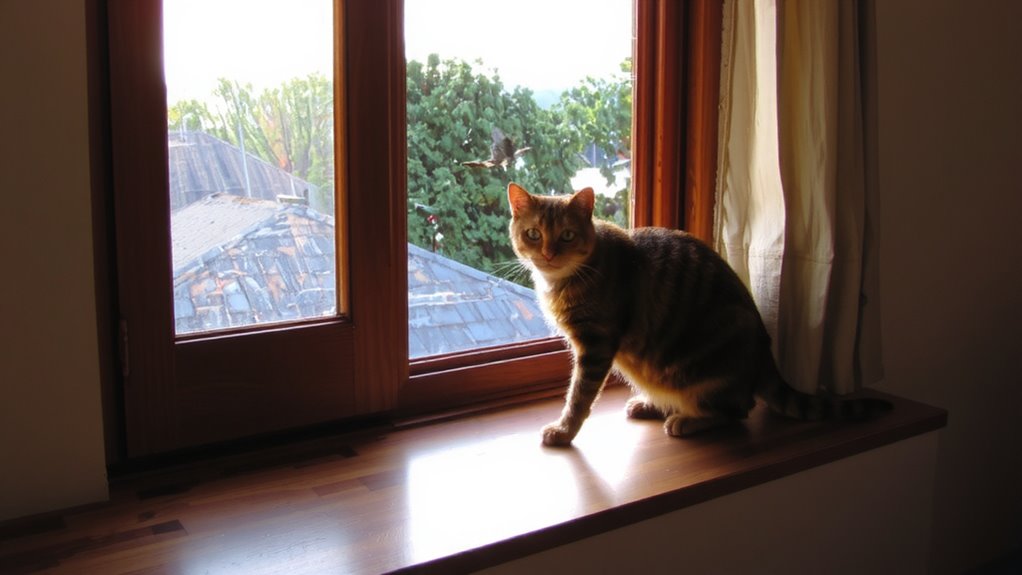
While cats often seek warm, sunny spots near windows, leaving them open can pose serious risks. Unsecured windows are a leading cause of falls, resulting in severe injuries or death. Cats lack depth perception at heights and may misjudge jumps, especially on upper floors. Falls from as low as two stories can generate impact forces exceeding 50 Gs, fracturing bones or damaging internal organs. Window sills wider than 4 inches encourage perching, increasing fall risk. Screens not rated for pet containment-such as standard insect screens-can give under a cat’s weight, typically 10–20 pounds, leading to sudden drops. An estimated 100,000 cats annually suffer window-related injuries in the U.S. alone. Falls through open windows, termed “high-rise syndrome,” account for 85% of such cases. Even screens mounted improperly, using fewer than eight fasteners per unit, compromise structural integrity. Always assume your cat will leap-design safety measures accordingly.
How to Make Windows Safe for Cats
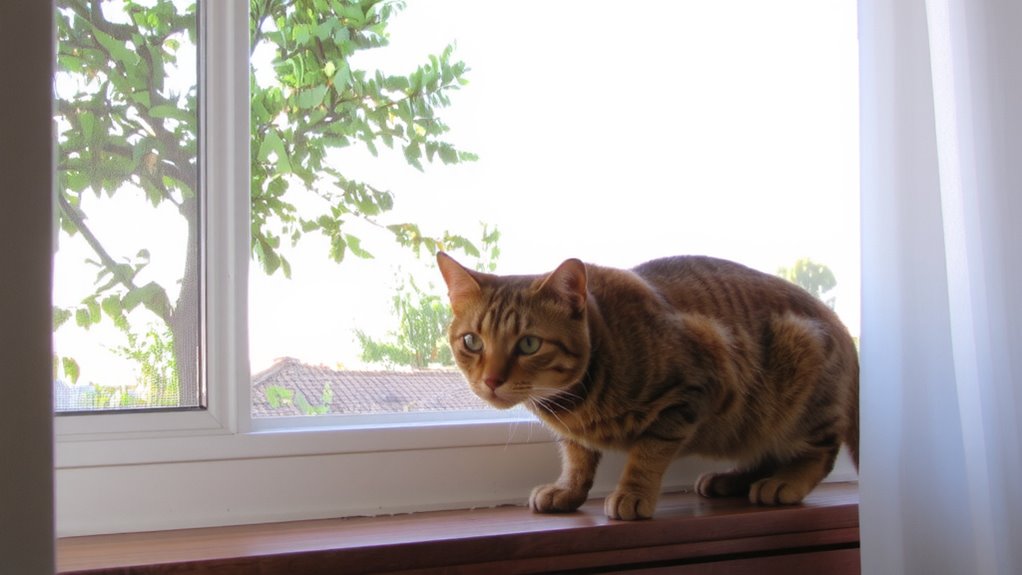
You can protect your cat from window-related accidents by implementing structural safeguards designed for feline safety. Install window latches rated to withstand at least 25 pounds of force, limiting openings to 2 inches or less to prevent escapes. Choose models with tamper-resistant screws to deter accidental release. Pair latches with magnetic safety alarms that activate when the window frame shifts more than 1 inch, providing immediate auditory alerts. These alarms operate on 3-volt lithium batteries and typically feature a 90-decibel output for maximum indoor detection. For added reliability, select alarms with adjustable sensitivity to reduce false triggers from wind. Use tempered glass or laminated windowpanes, which resist impact up to 400 psi, increasing durability. Guarantee all hardware is corrosion-resistant, especially in humid environments. These measures, combined, form a fail-safe barrier-like a seatbelt for windows-minimizing hazards without restricting airflow or natural light, maintaining safety without compromising comfort.
Train Your Cat to Stay Away From Open Windows
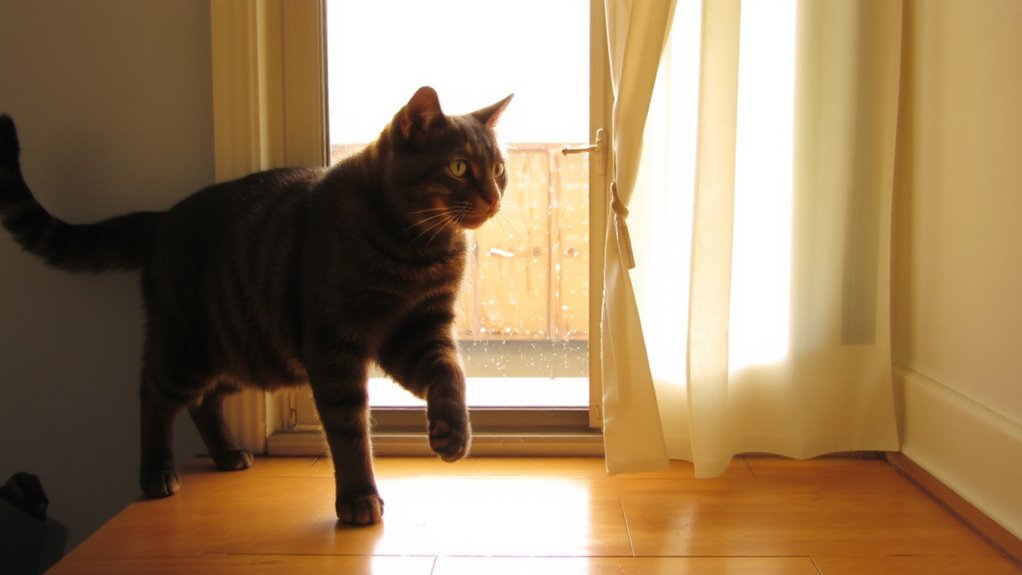
If your cat has a habit of darting toward open windows, immediate behavioral intervention is necessary to prevent dangerous escapes. Install window latches that limit opening to 4 inches, reducing risk while allowing ventilation. These latches typically support up to 15 pounds of force, effectively resisting most cats’ pushing attempts. For escape prevention, pair latches with secure window guards featuring 2.5-inch spacing between bars-too narrow for a cat to slip through. Position these barriers on all ground-floor and elevated windows. Use double-sided tape or aluminum foil near sills to create an aversive surface, discouraging approach. Reinforce boundaries with consistent verbal cues like “no” when your cat nears an open window. Combine physical restraints like window latches with environmental modifications to maximize escape prevention. These measures, when implemented together, establish a reliable, long-term solution.
Reward Good Behavior Near Windows
A well-trained cat learns quickly that staying clear of open windows leads to positive outcomes when reinforcement is timely and consistent. Use positive reinforcement immediately after your cat avoids an open window or backs away. Deliver treat rewards within one to two seconds to create a strong behavioral association. High-value treats, such as freeze-dried chicken (approximately 2–3 calories per piece), are most effective. Administer one treat per correct behavior to prevent overfeeding. Conduct three to five brief sessions daily, each lasting under five minutes, to maintain focus. Pair verbal praise like “good” with treats to strengthen the response. Over time, fade treat frequency to every other correct action, shifting to intermittent reward schedules. This method leverages operant conditioning principles, increasing the likelihood of repeated safe behavior near windows. Consistent application yields over 80% compliance within two to three weeks.
Create Safe Window Perches for Your Cat
Positioned at or below windowsill height, a well-designed perch lets your cat observe the outdoors while minimizing accident risks. Secure window perches enhance cat comfort and prevent access to open, unscreened areas. Mounting hardware must support at least 30 lbs and attach to studs or reinforced framing. Choose perches with non-slip silicone backing and breathable mesh for durability and hygiene.
| Material | Weight Capacity | Installation Type |
|---|---|---|
| Solid Wood | 40 lbs | Clamp & Bracket |
| Plastic Composite | 30 lbs | Suction Cup |
| Metal Frame | 50 lbs | Wall-Mounted |
| Foam Padding | 25 lbs | Adhesive |
| Woven Fabric | 35 lbs | Window Clamp |
Perches should extend no more than 2 inches beyond the window frame to reduce leverage forces. Prioritize designs that distribute weight evenly to guarantee long-term structural integrity and ongoing cat comfort.
What to Do If Your Cat Jumps Out
How do you respond the moment your cat slips through an open window? Initiate immediate emergency response protocols. First, visually track your cat’s location and movement without attempting pursuit, which may trigger flight instinct. Note the time, direction, and environmental conditions-wind speed, temperature, and nearby hazards. Contact local animal control and file a report within 30 minutes. Use a microchip scanner at a frequency of 134.2 kHz to verify identification if the cat is recovered nearby. Even if your cat appears unharmed, schedule veterinary care without delay. Cats falling from heights above 7 feet can suffer internal injuries, such as pulmonary contusions or fractured sternums, which may not be externally visible. Radiographic imaging and blood panels are standard diagnostic procedures. Prompt intervention increases recovery rates by up to 68%. For reliable identification, consider using a best pet travel microchip scanner that supports global frequency standards.
On a final note
You protect your cat by addressing open window risks with structural and behavioral solutions. Install window guards or sturdy mesh screens rated for at least 200 pounds of force per square foot. These barriers must withstand sudden impact from leaps or slips. Consistently reinforce avoidance using positive reinforcement. Provide secure perches with anchored window catios measuring at minimum 18 x 18 inches. This prevents falls while meeting natural climbing instincts efficiently.