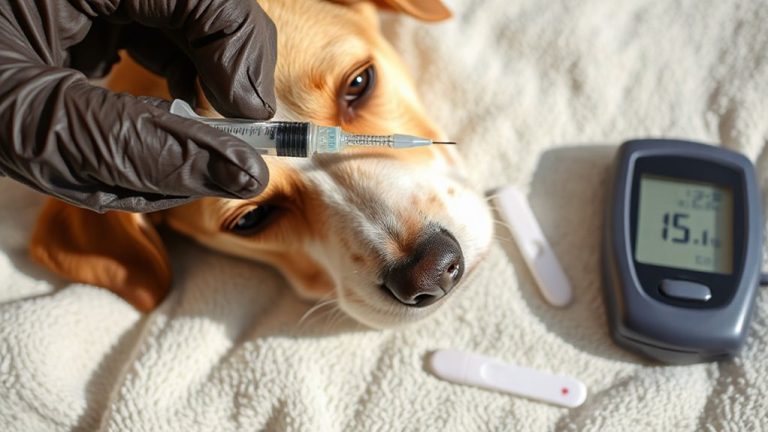
What Skin Allergy Testing Methods Are Most Accurate for Pets
Intradermal skin testing is the most accurate method for detecting environmental allergies in your pet. Small allergen injections are placed under the skin, spaced 1–2 cm apart, with reactions measured in 10–20 minutes. A wheal 2–3 mm larger than the negative control indicates sensitivity. This test directly measures IgE-mediated responses and outperforms blood tests in precision. It’s the gold standard for diagnosing pollen, mold, and dust mite allergies. You’ll learn which allergens truly affect your pet’s immune response.
Notable Insights
- Intradermal skin testing is the gold standard for detecting environmental allergies in pets due to high sensitivity and direct immune response assessment.
- Intradermal testing measures wheal formation at injection sites, with results interpreted within 10–20 minutes post-injection.
- Blood tests detect IgE antibodies and are useful when skin testing is impractical, but have higher false positive rates.
- Skin testing is more accurate than blood tests for allergies to pollen, mold, and dust mites.
- Food allergies cannot be reliably diagnosed with skin or blood tests; elimination diets remain the gold standard.
What’s Causing Your Pet’s Skin Allergies?
What’s really behind your pet’s itchy skin? Environmental triggers are a leading cause of allergic dermatitis in pets. These allergens include pollen, mold spores, dust mites, and dander. Unlike food allergies, which persist year-round, reactions to environmental triggers often follow seasonal patterns. You’ll likely notice worsening symptoms in spring and fall when pollen counts peak. Atopic dermatitis, a genetically predisposed condition, amplifies sensitivity to these allergens. Clinical signs include erythema, lichenification, and intense pruritus, especially around the paws, ears, and abdomen. Intradermal and serologic testing can identify specific triggers. Symptom onset typically occurs between 1 and 3 years of age. Prevalence studies show up to 15% of dogs suffer from environmental allergies. Management focuses on allergen avoidance, immunotherapy, and anti-inflammatory treatments. Identifying seasonal patterns helps predict flare-ups and tailor preventive care. Early intervention reduces secondary infections and improves long-term outcomes.
Skin Allergy Testing: How Intradermal Tests Work
Intradermal skin testing is the gold standard for identifying environmental allergens in pets. You’ll see small amounts of allergens injected under your pet’s shaved skin, usually on the chest or abdomen. Each injection site corresponds to a specific allergen, spaced 1–2 cm apart to prevent overlap. Test accuracy improves because you’re directly exposing the immune system in a controlled setting. Within 10–20 minutes, reaction observation begins. You’ll look for wheal formation-a raised, red bump-measured in millimeters. A wheal larger than 2–3 mm compared to the negative control indicates sensitivity. False positives can occur, so context matters. The test detects Type I hypersensitivity mediated by IgE antibodies. Results guide allergen-specific immunotherapy. Proper technique and trained interpretation are essential. This method offers high specificity when performed correctly.
Pet Allergy Blood Tests: What They Do (and Don’t) Show
How do you know if your pet’s itching stems from environmental triggers when a skin test isn’t an option? Blood tests detect IgE antibodies to specific allergens using serum samples. They’re useful when skin testing isn’t feasible due to medication conflicts or skin conditions. These tests measure immune reactivity to common environmental allergens like pollen, mold, dust mites, and dander. Test accuracy depends on laboratory methods, with ELISA and immunoassay platforms offering high specificity. However, results don’t always correlate with clinical symptoms-positive results may reflect sensitization without allergy. Sample preservation is critical: serum must be separated promptly and stored at 2–8°C or frozen to prevent degradation. Avoid hemolyzed or lipemic samples, as they compromise reliability. Blood tests help guide immunotherapy but can’t confirm active allergy alone. They complement, but don’t replace, clinical evaluation.
Skin Test vs. Blood Test: Which Is More Accurate?
When comparing diagnostic accuracy for detecting environmental allergies in pets, skin testing is generally considered the gold standard. Veterinarians perform intradermal skin tests by injecting small amounts of allergens into the dermis. Reactions are measured at specific intervals, usually 15–20 minutes, with wheal size indicating sensitivity. This method offers high sensitivity and low test variability when done correctly. Blood tests, while convenient, show higher rates of false positives due to cross-reactivity and antibody persistence. They measure IgE levels but can’t distinguish between exposure and clinical allergy. Skin testing directly assesses immune response at the site, reducing interpretation errors. Though blood tests require only a single draw, their results fluctuate more between labs-increasing test variability. You’ll get the most reliable data from skin testing, especially for pollen, mold, and dust mites. It’s more accurate, despite needing sedation. Choose based on your pet’s needs and veterinary expertise.
Food Allergies: Why Testing Isn’t the Answer
You can’t rely on allergy testing to diagnose food allergies in pets, even though skin and blood tests work well for environmental triggers. These tests detect IgE antibodies, which play a minor role in food reactions. True food allergies involve complex immune pathways that current testing doesn’t accurately measure. Instead, veterinarians use elimination diets to identify problematic ingredients. Elimination diets require feeding a novel protein or hydrolyzed diet exclusively for 8–12 weeks. During this period, no treats or human food are allowed. Food trials must be strictly controlled to prevent false results. A positive response is confirmed when symptoms improve on the diet and return upon reintroducing the original food. This gold-standard method isolates allergens with over 90% reliability when properly conducted. Compliance and duration are critical for diagnostic accuracy. Testing supplements this process but doesn’t replace it.
How to Choose the Right Test With Your Vet
Why do some pets respond to allergens while others don’t, and how can testing clarify the cause? Individual immune systems vary, making test selection critical. Your vet consultation guarantees accurate diagnosis and proper method choice.
| Test Type | Sample Required | Common Allergens Detected |
|---|---|---|
| Intradermal | Skin injection | Pollens, molds, dust mites |
| Serum (IgE) | Blood draw | Grasses, weeds, animal dander |
| Food Elimination | Dietary trial | Proteins, grains, additives |
| Patch | Skin application | Contact allergens like shampoos |
Intradermal testing is the gold standard, requiring sedation and clipped fur. Serum tests offer convenience but may yield false positives. Patch tests evaluate contact reactions. Food trials last 8–12 weeks. Always confirm results through clinical correlation. Your vet consultation guides effective test selection based on symptoms, history, and exposure risks.
On a final note
Your pet’s allergy diagnosis depends on accurate test selection. Intradermal skin testing, considered the gold standard, directly measures immune reactions to specific allergens via subcutaneous injections. It detects environmental allergies with 80–90% sensitivity. Blood tests assess IgE levels but yield more false positives. They’re less invasive but less precise. For food allergies, elimination diets remain definitive. Combine clinical history, test results, and symptoms. Work with your vet to choose the method best suited to your pet’s condition.