Responding to Avulsed Tissue Flaps in Dogs Involved in Animal Attacks
You must act fast if your dog suffers an avulsed tissue flap during an animal attack. These flaps-skin and tissue torn but still partly attached-rely on limited blood flow. Preserve viability by covering the area with a non-adherent, sterile, moist dressing. Avoid pulling or repositioning the flap, which can destroy microvasculature. Immobilize your dog and prevent hypothermia to maintain perfusion. Seek veterinary care immediately-ideally within six hours-since assessment and surgical intervention can determine tissue survival. Delay increases necrosis and infection risk. Proper stabilization now improves the chance of successful repair. Key details on how to manage until you reach the clinic follow.
Notable Insights
- Avulsed tissue flaps require immediate veterinary assessment within six hours to evaluate perfusion and viability.
- Cover the wound with a non-adherent sterile dressing to prevent contamination and tissue desiccation.
- Avoid manipulating the flap to preserve fragile blood supply and prevent further ischemic damage.
- Immobilize the dog and prevent hypothermia to support microcirculation and overall stability.
- Seek emergency care if signs of shock, poor perfusion, or systemic trauma are present.
What Are Avulsed Tissue Flaps in Dog Bite Wounds?
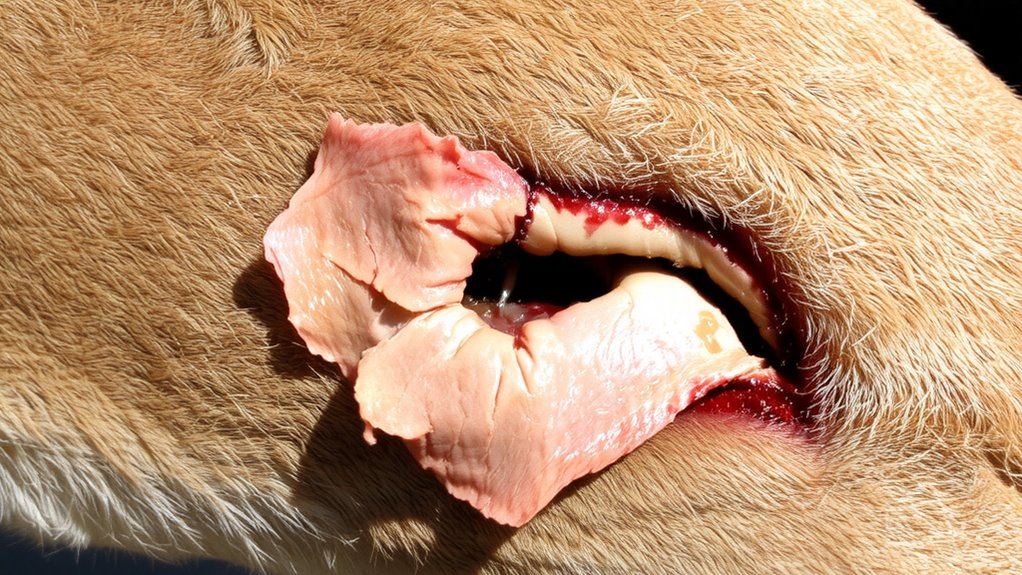
An avulsed tissue flap is a common but serious type of injury seen in dog bite wounds, where a portion of skin and underlying tissue is forcibly torn or partially detached from the body. You must recognize that the remaining connection often limits blood supply, directly impacting tissue viability. Without adequate perfusion, the flap cannot survive, leading to flap necrosis. This compromised tissue becomes a breeding ground for infection and delays healing. The extent of damage depends on the flap’s size, location, and degree of vascular compromise. Flaps with poor capillary refill or dusky discoloration indicate ischemia. Immediate, gentle handling preserves what blood flow remains. Do not stretch or constrict the flap during initial care. Assessment of tissue viability within the first six hours post-injury is critical. Early intervention improves outcomes by reducing necrosis risk and supporting possible surgical salvage.
Signs Your Dog Needs Emergency Care After a Bite
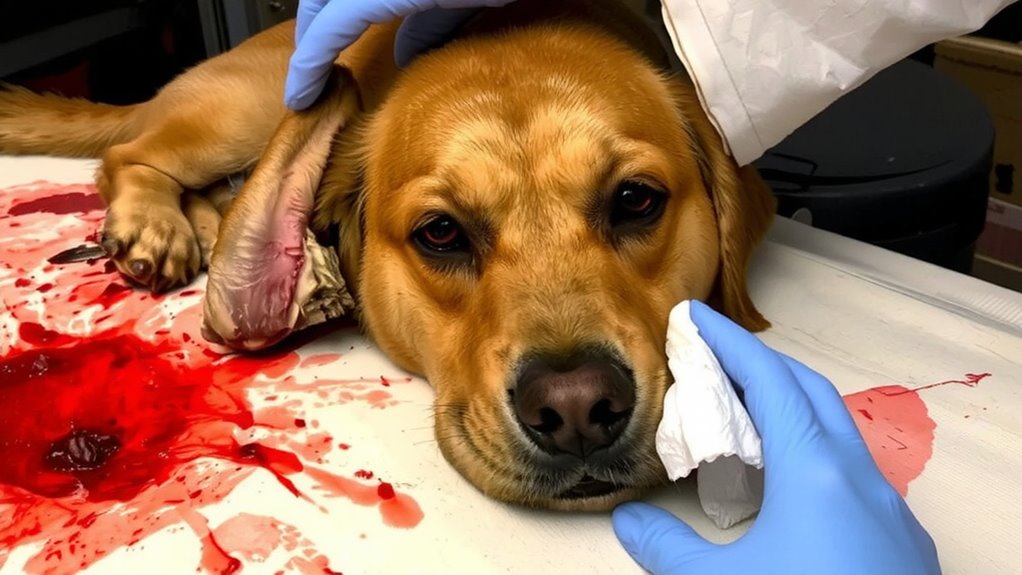
You need to act fast if your dog shows signs of serious injury after a bite. Pale gums, rapid breathing, and weakness indicate shock symptoms requiring immediate intervention. Shock occurs when circulation fails to deliver oxygen adequately; heart rates often exceed 140 bpm in small dogs. If your dog’s breathing is labored or abdominal distension is present, suspect internal injuries. Blunt force trauma can rupture organs without external wounds. Capillary refill time greater than two seconds is a clinical marker of poor perfusion. Lethargy or collapse suggests systemic compromise. Do not wait for all signs to appear. Internal injuries may not be visible but can be fatal within hours. Check for bruising, unnatural limb positioning, or vocalization upon touch. These are objective indicators of trauma severity. Immediate veterinary assessment is essential. Time is critical; survival rates drop markedly if treatment delays beyond two hours post-injury.
Stabilizing Avulsed Flaps Before the Vet
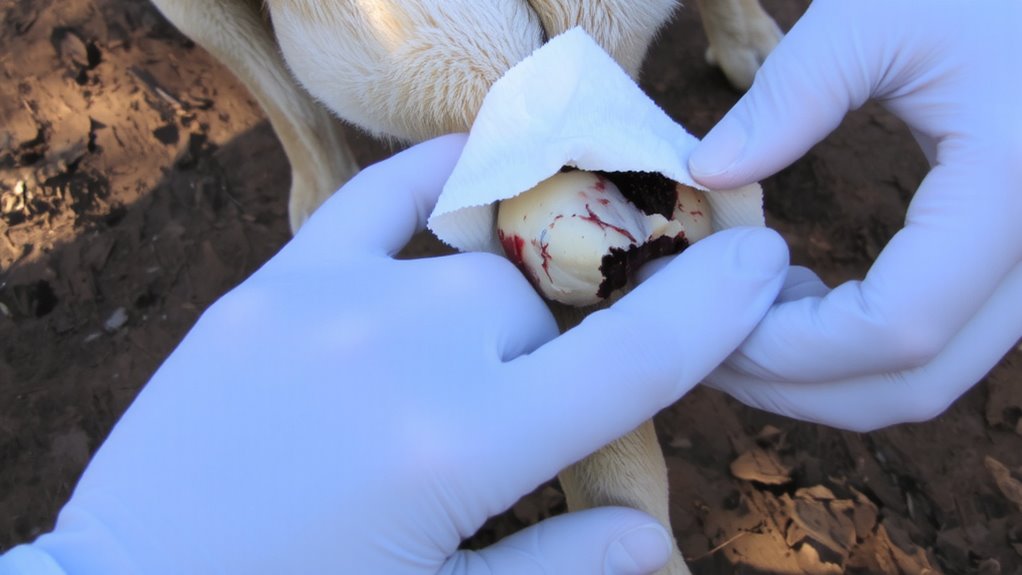
A torn flap of skin from a bite injury demands immediate, careful handling to preserve tissue viability. Gently cover the area with a non-adherent sterile dressing to prevent contamination. Avoid pulling or manipulating the flap-this is critical. Use a clean, damp cloth to maintain moisture over the wound, supporting hydration management and minimizing tissue desiccation. Do not soak the wound. Assess your dog’s pain level promptly: restlessness, panting, and vocalization indicate moderate to severe discomfort. Address pain assessment early, as unmanaged pain increases stress and delays healing. Keep the animal calm and immobilized; movement exacerbates tissue trauma. Maintain normal body temperature-hypothermia impairs microcirculation essential for flap survival. Transport promptly to a veterinary facility. Every minute counts: perfusion to avulsed tissue is compromised, and timely professional intervention improves outcome. Do not administer medications unless instructed.
Dangers of Pulling or Reattaching Loose Skin
Never try to reposition or pull a loose flap of skin back into place after an avulsion injury. Doing so compromises flap viability and increases the risk of tissue necrosis. The skin flap loses its blood supply when detached, and manipulating it further damages delicate microvasculature. Even slight tension or misalignment can obstruct capillary refill, leading to ischemia. Avoid applying pressure, scrubbing, or using adhesives to reattach the flap. These actions introduce pathogens and worsen trauma. Contamination and poor perfusion are primary contributors to necrotic tissue development. Instead, leave the flap in its natural position, if possible, and cover it with a moist, sterile dressing. This preserves residual blood flow and minimizes desiccation. Maintain a clean environment until veterinary intervention. Preserving flap viability is critical for potential reconstruction. Mechanical manipulation at home reduces successful outcomes markedly. Your immediate goal is protection, not repair.
How Vets Treat Avulsed Tissue Flaps in Dogs
When a dog suffers an avulsed tissue flap, veterinary treatment focuses on restoring perfusion and preventing necrosis through immediate, controlled intervention. You’ll need to stabilize the patient first, addressing shock and pain. The vet will gently debride contaminated tissue, preserving viable margins. Maintaining flap viability is critical-assess capillary refill, tissue elasticity, and color. If the flap’s blood supply is intact, the vet may reposition it and secure with fine-gauge sutures, typically 4-0 or 5-0 absorbable material. Cold saline-soaked gauze keeps the tissue moist during prep. In complex cases, surgical reconstruction using adjacent skin flaps or grafts restores coverage. Post-op, antibiotics and strict immobilization reduce infection and shear risks. Laser Doppler imaging may monitor microcirculation. You won’t attempt reattachment if ischemia exceeds 6 hours. Success hinges on rapid, precise action to salvage tissue and promote healing.
How to Spot Wound Complications
How can you tell if a wound is healing properly or headed for trouble? Watch for signs like increased redness, swelling, or pus. These indicate possible infection. Normal healing tissue is pink and granular, with edges gradually closing. If you notice wound odor, especially a foul or putrid smell, it often signals bacterial overgrowth. Delayed healing-when the wound shows no improvement after 7–10 days-requires evaluation. Check for devitalized tissue or persistent moisture, which impede repair. Monitor temperature around the wound; warmth exceeding 103°F locally suggests inflammation. Avoid assuming slow progress is normal. Some medications and underlying conditions impair recovery. Use clean gloves when checking the site, and document changes daily. Persistent pain, discharge, or lethargy in your dog are red flags. Early detection improves outcomes. Prompt veterinary care prevents complications from escalating.
Long-Term Recovery and Preventing Infection
While healing progresses, maintaining a controlled environment around the wound is essential for long-term recovery and infection prevention. You must practice strict wound hygiene by cleansing the area twice daily with sterile saline or a veterinarian-approved antiseptic like 0.05% chlorhexidine. Avoid hydrogen peroxide-it damages tissue. Keep the flap site dry and protected with a non-adherent dressing, changed every 48 hours or sooner if soiled. Use an Elizabethan collar to prevent licking or biting. Monitor for heat, swelling, or purulent discharge-signs of infection. Scar management begins once epithelialization is complete, usually by day 14. Apply silicone-based gels or sheets to minimize hypertrophic scarring. Massage adjacent tissue gently to maintain flexibility. Guarantee your dog avoids strenuous activity for at least 3–4 weeks to reduce tension on the wound. Follow your vet’s schedule for suture removal and evaluation.
On a final note
You must act quickly when your dog suffers an avulsed tissue flap. Immediate first aid prevents further damage. Do not pull or reattach loose skin-it compromises blood flow. Veterinarians assess flap viability using capillary refill time and tissue elasticity. Treatment may include surgical debridement, antibiotics like cephalexin (22 mg/kg every 12 hours), and wound revision. Monitor for seroma, infection, or necrosis. Proper aftercare secures ideal healing.