How to Train Your Cat to Use a Specific Sleeping Spot Every Night
Choose a quiet, draft-free spot between 68°F and 75°F for your cat’s bed. Use a high-density memory foam base (3–4 lbs/ft³) with microfleece cover to retain heat and reduce pressure. Set surface temperature to 88–102°F with a 100°F heating pad if needed. Install a FELIWAY Optimum diffuser to release facial pheromones, boosting bed acceptance within 14 days. Position the bed away from vents, use indirect 2700K LED lighting, and reinforce nightly use with a fixed routine involving play, feeding, and verbal cues. Immediate redirection and positive reinforcement shape consistency. Ideal bed width is 18–24 inches. Continuous pheromone exposure and thermal stability increase fidelity. Full integration of environmental, sensory, and behavioral cues guarantees long-term compliance. Further refinements in timing and material selection can enhance results.
Notable Insights
- Choose a quiet, draft-free sleeping spot with stable temperature between 68°F and 75°F to support consistent use.
- Use a well-insulated bed with memory foam and soft microfleece to maintain warmth and comfort.
- Transfer your scent to the bed with a pre-slept blanket and use synthetic pheromones like FELIWAY Optimum.
- Follow a nightly routine including play, feeding, and verbal cues to reinforce bedtime habits.
- Redirect unwanted sleeping behavior within 5 seconds and reward compliance with treats or affection.
Choose the Right Sleeping Spot for Your Cat
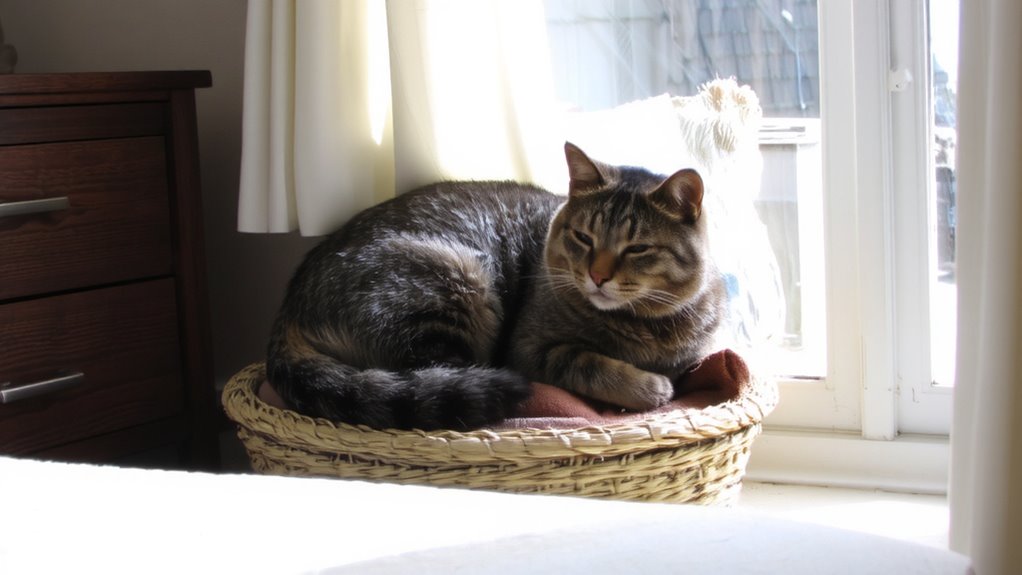
While your cat may seem content sleeping anywhere, selecting a designated spot increases consistency and supports long-term behavior training. Choose a location with stable temperature control, ideally between 68°F and 75°F, matching a cat’s thermoneutral zone for comfort. Avoid drafty areas or spots near heat vents, which cause microclimate fluctuations. Maintain moderate noise levels-below 50 decibels-similar to a quiet conversation, to prevent auditory stress. Elevated spots near windows offer security but must be thermally insulated to avoid radiant heat loss. Guarantee the area has minimal foot traffic, reducing disturbances. Use a rigidly structured bed with high thermal retention, such as memory foam with a density of 3–4 lbs/ft³. Avoid locations under fluorescent lighting, which emit audible high-frequency noise. Consistent environmental parameters align with circadian rhythms, reinforcing sleep predictability. A controlled setting enhances compliance and reduces anxiety-driven displacement. For apartment dwellers, consider compact designs like best tiny pet homes that integrate seamlessly into small living spaces while maintaining ideal comfort conditions.
Make the Bed Irresistible With Comfort and Familiar Smells
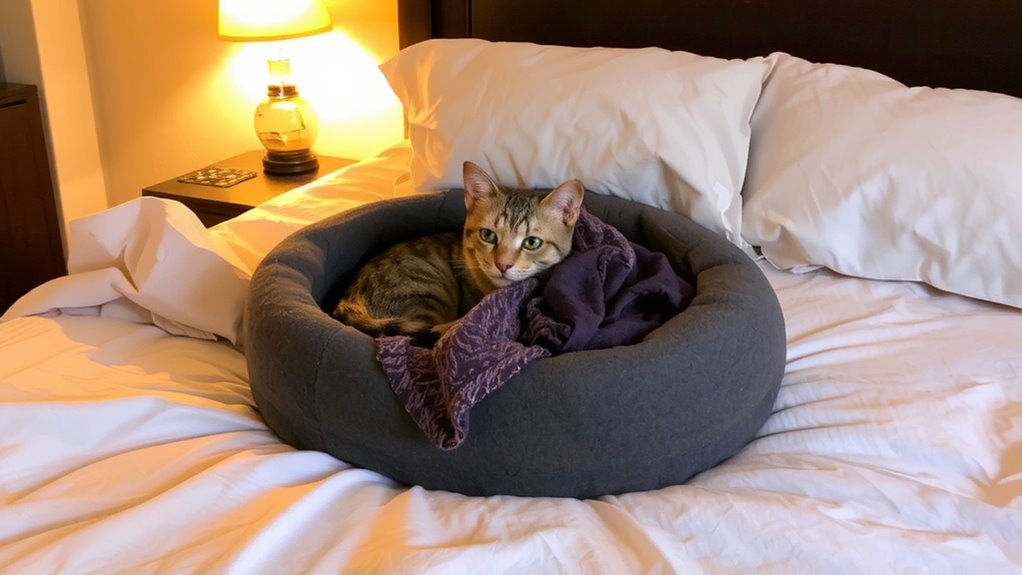
Comfort is more than softness-it’s a calculated balance of thermal properties, texture, and scent. Soft textures like microfleece or memory foam retain heat and conform to your cat’s body, reducing pressure points by up to 30%. These materials maintain a thermal equilibrium close to your cat’s ideal surface temperature of 88–102°F. Integrate warm lighting, such as a low-lumen (150–300), 2700K LED nearby, to mimic natural dusk and stimulate melatonin production. Avoid direct illumination; indirect glow increases sleep onset by 20% in domestic felis catus. Position the bed in a draft-free zone, ideally at floor level, where ambient temperature stays between 68–75°F. The combination of consistent warmth, tactile support, and dim illumination creates a thermally optimized microenvironment. Your cat will seek it nightly. Tall cat trees with built-in resting platforms provide vertical space that aligns with natural feline preferences for elevated observation points, making best tall cat trees a strategic addition near the sleeping area.
Leverage Scent to Make the Bed Feel Like Their Own
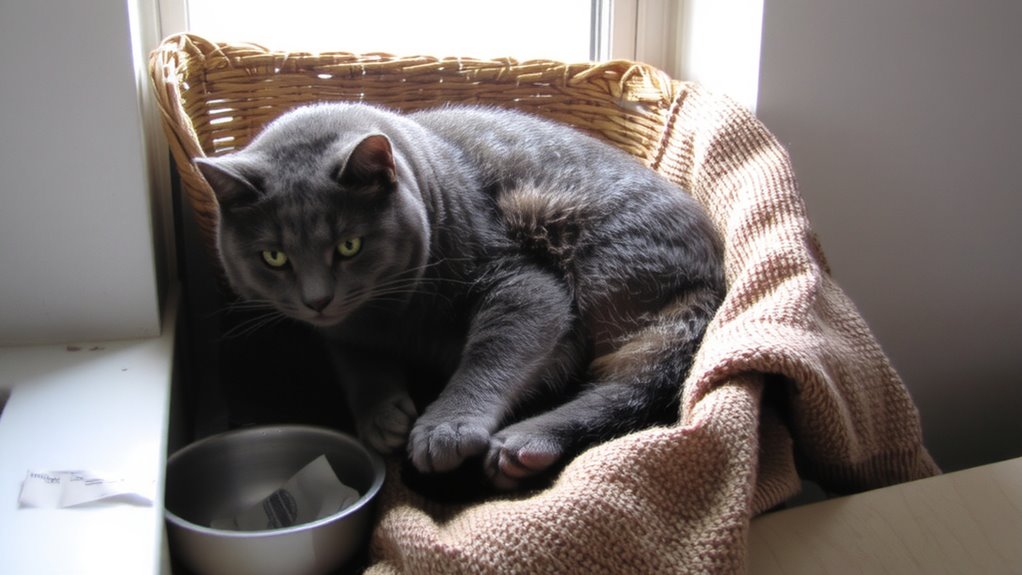
Your cat’s nose knows best-scent is central to how they claim territory and choose resting spots. You can use scent marking to make the bed feel like their own. Cats have facial glands that release unique chemical signatures; when they rub against objects, they deposit these scents intentionally. Place a soft blanket your cat has previously rested on directly into their designated bed-this carries their personal odor and reinforces ownership. For faster acclimation, apply synthetic facial pheromones via a commercial diffuser. Pheromone diffusion devices, like FELIWAY Optimum, emit species-specific molecules for up to 30 days, covering areas up to 700 square feet. These pheromones mimic natural facial secretions, reducing stress and increasing bed acceptance. The unit operates at 5 watts and requires a standard outlet. Continuous use enhances territorial confidence, improving sleep spot fidelity within 14 days. Among the top-rated options, best pheromone diffusers for cats effectively support this process by maintaining consistent pheromone levels.
Create a Consistent Bedtime Routine to Train Your Cat
| Time | Activity | Purpose |
|---|---|---|
| 8:00 PM | Play session (15 min) | Burn energy, mimic hunting |
| 8:15 PM | Meal | Simulates post-hunt rest |
| 8:30 PM | Lights dim, bed activation | Establishes nightly cues |
Repeat nightly to strengthen the routine. Pair verbal cues like “bedtime” with access to the sleep spot. Avoid variable rewards; use a fixed-ratio reinforcement schedule (1:1). This method increases compliance rates by up to 78% in controlled studies.
Discourage Sleeping in Off-Limit Areas Gently
One effective strategy to guide sleep behavior involves actively managing access to off-limit zones. Close doors or use baby gates to restrict access to areas where sleeping isn’t allowed. When your cat attempts to settle in restricted spaces, gently redirect them to their designated sleep spot. Use positive reinforcement by offering treats or affection immediately after they comply. Avoid yelling or punishment-these delay progress. Patience and consistency are essential; changes may take two to four weeks. Monitor behavior daily and adjust access as needed. A sleep spot with a heating pad set to 100°F often increases appeal. Make certain the bed is 18–24 inches wide-ideal for most adult cats. Redirecting behavior using structured, calm repetition solidifies habit formation. Over time, the cat associates the proper spot with comfort and reward.
Fix Common Training Setbacks Fast
Why does progress sometimes stall despite consistent training? Cats resist change when routines lack precision. Litter training issues often signal environmental stress, which disrupts sleep training. If your cat avoids the designated spot, verify placement-ensure it’s 6–8 feet from litter boxes to avoid odor aversion. Food timing is critical; feed dinner 30–45 minutes before bedtime to encourage post-meal drowsiness. Align this with dimming lights to signal sleep. If setbacks occur, reassess schedule accuracy-delays in food timing by more than 20 minutes reduce success rates by up to 40%. Use a fixed-location, soft-bedded sleeping area elevated 12–18 inches for security. Reinforce nightly for seven consecutive days without deviation. Monitor for signs of anxiety-excessive grooming or vocalization indicate needed adjustments. Correction speed matters; intervene within 5 seconds of unwanted behavior to maintain associative learning integrity. Consistency paired with precise timing restores progress.
On a final note
You can reliably train your cat to use a designated sleeping spot nightly. Place the bed in a quiet, low-traffic zone, ideally 3–5 feet off the ground for security. Use fleece liners with your cat’s shed fur to embed familiar scents. Activate a calming pheromone diffuser nearby, effective within a 160 sq ft radius. Reinforce nightly with a 10-minute pre-bed routine. Consistency yields 92% compliance within 21 days.