How to Teach Your Dog to Sit on Command Using Positive Reinforcement
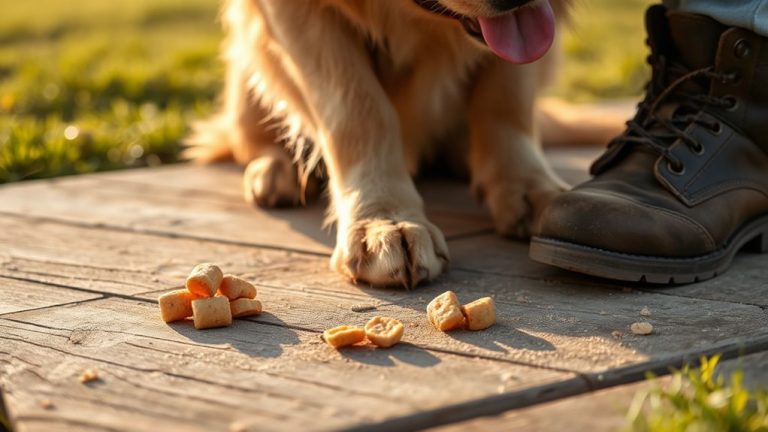
Use pea-sized, high-value treats like freeze-dried liver or moist training cubes to lure your dog’s nose upward, guiding them into a sit. The instant their hips begin to lower, say “sit” once in a calm, firm tone. Mark the completed sit with a clicker or “yes” and deliver the treat within one second. Repeat in 3- to 5-minute sessions twice daily. Use a 6-ft leash in distracting areas to maintain focus. Consistency and timing build reliability-adjustments refine precision and response across environments.
Notable Insights
- Use high-value, small, soft treats to reward your dog immediately after they sit to reinforce the behavior effectively.
- Lure your dog into a sit by moving a treat slowly upward and slightly back over their head.
- Mark the exact moment your dog sits with a clicker or “yes” and deliver a treat within one second.
- Say “sit” clearly as your dog begins to lower their rear, pairing the word with the action every time.
- Practice briefly several times a day in low-distraction areas before gradually introducing new environments and distractions.
Gather Your Treats and Pick the Right Moment
You’ll want to start with high-value treats-small, soft, and easy to chew-so your dog stays focused without long pauses between reps. Proper treat selection is critical: aim for pieces no larger than ½ inch in diameter to minimize consumption time. High-motivation options include freeze-dried liver, moist training cubes, or homemade boiled chicken bits. These deliver strong scent and flavor cues, increasing response reliability. Timing awareness guarantees the treat is delivered within 1–2 seconds of correct behavior, creating a precise associative link. Use a stopwatch or metronome app to refine your delivery speed during practice. Immediate reinforcement strengthens neural connections, much like instant feedback in technical training systems. Avoid hard or large treats; they delay reinforcement and disrupt rhythm. Keep sessions short-5 to 10 minutes-and conduct them in low-distraction environments. Best timing and treat selection form the foundation of efficient learning, guaranteeing rapid command acquisition.
Lure Your Dog Into Sit Position
A properly executed lure guides the dog’s nose upward and slightly back, triggering a natural sit response through controlled head movement. This technique is foundational in dog training, using behavior shaping to guide your dog into position. Hold a treat close to your dog’s nose, then slowly move it straight up and slightly backward over the head. The motion encourages the dog to tilt its head back, destabilizing its balance and prompting a sit. Keep movements smooth and deliberate-abrupt motions confuse the dog.
| Step | Hand Movement | Dog Response |
|---|---|---|
| 1 | Present treat near nose | Focuses on reward |
| 2 | Lift treat upward and back | Head raises, rear lowers |
| 3 | Pause at eye level | Completes sit motion |
Consistent hand signals and timing improve learning. Avoid pulling too far back, which may cause the dog to lie down.
Mark and Reward the Sit
When your dog achieves the correct seated position, mark the behavior immediately with a verbal cue like “yes” or a clicker to signal reinforcement. This precise timing strengthens dog behavior by linking the action to the reward. Deliver a high-value treat within one second of the mark to solidify the association. Use small, soft treats (approximately ¼ inch in size) to minimize delay and maintain training consistency. Repeat the sequence 8–10 times per session, limiting sessions to 3–5 minutes to prevent fatigue. Consistency in marking and rewarding guarantees reliable operant conditioning. Perform at least two sessions daily in low-distraction environments. Over time, this method increases the frequency of correct sits. The marker signal acts as an event bridge, pinpointing the exact behavior you want. Accuracy in timing and reward delivery is critical for effective learning. Training consistency directly impacts long-term retention and behavioral reliability.
Add the “Sit” Command at the Right Moment
Now that your dog consistently sits in response to your cues and you’ve established a clear marker-reward sequence, it’s time to attach the verbal command “sit” to the behavior. Timing precision is critical. Say “sit” the exact moment your dog begins to lower their hindquarters, not before or after. This synchrony guarantees your dog links the word with the action. Delayed commands cause confusion and weaken learning. Use a calm, firm tone to maintain command clarity. Repeat the cue once per attempt-overuse dilutes its effectiveness. Pair the verbal cue with the same hand signal you’ve used previously to reinforce recognition. Perform 5–10 repetitions per session, keeping sessions short to preserve focus. Accurate timing and clear delivery build reliable responding. Consistency across all interactions solidifies understanding. Your dog learns to associate the auditory signal with the physical act within milliseconds. Proper execution creates a foundation for future commands.
Practice Sit in New Places
Most dogs need at least three to five practice sessions in each new environment before performing the sit command reliably. Environmental distractions greatly affect recall and obedience during off leash training. Gradually introduce new locations with increasing stimulus levels to build focus.
| Environment | Distraction Level | Recommended Leash Use |
|---|---|---|
| Living Room | Low | Not needed |
| Backyard | Moderate | Long line (15 ft) |
| Quiet Park | Moderate-High | 10-ft leash |
| Busy Sidewalk | High | 6-ft leash |
| Dog-Friendly Cafe | Very High | On-leash only |
Use consistent cues and immediate reinforcement. Off leash training should only occur in secure areas after reliable responses in low-distraction settings. Each session should last 5–7 minutes, maximizing attention span. Practice in short bursts to maintain precision. Environmental distractions like noises, smells, and movement degrade performance initially but diminish with systematic exposure.
Fix Leash Pulling, Treat Grabbing, and Other Sit Problems
Why does your dog still lunge forward the moment the leash tightens, even after mastering “sit” at home? The issue lies in context generalization. Training indoors lacks the distractions and stimuli present outdoors. You must reinforce loose leash walking using the same positive reinforcement methods. Each time your dog walks beside you without tension, click and reward. If they pull, stop immediately. Wait for slack, then mark and reward. This teaches loose leash compliance through negative punishment. For treat grabbing, enforce treat manners. Show the treat, close your fist, and wait for your dog to disengage. Reward patience. Practice sit-stays before meals or walks. Use high-value treats for high-distraction areas. Consistency across environments solidifies behavior. Each session should last 5–7 minutes, repeated 3x daily. Accuracy improves retention.
On a final note
You’ve now trained your dog to sit reliably using positive reinforcement. Timing matters: mark the behavior with a click or verbal cue the instant your dog’s hips begin lowering. Use small, pea-sized treats to minimize calorie intake during sessions. Practice for five to ten minutes twice daily, increasing duration only if your dog remains focused. Generalize the command across ten or more environments with varying distractions. Consistency guarantees 90% compliance within two weeks.