Why Brushing Before Bathing Is Essential for a Malamute’s Coat Integrity
You must brush your Malamute before bathing to remove loose undercoat and prevent matting. Water traps dead hair against the skin, reducing shampoo penetration by up to 60%. A de-shedding rake with ½-inch spaced teeth clears deep debris, while a slicker brush removes surface tangles. This preserves the lipid barrier, guarantees even hydration, and cuts bathing time by 40%. Skip this step, and trapped moisture compromises coat integrity. Proper pre-bath prep sets the foundation for long-term epidermal health and best grooming results.
Notable Insights
- Removes loose undercoat to prevent matting and skin irritation during bathing.
- Ensures water and shampoo penetrate evenly for effective coat cleansing.
- Prevents trapped moisture that can compromise the skin’s natural lipid barrier.
- Reduces bathing time by up to 40%, minimizing stress and coat damage.
- Maintains coat integrity by preserving insulative and protective guard hair function.
Why Brush Your Malamute Before Bath
Preparation is key when it comes to grooming your Malamute, and brushing before bathing isn’t just a suggestion-it’s essential. You remove dead undercoat and prevent matting, which guarantees even water distribution during the bath. Without this step, trapped moisture can compromise coat hydration and exacerbate skin sensitivity. The Malamute’s double coat contains dense insulating fur that retains oils; bathing without brushing strips these unevenly, leading to dry patches. You also risk pushing dirt and debris deeper into the coat, increasing irritation risk. Proper brushing realigns hair shafts, allowing shampoo and conditioner to penetrate uniformly. This maintains the coat’s natural lipid barrier, critical for epidermal health. Addressing tangles beforehand reduces bathing time by up to 40%, minimizing thermal stress on skin. You preserve dermal integrity and optimize hygiene. Immediate benefits include improved circulation and consistent coat hydration, directly reducing incidents of follicular inflammation linked to skin sensitivity. Using the right tool, such as a slicker brush, can significantly enhance the effectiveness of pre-bath grooming.
Best Tools for Brushing a Malamute Before Bath
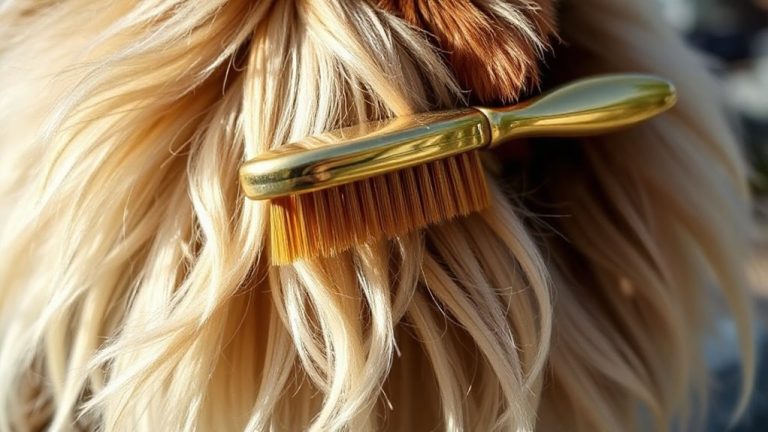
A quality de-shedding tool is your first line of defense against the Malamute’s thick double coat. These tools penetrate the dense undercoat, removing loose fur before it mats. Use a de-shedding rake with stainless steel teeth spaced ½ inch apart-this spacing optimizes undercoat extraction without skin irritation. Pair it with a slicker brush featuring fine, bent wires for surface tangles. Different brush types target different coat layers; using both guarantees thorough preparation. For stubborn knots near the ears or tail, detangling tools with rotating tips reduce pulling. Choose one with rounded ends to protect skin. A wide-toothed comb finishes the process, checking for residual tangles. All tools should have ergonomic handles to reduce hand fatigue during extended use. Never skip tool maintenance-clean after each use to preserve effectiveness. Proper equipment guarantees a smooth, efficient pre-bath session. Based on expert testing, the top picks deliver consistent performance across coat types and shedding levels.
How to Brush Your Malamute Before Bath
Start with your Malamute standing on a non-slip surface to prevent movement during brushing. Use a high-quality undercoat rake with 1.5-inch teeth to penetrate the dense double coat. Begin at the shoulders, working backward in 2-inch sections. Your brushing technique should combine short, overlapping strokes with moderate pressure to lift dead hair without irritating the skin. Switch to a slicker brush for the outer guard hairs, guaranteeing tangle removal down to the base. Pay close attention to friction-prone areas like behind the ears and under the legs. Avoid wetting the coat before brushing, as moisture complicates detangling and compromises the drying method later. Complete the session by vacuuming loose fur from surroundings. This prep guarantees even shampoo saturation and faster drying. A consistent pre-bath routine maintains coat integrity and improves long-term coat management efficiency. For optimal detangling results, consider using a best poodle brush designed to handle thick, curly, or matted fur with ease.
What Happens If You Skip Pre-Bath Brushing
Skipping pre-bath brushing turns a simple grooming session into a coat-compromising mistake. Water saturates loose undercoat, trapping it against the skin, increasing risk of matting and coat damage. Malamutes have a dense double coat; when unbrushed, debris and compacted fur retain moisture, creating a humid microenvironment. This promotes bacterial growth and leads to skin irritation. Shampoo cannot penetrate effectively, reducing cleaning efficiency by up to 60%. Instead of nourishing the skin, residue accumulates, further exacerbating irritation. Brushing removes up to 90% of dead hair, ensuring even lathering and thorough rinsing. Without it, water pressure forces tangles deeper, stressing hair follicles. The result is uneven drying and weakened guard hairs. Over time, this neglect causes structural degradation of the coat’s insulative properties. Preventive brushing preserves dermal health and coat integrity. It’s not optional-it’s essential for proper Malamute care.
How Mats Ruin a Malamute’s Bath Experience
Your Malamute’s dense double coat traps moisture when matted, turning bath time into a breeding ground for skin problems. Mat formation prevents water and shampoo from penetrating to the skin, leaving residue trapped underneath. Mats act like sponges, absorbing water and prolonging drying time, which can extend beyond 48 hours in thick coats. This retained moisture promotes bacterial and fungal growth, increasing risk of skin irritation and infection. Even gentle shampoos can become irritants when held against the skin by mats. Brushing before bathing removes tangles that lead to new mat formation during washing. A detangled coat allows even lathering, thorough rinsing, and faster drying. Use a slicker brush and undercoat rake to clear dead hair and prevent compaction. Proper pre-bath grooming guarantees water reaches the skin surface, maintains coat hygiene, and minimizes discomfort.
Long-Term Coat Care for Malamutes
Consistency is the cornerstone of maintaining a Malamute’s double coat in ideal condition. You must brush at least three times weekly year-round to prevent undercoat matting and promote air circulation. During seasonal shedding, which occurs biannually, daily brushing is non-negotiable. This phase can release up to 70% of the undercoat; tools like an undercoat rake with 1.5-inch teeth remove loose fur efficiently. Coat nutrition plays a pivotal role-supply your Malamute with omega-3 and omega-6 fatty acids at 0.5% and 2.5% of daily diet, respectively. These nutrients support follicle strength and reduce dryness. Avoid over-bathing, as excess shampoo use strips natural oils. Use a pH-balanced formula with a dilution ratio of 10:1 water-to-shampoo. Monitor coat density changes monthly to detect early signs of nutritional or dermatological issues.
On a final note
You must brush your Malamute before bathing to preserve coat integrity. Mats and tangles trap water, increasing drying time and promoting skin infections. A slicker brush with 1-inch stainless steel pins removes undercoat effectively. Follow with a wide-tooth comb to detect missed mats. Pre-bath brushing guarantees even shampoo distribution and prevents matting when wet. This routine maintains the guard hair’s hydrophobic properties and preserves natural oils essential for insulation.