Trimming Overgrown Nails to Prevent Paw Pad Pressure Sores
Trimming overgrown nails prevents paw pad pressure sores by restoring proper toe alignment and weight distribution. Overgrown nails elevate the toes, increasing pressure on digital cushions and creating stress points. Use sharp scissor-style clippers or a Dremel 7300-PT (6,500–14,000 RPM) for clean cuts. Trim 0.5 mm at a time, avoiding the quick. Ideal nail length is 1–2 mm above the pad when standing. Monitor every 7–10 days with a digital caliper to maintain ideal length. You’ll discover how to identify early damage and choose the best tools for consistent care.
Notable Insights
- Overgrown nails alter paw alignment, increasing pressure on pads and raising the risk of pressure sores.
- Regular trimming every 3–4 weeks prevents gait changes and uneven weight distribution on paw pads.
- Trim nails to within 1–2 mm of the pad surface to ensure proper weight distribution and reduce stress points.
- Use sharp clippers or a high-speed grinder to safely shorten nails without crushing or damaging the quick.
- Check for signs of pad damage like redness, swelling, or thickening, especially in dogs with chronically long nails.
How Overgrown Nails Damage Paws
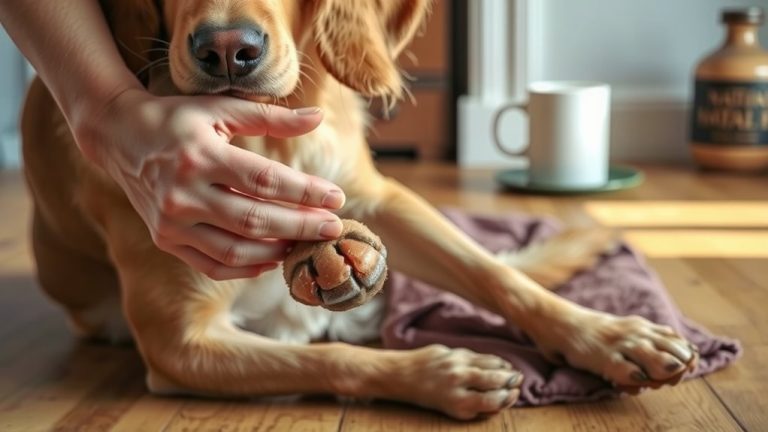
When a dog’s nails grow too long, they alter the natural alignment of the toes, forcing the foot into an unnatural position with each step. This misalignment increases pressure on the toe joints and soft tissues. Prolonged overgrowth leads to progressive nail curvature, which prevents the paw from making full contact with the ground. As nail curvature worsens, the digital cushion fails to distribute weight evenly across the pad. This causes localized stress points that compromise circulation. You’ll notice a visible gait alteration-shortened strides, foot splaying, or limping. Gait alteration reduces propulsion efficiency and increases fatigue during activity. Over time, sustained mechanical imbalance can lead to joint strain and ligament overuse. The structural integrity of the paw deteriorates, elevating injury risk. Trimming every 3–4 weeks prevents these issues. Ideal nail length stops 2 mm above the ground when standing. Corrective trimming restores natural biomechanics and halts further damage.
How to Spot Paw Pad Damage
Though you might not notice it at first, paw pad damage from overgrown nails often begins subtly, with visible signs appearing only after prolonged strain. Paw discoloration-ranging from redness to bluish tint-indicates compromised circulation due to uneven weight distribution. You may observe calloused patches or cracked skin, especially on weight-bearing pads. Limping behavior usually follows, even if intermittent, signaling discomfort or early ulceration. Swelling around the pad margins suggests pressure-induced inflammation. Inspect the paws weekly; compare bilateral symmetry in pad shape and texture. Early lesions may measure less than 3 mm in diameter but can deepen without intervention. Chronically affected pads often thicken up to 20% beyond normal dermal depth. Use bright lighting and gentle restraint to examine your pet. Document changes monthly to track progression accurately. Early detection prevents non-reversible tissue damage.
What Tools You Need to Trim Nails
What exactly do you need to trim your pet’s nails safely and effectively? You’ll need quality nail clippers designed for pets. Guillotine-style clippers work well for small to medium dogs, featuring a sharp circular blade that slices cleanly. Scissor-style models offer better leverage and visibility for larger breeds. Make sure blades stay sharp; dull ones crush rather than cut. For thick or dark nails, grinding tools are ideal. These rotary tools, like Dremel 7300-PT, use sanding bands to gradually wear down the nail, reducing the risk of cutting the quick. They operate at 6,500–14,000 RPM, allowing precise control. Always secure your pet and choose the right guard attachment. Pair nail clippers with grinding tools for best results. Both should be cleaned after use to maintain hygiene and performance. A quiet and best pet nail grinder can make the experience less stressful for noise-sensitive animals.
How to Trim Overgrown Dog Nails
You’ve gathered the right tools-quality clippers, a grinder, and protective attachments-so now it’s time to tackle overgrown nails safely. Managing nail trimming anxiety starts with proper dog restraint methods. Use a non-slip mat and, if needed, a helper to gently hold your dog’s body without strain. Approach one paw at a time, applying steady pressure to extend the nail fully. A well-fitted puppy collar and leash can help keep your dog calm and in position during grooming sessions.
| Method | Purpose |
|---|---|
| Front-leash hold | Controls forward movement |
| Lap positioning | Stabilizes small dogs |
| Muzzle (if anxious) | Prevents snapping |
| Tether system | Limits side motion |
Clip small sections to avoid the quick, especially in dark nails. Use grinders at 8,000–12,000 RPM for smoothing. Always inspect nail angle and pad contact after each cut. Consistent restraint reduces stress for both dog and handler, ensuring precision in overgrown nail management.
How to Cut Nails to the Right Length
When trimming your dog’s nails, aim to cut them just above the quick, leaving enough length to prevent bleeding while guaranteeing the nail doesn’t touch the ground when standing. The ideal length is achieved when the nail is elevated 1–2 mm above the paw pad surface. Use a Nail measurement tool or ruler to verify this distance, especially in dogs with dark claws where the quick isn’t visible. Trim incrementally-0.5 mm at a time-to avoid overcutting. For clear nails, stop 2 mm short of the pink zone. For black nails, rely on cross-sectional inspection: a small dark circle indicates proximity to the quick. Achieving the ideal length prevents paw misalignment and pad pressure sores. Proper Nail measurement guarantees functional paw positioning during weight-bearing. Regular trimming to this specification supports healthy gait mechanics and reduces slipping on flooring. Using high-quality dog nail clippers ensures clean, precise cuts and minimizes the risk of splitting or crushing the nail.
How to Keep Nails at the Right Length
Keeping your dog’s nails at the proper length requires consistent maintenance and a reliable schedule tailored to their activity level and growth rate. Nail aesthetics matter, but function matters more-nails should not touch the ground when standing. Ideally, they should be 1–2 mm above the paw pad surface. Check every 7 to 10 days using a digital caliper for precision. Behavioral indicators such as reluctance to walk, slipping on floors, or paw licking signal discomfort or improper nail length. Use a high-speed rotary tool or guillotine-style clipper with a 45-degree blade angle for clean cuts. Avoid the quick, which contains nerves and blood vessels. For dogs with dark nails, use a flashlight to illuminate the quick’s path. Short, frequent trims prevent overgrowth and reduce the risk of paw pad pressure sores. Maintain a log to track growth patterns and adjust trimming intervals accordingly. Consistency prevents complications.
On a final note
You prevent paw pad pressure sores by maintaining proper nail length. Overgrown nails alter weight distribution, increasing plantar pressure by up to 30%. Use sharp, guillotine-style clippers with a tungsten-carbide blade for clean cuts. Trim every 2–3 weeks to keep nails 2 mm above the walking surface. Regular maintenance guarantees efficient paw alignment, reducing shear forces on digital cushions and minimizing ulcer risk.