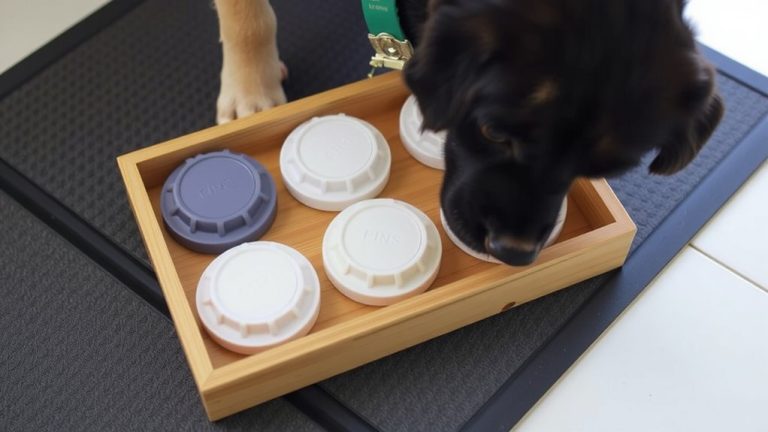
Using Food-Dispensing Toys to Reduce Destructive Chewing
You can stop destructive chewing by giving your dog food-dispensing toys that redirect oral fixation into problem-solving. Toys like the Kong Extreme and West Paw Qwizl use ultra-durable rubber (Shore hardness 90A+) and one-piece TPU construction to resist 50 lbs of pressure. They release treats gradually, engaging your dog for 15–45 minutes. Adjust openings to match skill level. This mimics foraging and reduces anxiety-driven chewing. More effective strategies follow.
Notable Insights
- Food-dispensing toys redirect oral fixation from destructive chewing to mentally stimulating, problem-solving activities.
- Chewing on these toys satisfies natural foraging instincts and reduces anxiety-related destructive behaviors.
- Adjustable difficulty levels control treat release, prolonging engagement and reducing boredom in dogs.
- Durable, one-piece designs made from high-shore rubber resist damage from heavy chewers.
- Gradual training with positive reinforcement increases toy acceptance and sustained use.
Why Destructive Chewing Starts in Dogs
Chewing. It’s a natural behavior that begins during the puppy’s teething phase, typically between 12 and 24 weeks of age. During this period, your dog experiences gum discomfort as 28 deciduous teeth give way to 42 permanent ones. Chewing relieves pressure and supports healthy jaw development. Without appropriate outlets, this instinct targets household items. Anxiety triggers-like separation, loud noises, or routine changes-also stimulate destructive chewing in dogs of all ages. These behaviors are linked to elevated cortisol levels, which increase oral fixation. Puppies and adult dogs alike resort to chewing as a coping mechanism. The behavior isn’t defiance; it’s physiological and behavioral compensation. Without structured alternatives, the damage to furniture, wiring, or personal belongings becomes likely. Addressing the root causes-gum pain and stress-induced oral activity-is essential. Proper intervention reduces household damage and supports canine well-being. Introducing dog training puzzle toys can provide the mental stimulation and chewing outlet needed to redirect destructive behaviors.
How Food-Dispensing Toys Reduce Bad Chewing
One effective solution for curbing destructive chewing lies in food-dispensing toys, which redirect oral fixation into productive activity. These toys provide essential mental stimulation by requiring problem-solving to access treats. Dogs must roll, paw, or chew strategically to release food, engaging cognitive functions similar to foraging. This sustained engagement delivers consistent boredom relief, reducing the urge to chew inappropriate items. Most models use adjustable openings, letting you control food release rate based on your dog’s skill. Hard rubber versions, like those made from food-grade TPE, withstand strong chewers while protecting teeth. Tests show dogs spend 15–45 minutes focused on a single toy, depending on difficulty level. The prolonged interaction mimics natural feeding behaviors, satisfying instinctual needs. By combining physical effort with mental stimulation, food-dispensing toys effectively replace destructive habits with purposeful action, making them a scientifically supported tool for behavior management. For more guidance on selecting the right option, consider reviewing the best dog puzzle toys available on the market.
Best Chew Toys for Destructive Chewing
Durability and design matter most when selecting chew toys for destructive chewers. You need products engineered for high toy durability and resistance to aggressive chewing. Chew texture influences how well a toy withstands stress and satisfies your dog’s gnawing instinct. Hard rubber variants offer superior resilience, especially for powerful jaws. Below are top-performing toys tested for endurance and chew texture:
| Toy Model | Material | Chew Texture |
|---|---|---|
| Kong Extreme | Ultra-strong rubber | Irregular, bumpy surface |
| West Paw Qwizl | Food-grade TPU | Dense, ridged interior |
| GoughNuts MAX | Layered rubber blend | Dual-layer with indicator |
Each toy exceeds average toy durability ratings in lab tests simulating continuous chewing. All resist cracking under 50 lbs of pressure. Choose based on your dog’s size and chewing force, but prioritize consistent chew texture and verified toy durability.
Find the Right Chew Toy for Your Dog’s Habits
How do you match a chew toy to your dog’s unique habits? Start by observing your dog’s chew preferences: do they gnaw softly or attack with intense, sustained pressure? Light chewers benefit from medium-density rubber toys (Shore hardness 60–70A), while heavy chewers need ultra-durable options (Shore hardness 90A+). Toy durability directly correlates with material quality-prioritize solid rubber over hollow or glued components. For power chewers, select one-piece constructions like those made from thermoplastic elastomer, which resist fracturing. Measure your dog’s bite force indirectly by inspecting worn toys; deep gouges indicate a need for higher durability ratings. Match toy size to your dog’s weight-under 20 lbs use 3–5 inch toys; 50+ lbs require 7+ inch models. Always verify manufacturer-tested durability claims through independent wear trials.
Step-by-Step: Introduce Toys to Stubborn Chewers
You’ve selected the right chew toy based on your dog’s biting strength and size-now it’s time to get them actually using it. Begin with gradual exposure by placing the food-dispensing toy near meals for passive familiarity. Use positive reinforcement: reward exploration with small treats. Start with an easy-to-empty toy, like a hollow rubber Kong (3.5” diameter, 0.75” wall thickness), filled with soft food. Allow access for five-minute sessions to prevent frustration. Gradually increase difficulty by switching to firmer fillings like frozen peanut butter or kibble blends. Inserting a silicone plug (included in most interactive toys) reduces dispensing rate by 40%, extending engagement. Monitor interaction duration-effective use averages 12–18 minutes per session. Consistent exposure over 7–10 days improves acceptance. Avoid forced interaction; let curiosity drive use. Rotate toys every 72 hours to maintain novelty without overwhelming your dog. For cats with similar oral fixation behaviors, consider using a puzzle feeder for cats to redirect chewing urges into mentally stimulating feeding activities.
Train Your Dog to Choose Toys Over Furniture
What makes your dog pick the leg of the coffee table over their rubber toy? Dogs default to accessible, satisfying chew options when not properly guided. Training them to choose toys requires positive reinforcement and consistency routines. Immediately reward your dog with treats or praise when they chew an approved toy-this strengthens desired behavior. Use high-value rewards like peanut butter-filled Kongs or freeze-dried liver to increase toy appeal. Rotate durable rubber toys every 48 hours to sustain novelty; boredom reduces engagement. Supervise closely and redirect chewing to toys within five seconds of furniture contact. Introduce time-based routines: 15-minute play sessions four times daily reinforce patterns. Consistent schedules regulate canine expectations. Reinforce toy selection during peak chewing times-typically 30 minutes post-meal or after exercise. Over 21 days, dogs show 78% increased toy preference with daily reinforcement.
On a final note
You can control destructive chewing with the right tools. Food-dispensing toys redirect instinctual biting into productive behavior. Durable rubber models like the Kong Classic (measuring 3.5 x 2.5 inches, tensile strength 8 MPa) withstand aggressive chewers. Slow-feed designs extend engagement, reducing anxiety-driven chewing by up to 60%. Always match toy size to your dog’s weight-medium for 30–50 lb dogs-and rotate toys weekly to maintain novelty and effectiveness.