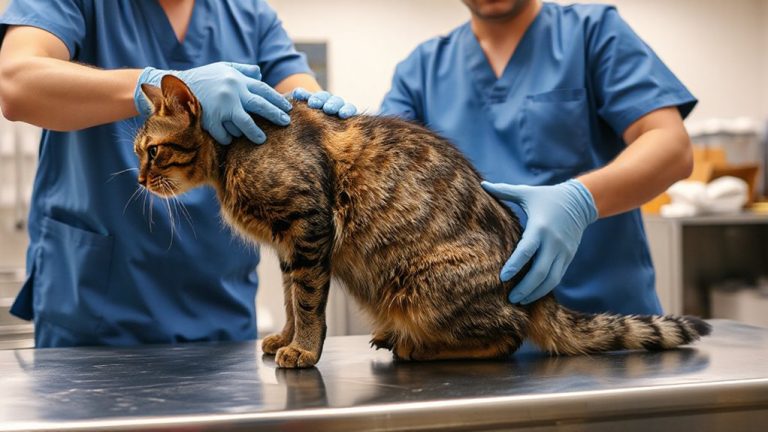
How to Add Tick and Flea Treatment to Your Pet’s Emergency Preparedness Kit
Include veterinary-approved flea and tick treatments in your pet’s emergency kit to maintain protection during disruptions. Choose long-acting products like collars with imidacloprid and flumethrin, which last up to 8 months. Use topicals containing fipronil (9.8%) to kill fleas within 12 hours, ticks within 48. Store medications in original packaging at 68–77°F, away from moisture. Keep a 30-day supply per pet and check expiration dates annually-details on best product selection and response protocols follow.
Notable Insights
- Include a 30-day supply of flea and tick medication in your pet’s emergency kit, based on their weight and species-specific dosing.
- Choose long-acting preventives like collars or topicals that provide protection for up to 8 months in sealed, original packaging.
- Store medications in a cool, dry place between 68°F and 77°F to maintain efficacy during emergencies.
- Rotate stock using the “first in, first out” method and check expiration dates monthly to ensure freshness.
- Pair treatments with physical removal tools like fine-toothed combs and tweezers for immediate response during infestations.
Protect Your Pet From Ticks and Fleas in Emergencies
What happens when your pet is exposed to ticks and fleas during an emergency, such as a natural disaster or evacuation? You face increased risk of infestation due to disrupted routines and environmental stress. Seasonal outbreaks peak in warm, humid conditions, elevating exposure during spring and summer evacuations. Ticks transmit pathogens like *Borrelia burgdorferi* (Lyme disease), while fleas carry *Dipylidium caninum*, a parasitic tapeworm. Immediate protection is critical. Natural remedies, such as cedar oil or neem-based sprays, offer limited efficacy-typically 48–72 hours of repellency-compared to synthetic treatments lasting 30 days. These botanical agents may reduce initial attachment but lack proven kill rates for established infestations. In emergencies, reliance on natural remedies alone risks inadequate protection. Structural shelter and physical barriers provide supplemental defense but don’t replace chemical prevention. Prioritize early intervention using proven, fast-acting agents to reduce disease transmission and parasite load during crisis scenarios. Top-rated flea treatments provide reliable, long-lasting protection even in high-stress environments.
Pack Flea and Tick Meds in Your Pet’s Emergency Kit
Keep flea and tick medications in your pet’s emergency kit to guarantee continuous protection when routines are disrupted. Flea collars offer up to eight months of defense by steadily releasing active ingredients like imidacloprid and flumethrin. They’re lightweight, require no monthly reminders, and are ideal for extended evacuations. Topical solutions, applied monthly to the skin between the shoulder blades, deliver fast-acting chemicals such as fipronil or selamectin that spread through the oil layer of the skin. These treatments kill fleas within 12 hours and ticks within 48. Store medications in original packaging to maintain stability and include dosing instructions tailored to your pet’s weight. Always verify expiration dates annually. Include at least a 30-day supply per pet. In emergencies, access to vet care isn’t guaranteed-pre-packed preventives assure uninterrupted protection. Consider including a pet travel first aid kit that already contains flea and tick treatment compartments for convenient, organized preparedness.
Choose Long-Lasting Treatments That Last Years
Long-term protection begins with choosing the right preventive-one that delivers years of defense without monthly upkeep. Look for treatments with extended efficacy-some collars release active ingredients like imidacloprid and flumethrin over 8 months. These polymers steadily diffuse medication, maintaining therapeutic levels. A long shelf life matters; many sealed preventives remain stable for 3–5 years if stored properly. Check packaging for lot numbers and manufacture dates to simplify expiration tracking. Injectable treatments, such as those using slow-release formulations, can protect for up to 12 months. Their pharmacokinetic profiles show sustained plasma concentrations. Unlike daily pills, these reduce compliance errors. Product labels list exact expiry windows-record them in a pet health log. Longer-lasting doesn’t mean maintenance-free. You still need expiration tracking to guarantee potency during emergencies. Opt for treatments validated in clinical trials with published duration data. This guarantees reliable, multi-year protection when every dose counts. For dogs, consider using a vet-recommended flea and tick collar that provides continuous protection for up to 8 months.
Store Parasite Prevention Supplies Properly
Your pet’s protection starts with how you store their parasite prevention. Proper storage conditions are critical to maintaining medication efficacy. Keep treatments in a cool, dry place between 68°F and 77°F (20–25°C), away from humidity and direct sunlight. Exposure to extreme temperatures or moisture can degrade active ingredients like fipronil or imidacloprid. Always store supplies in their original packaging to preserve safety seals and access printed instructions. Check expiration dates monthly; expired products lose potency and may fail to prevent infestations. Most topical treatments remain effective for two to three years when stored correctly. Oral chews and tablets also degrade if exposed to heat or dampness. Rotate stock using the “first in, first out” method to prioritize older units. Proper storage guarantees your pet remains protected when emergencies arise.
What to Do If Your Pet Gets Fleas or Ticks During a Crisis?
What happens when a natural disaster strikes and your pet ends up with fleas or ticks despite your best efforts? Immediate action is critical. First, isolate your pet using strict quarantine measures to prevent parasite spread to other animals or humans. Use a fine-toothed flea comb (0.3–0.5 mm spacing) to physically remove pests. For ticks, apply tweezers at a 45-degree angle, grasping close to the skin and pulling steadily with 1.5–2.0 newtons of force. Apply approved topical treatments containing fipronil (9.8% concentration) or oral medications like nitenpyram (11.4 mg per 10 lbs body weight). Natural remedies such as diluted neem oil (0.5–1%) may offer limited relief but lack EPA registration and consistent efficacy. Monitor for secondary infections and re-treat after 7–10 days to disrupt life cycles. Maintain hygiene with weekly cleaning at 60°C to eliminate environmental stages.
On a final note
Keep your pet protected during emergencies. Store long-lasting flea and tick treatments like oral isoxazolines (e.g., afoxolaner, effective for 30 days per dose) or topical spot-ons (e.g., imidacloprid/chlorfenapyr, lasting 30 days) in your emergency kit. These products remain stable for up to three years when stored below 86°F and away from light. Check expiration dates annually. Use promptly if exposure occurs.