How to Add Wound Care Supplies to Your Pet’s Emergency Kit Safely
Stock sterile 4×4-inch gauze pads (12-count minimum), adhesive bandages for small limbs, and latex-free exam gloves to guarantee safe wound handling. Use a digital thermometer with ±0.1°F accuracy between 90–110°F for reliable temperature checks. Add cohesive wrap like VetRap-it conforms without restricting circulation. Choose vet-approved antiseptics such as diluted chlorhexidine or povidone-iodine; avoid hydrogen peroxide and essential oils. Store all items in a labeled, water-resistant case at 50–77°F. Replace supplies every three months and keep a checklist to maintain readiness-details on optimizing each component follow.
Notable Insights
- Choose sterile gauze pads and adhesive bandages sized for your pet’s limbs to ensure proper wound coverage.
- Use vet-approved antiseptics like diluted chlorhexidine or povidone-iodine; avoid hydrogen peroxide and essential oils.
- Include latex-free gloves and a digital thermometer for safe handling and accurate temperature monitoring.
- Store supplies in a durable, labeled, water-resistant case kept between 50–77°F to maintain efficacy.
- Tailor contents to your pet: use hypoallergenic materials for cats, thicker gauze for dogs, and replace all items every 3 months.
Stock These Wound Care Supplies in Your Pet Emergency Kit
A well-stocked pet emergency kit should include specific wound care supplies designed for animal use. You need sterile gauze pads (4×4 inches, 12-count minimum) for pressure and absorption. Include adhesive bandages sized for small limbs and cohesive wrap (like VetRap) that conforms without restricting circulation. A digital thermometer (range: 90–110°F, ±0.1° accuracy) aids in detecting infection early. Latex-free examination gloves guarantee safe handling during wound identification. You’ll use blunt-tipped scissors (4-inch, rounded ends) to trim fur without causing harm. Include a saline solution (0.9% sodium chloride, 500 mL bottle) for irrigation. These tools support accurate injury assessment and prevent contamination. Each item serves a measurable function-absorption, containment, diagnosis, or cleaning-and meets veterinary standards for immediate response. Proper storage in a waterproof, labeled case preserves sterility.
Choose Safe, Non-Toxic Antiseptics for Pets
Since not all antiseptics are safe for pets, you’ll want to choose products specifically formulated for animal use. Avoid hydrogen peroxide, which can damage healthy tissue and delay healing in pets. It’s especially harmful if ingested or applied to deep wounds. Many human antiseptics contain ingredients toxic to animals, including phenols and alcohol-based solvents. Instead, use chlorhexidine diacetate or povidone-iodine solutions diluted to 1–2%, proven effective against bacteria without harming skin. Never use products with essential oils-like tea tree or eucalyptus-as they can cause neurological symptoms in cats and small dogs. Pet-safe antiseptics are tested for dermal toxicity and have safety margins suitable for accidental ingestion in low doses. Always check labels for veterinary approval and avoid combination products with unnecessary additives. Using the right antiseptic minimizes infection risk and supports faster, safer healing.
Store Supplies for Fast Access and Pet Safety
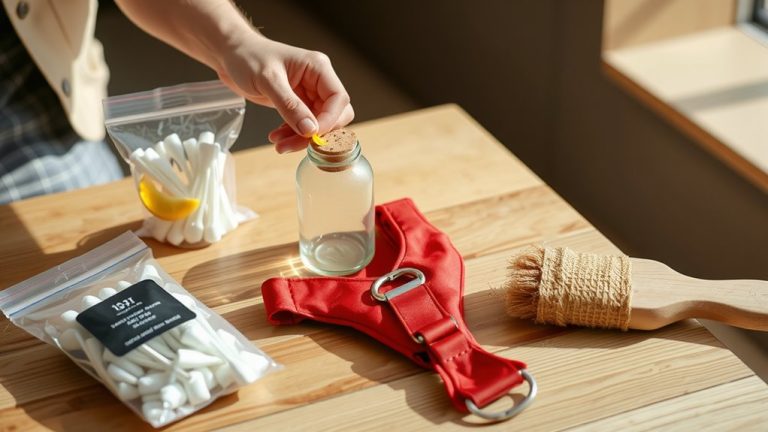
Keep your pet’s wound care supplies organized and within reach-seconds matter during an emergency. Quick access guarantees timely treatment, reducing risk of infection or complications. Use a durable, water-resistant container with labeled compartments to maintain order. Store items in resealable, transparent pouches for visibility and hygiene. Secure storage prevents spills and keeps toxic materials away from curious paws. Choose a compact kit (minimum 8” x 6” x 4”) that fits essential supplies without excess bulk. Mount the container in a consistent location known to all household members. Avoid extreme temperatures; store between 50–77°F (10–25°C) to preserve product integrity. Avoid flimsy bags-rigid plastic cases offer better protection. Guarantee child-proof latches if toddlers are present, but allow adults fast entry. A well-designed system balances security with ease of use. Your pet’s safety depends on reliable organization and consistent maintenance of your emergency kit.
Customize for Dogs vs. Cats
When tailoring your pet’s emergency wound care kit, differences between dogs and cats demand specific adjustments based on species anatomy, behavior, and common injury types. Dogs sustain more outdoor trauma, requiring robust bandage types like cohesive wrap (2-inch for cats, 3-inch for dogs). Cats’ delicate skin needs hypoallergenic adhesive alternatives. Perform accurate wound assessment by checking for punctures-common in cats-or lacerations, frequent in active dogs.
| Concern | Dog vs. Cat Reality |
|---|---|
| Skin Thickness | Dogs: Thicker; resists tearing |
| Pain Response | Cats: Subtle signs; mask distress |
| Bandage Adhesion | Cats: Slough off easily |
| Wound Location | Dogs: Limbs; Cats: Face, neck |
Use this knowledge to choose appropriate bandage types and conduct precise wound assessment. Size-appropriate gauze (4×4 inch for cats, 5×9 inch for dogs) guarantees coverage without restriction.
Refresh Your Pet Emergency Kit Every 3 Months
Regularly updating your pet’s emergency wound care kit every three months guarantees all components remain effective and safe for use. Check expiration dates on ointments, antiseptics, and bandaging materials-expired products lose potency and may harbor bacteria. Perform thorough inventory checks to identify missing or depleted supplies like gauze pads, adhesive tape, or sterile saline solution. Replace single-use items immediately. Store medications away from moisture and direct sunlight to preserve shelf life. For example, topical antibiotics typically remain stable for two years unopened, but degrade faster once exposed. Include a printed checklist in your kit to streamline future inspections. Rotate unused sterile gloves and non-adherent dressings into new batches. Think of it like changing smoke alarm batteries-scheduled maintenance prevents failure when you need it most. Consistent inventory checks guarantee rapid response during emergencies without delays. Choosing the right Top Pet First Aid Kits ensures you include vet-recommended supplies tailored to your pet’s needs.
Build a Complete Kit for Common Injuries
A well-prepared wound care kit accounts for the most frequent injuries pets encounter, from minor scrapes to deep lacerations. Begin with wound identification tools like a magnifying glass and penlight to detect foreign debris or infection early. Include sterile saline (500 mL bottle) for irrigation and non-adherent pads (3 in x 3 in) to protect damaged tissue. Gauze rolls (2 in and 4 in) secure dressings; use adhesive tape (1 in x 10 yds) cautiously to avoid fur damage. Add digital thermometer for fever tracking. Perform injury assessment using clinical signs: capillary refill time, bleeding type, and pain response. Carry hemostatic gauze if clotting is a concern. Include tweezers (rust-proof, fine-tipped) and scissors with blunt ends. Label all contents. Store in a waterproof, crush-proof case. Recheck supplies monthly to maintain readiness and efficacy.
On a final note
Keep your pet’s emergency kit updated every three months. Replace expired items like hydrogen peroxide (3% concentration, antiseptic use only) and chlorhexidine (0.12% solution, safe for mucous membranes). Store supplies in sealed, labeled containers, away from heat. Use only pet-safe antiseptics-avoid phenol-based products. Customize based on species: cats need smaller bandages (¾-inch wrap), dogs require larger gauze pads (4″ x 4″). Fast access guarantees effective response.